📞 (972) 643-8379 Monday to Friday 8:00 am - 5:00 pm, Saturday & Sunday - CLOSED

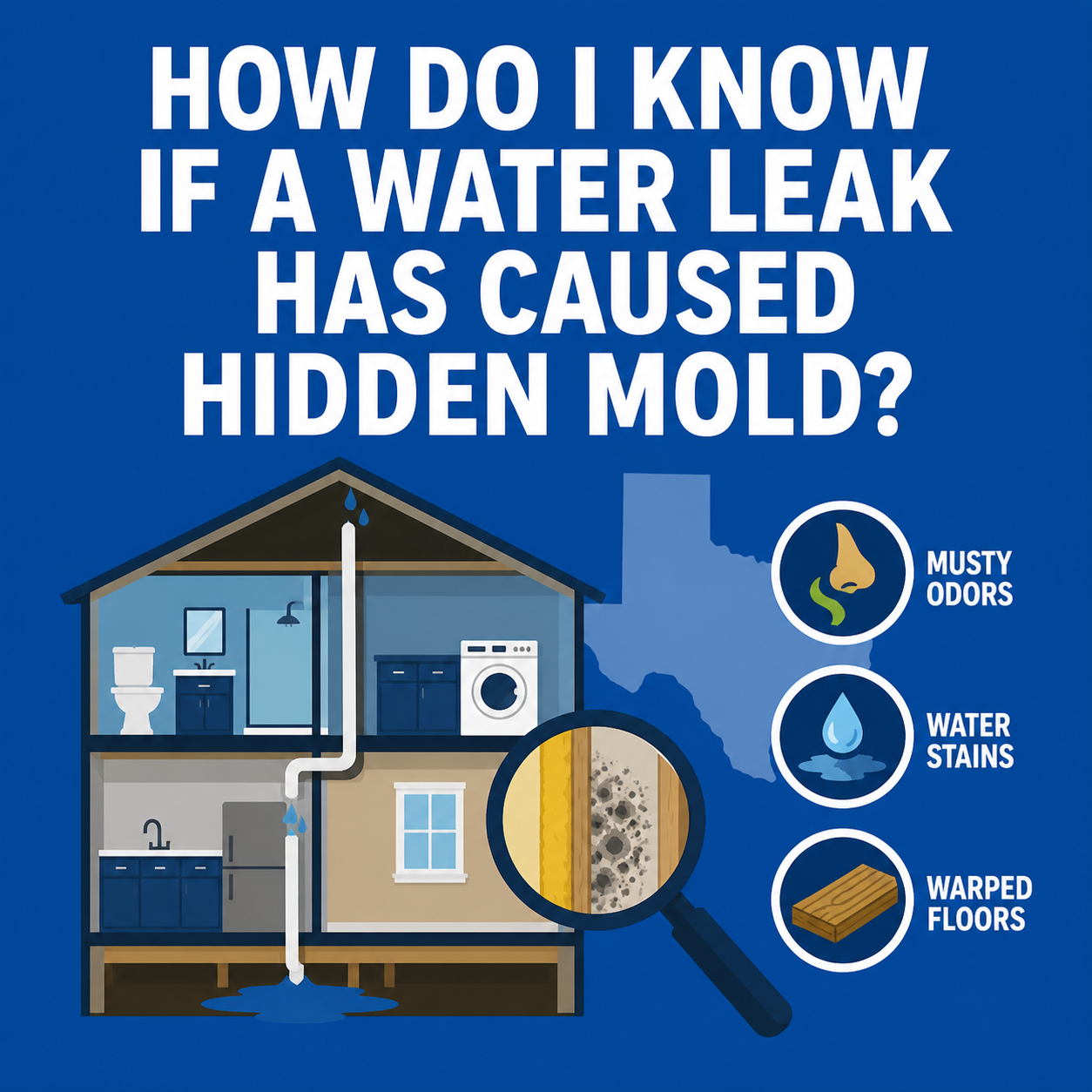
How Do I Know If a Water Leak Has Caused Hidden Mold?

Water leaks are a common issue in both residential and commercial properties. While some leaks are obvious and quickly addressed, others may go unnoticed or appear minor at the surface. One of the primary concerns following a water leak is whether hidden mold may have developed behind walls, under flooring, or within building materials.
Because mold growth is not always visible, property owners often ask how they can determine whether a past or recent leak has led to a concealed mold problem. Understanding the warning signs and contributing conditions can help guide the next steps.
Why Water Leaks Can Lead to Hidden Mold
Mold growth is driven by moisture. When building materials become wet and are not properly dried, they can provide the conditions necessary for mold to develop. In many cases, the most significant concern is not the visible surface, but what occurs in concealed spaces.
Leaks from plumbing lines, appliances, roofs, or exterior walls can allow moisture to migrate into wall cavities, insulation, subflooring, or ceiling assemblies. Even when the visible area appears dry, moisture may remain trapped within materials.
If this moisture is not addressed within a reasonable timeframe, mold can begin to grow out of sight, often within 24 to 48 hours under favorable conditions.
👉 How Long Does It Take for Mold to Grow After Water Damage
Common Signs of Hidden Mold After a Leak
Hidden mold does not always present obvious visual indicators. However, there are several signs that may suggest a concealed issue.
Musty or stale odors are one of the most common indicators. These odors can persist even when surfaces appear clean and dry.
Discoloration, staining, or bubbling paint on walls or ceilings may indicate prior or ongoing moisture intrusion.
Warping or cupping of flooring materials can suggest that moisture is present beneath the surface.
Soft or deteriorating drywall or baseboards may indicate prolonged moisture exposure.
In some cases, no visible signs are present, particularly if the affected area is fully concealed within a wall or beneath flooring.
👉 Where Does Mold Commonly Grow in Homes That Look Clean
Situations That Increase the Risk of Hidden Mold
Not all water leaks result in mold growth, but certain conditions increase the likelihood.
Leaks that go undetected for extended periods are a primary concern. Slow plumbing leaks behind walls or under sinks can allow moisture to accumulate over time.
Incomplete drying following a water event is another common factor. Surfaces may appear dry while moisture remains within underlying materials.
Elevated indoor humidity can prolong drying times and contribute to moisture retention.
Porous materials such as drywall, insulation, and wood are more likely to support mold growth because they absorb and hold moisture.
Repeated or intermittent leaks can also create ongoing conditions that support hidden mold development.
Why Surface Drying May Not Be Enough
One of the most common misconceptions is that if a surface feels dry, the issue has been resolved. In reality, moisture can remain within materials even after the surface has dried.
For example, drywall can trap moisture within its core, and subflooring can retain moisture beneath finished flooring. Without proper drying methods, including airflow and dehumidification, these areas may remain damp long enough to support mold growth.
This is why professional water damage restoration often involves moisture monitoring and verification, rather than relying solely on visual or touch-based assessments.
👉 Do You Need Mold Testing After a Minor Water Leak
When a Professional Mold Inspection May Be Appropriate
If there is concern that a water leak may have caused hidden mold, a professional evaluation can help determine whether further action is needed.
A licensed Mold Assessment Consultant will assess the property for both visible and concealed moisture conditions. This may include:
- Visual inspection of affected and adjacent areas
- Moisture meter readings to identify elevated moisture levels
- Thermal imaging as a screening tool for temperature differentials
- Evaluation of building materials and construction assemblies
When appropriate, air or surface sampling may be used to assess whether indoor conditions are consistent with a normal fungal environment or if an abnormal source is present.
In Texas, mold assessments are regulated by the Texas Department of Licensing and Regulation, and inspections are performed in accordance with applicable rules and industry standards.
What to Do If You Suspect Hidden Mold
If a water leak has occurred, addressing the moisture source is the first and most important step. Repairs should be completed to stop the leak and prevent further intrusion.
If the leak was recent and properly dried within a short timeframe, the risk of mold growth may be limited. However, if the leak was prolonged, not fully dried, or if signs such as odors or material changes are present, further evaluation may be warranted.
Avoid relying solely on visual appearance. Hidden mold issues often develop in areas that are not immediately accessible.
Determining whether a water leak has caused hidden mold can be challenging because growth often occurs out of sight. While not every leak results in mold, the risk increases when moisture is not promptly and thoroughly addressed.
Paying attention to warning signs such as musty odors, material changes, and persistent moisture conditions can help identify potential concerns. When in doubt, a professional mold inspection can provide clarity and help ensure that any underlying issues are properly evaluated.
Dennis Butts is a Texas licensed Mold Assessment Consultant and principal of NTX Enviro Consulting Services, providing mold inspections, remediation protocols, and post remediation verification services throughout North Texas.
Worried about your HVAC System?
NTX Enviro provides professional mold inspections and moisture evaluations for homeowners throughout North Texas.

[…] How Do I Know If a Water Leak Has Caused Hidden Mold? […]
[…] How Do I Know If a Water Leak Has Caused Hidden Mold? […]
[…] How Do I Know If a Water Leak Has Caused Hidden Mold? […]
[…] How Do I Know If a Water Leak Has Caused Hidden Mold? […]