📞 (972) 643-8379 Monday to Friday 8:00 am - 5:00 pm, Saturday & Sunday - CLOSED

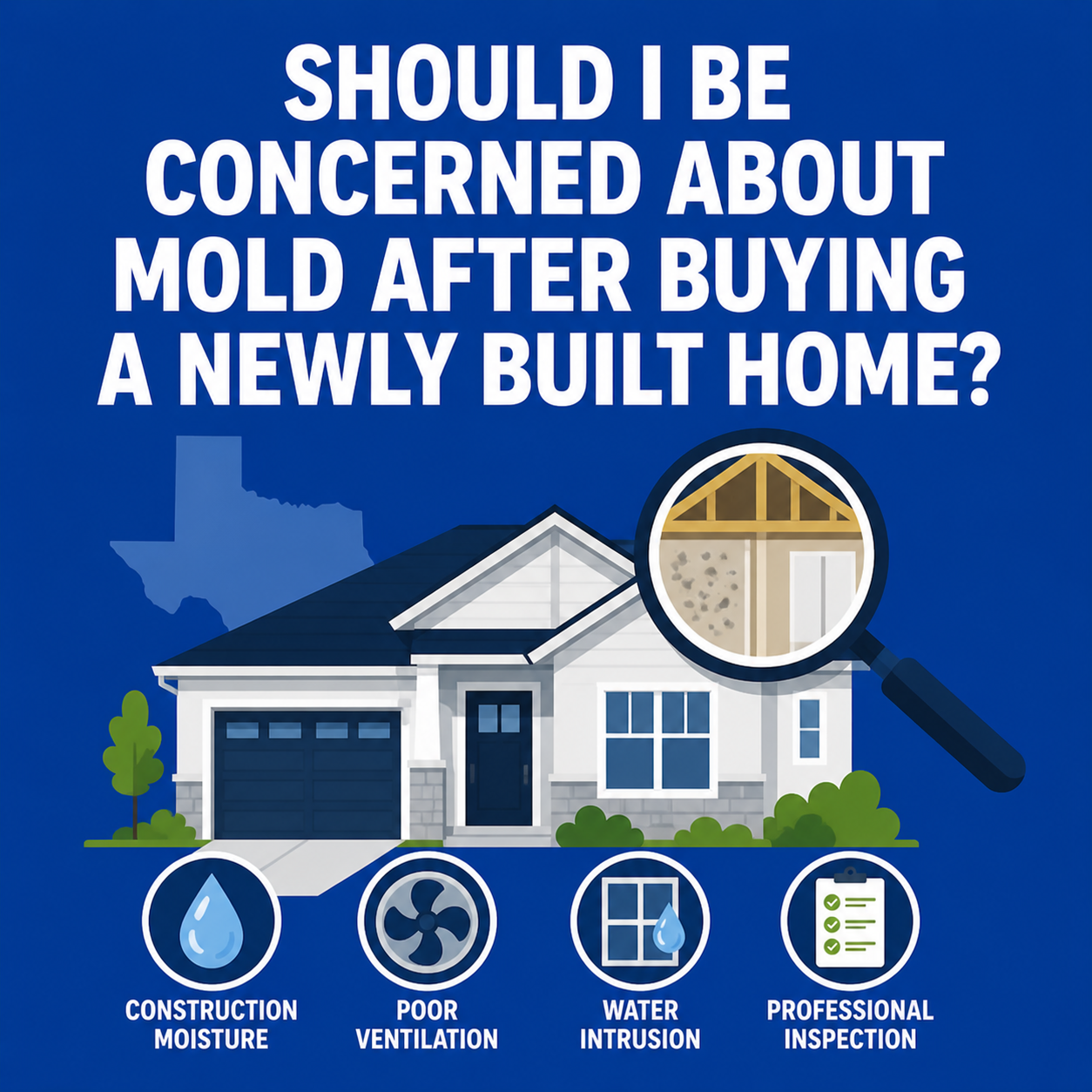
Should I Be Concerned About Mold After Buying a Newly Built Home?

New construction homes are often assumed to be free from defects, including mold and moisture related issues. Because everything is newly installed, many homeowners believe mold is only a concern in older properties.
However, mold growth is not related to the age of a home. It is driven by moisture conditions. Even newly built homes can develop moisture related issues under certain circumstances. Understanding how and why this can occur helps homeowners make informed decisions after purchasing a new property.
Can Mold Develop in Newly Built Homes?
Yes, mold can develop in newly built homes if moisture is present. During the construction process, building materials are frequently exposed to environmental conditions such as rain, humidity, and temperature fluctuations.
If materials such as framing, sheathing, or drywall become wet and are not fully dried before being enclosed, moisture can remain trapped within the structure. This can create conditions that support mold growth after the home is completed.
In addition, once the home is occupied, everyday activities and system performance can also influence indoor moisture levels.
👉 What Are the Most Common Causes of Indoor Moisture Problems in Homes
Common Moisture Issues in New Construction
Several factors can contribute to moisture problems in newly built homes.
Construction moisture is one of the most overlooked sources. Materials like concrete, drywall compound, and paint release moisture as they cure. If the home is closed up before this moisture dissipates, humidity levels inside the home can remain elevated.
Building envelope issues can also play a role. Improper sealing around windows, doors, or exterior penetrations can allow water intrusion during rain events.
HVAC system performance is another important factor. Systems that are oversized or not properly balanced may cool the home quickly but fail to adequately remove humidity from the air.
Drainage and grading issues around the foundation can allow water to collect near the structure, increasing the risk of moisture intrusion.
👉 Can Mold Grow in HVAC Systems and Air Ducts
Areas Where Mold May Develop in New Homes
Even in a newly built home, certain areas are more susceptible to moisture related concerns.
Attics may experience elevated humidity if ventilation is not properly designed or installed. This can lead to condensation on roof decking or framing.
Wall cavities can retain moisture if materials were enclosed before fully drying or if minor leaks develop after construction.
HVAC systems and ductwork can accumulate condensation, particularly during the initial occupancy period when indoor humidity may be higher.
Bathrooms, kitchens, and laundry areas are also common locations for moisture buildup if ventilation is not sufficient.
👉 Why Attic Moisture Problems Often Go Unnoticed in Texas Homes
Signs to Watch for After Moving In
While many new homes perform well, there are certain indicators that may suggest a moisture related concern.
Musty or stale odors can indicate elevated humidity or hidden microbial growth.
Condensation on windows or around vents may suggest that indoor humidity levels are too high.
Visible staining or discoloration on walls or ceilings can indicate prior or ongoing moisture intrusion.
Warping of materials such as baseboards or flooring may also be a sign of moisture exposure.
These signs do not necessarily confirm mold growth, but they may indicate conditions that should be evaluated.
👉 Why Does My House Smell Musty but No Mold Is Visible
Why a New Home Inspection May Still Be Valuable
Even though a home is newly constructed, a professional evaluation can still provide value, particularly if there are concerns about moisture or air quality.
A licensed Mold Assessment Consultant can evaluate the home for moisture related conditions, assess ventilation and HVAC performance, and identify any areas where moisture may be present.
In some cases, issues identified early can be addressed more easily, especially if they relate to construction or builder warranty items.
In Texas, mold assessments are regulated by the Texas Department of Licensing and Regulation, and inspections are conducted in accordance with applicable rules and standards.
Preventing Moisture Problems in a New Home
Homeowners can take several steps to reduce the likelihood of moisture related issues after moving into a new home.
- Monitor indoor humidity levels and maintain them within an appropriate range, typically between 30 percent and 50 percent.
- Use exhaust fans in bathrooms and kitchens to remove moisture during daily activities.
- Ensure that the HVAC system is properly maintained and functioning as intended.
- Observe exterior drainage and make adjustments if water appears to collect near the foundation.
- Address any signs of leaks or moisture intrusion promptly.
👉 What Humidity Level Causes Mold Growth in Homes
While newly built homes are not inherently prone to mold problems, they are not immune to moisture related issues. Mold growth can occur in any home when moisture conditions are present.
Understanding the potential sources of moisture in new construction, monitoring for early warning signs, and addressing concerns promptly can help maintain a healthy indoor environment.
If questions arise about indoor moisture or possible mold conditions, a professional inspection can provide clarity and help ensure that any issues are properly identified and addressed.
Dennis Butts is a Texas licensed Mold Assessment Consultant and principal of NTX Enviro Consulting Services, providing mold inspections, remediation protocols, and post remediation verification services throughout North Texas.
Concerned About Mold in a Newly Built Home?
NTX Enviro provides professional mold inspections and moisture evaluations for homeowners throughout North Texas.