📞 (972) 643-8379 Monday to Friday 8:00 am - 5:00 pm, Saturday & Sunday - CLOSED

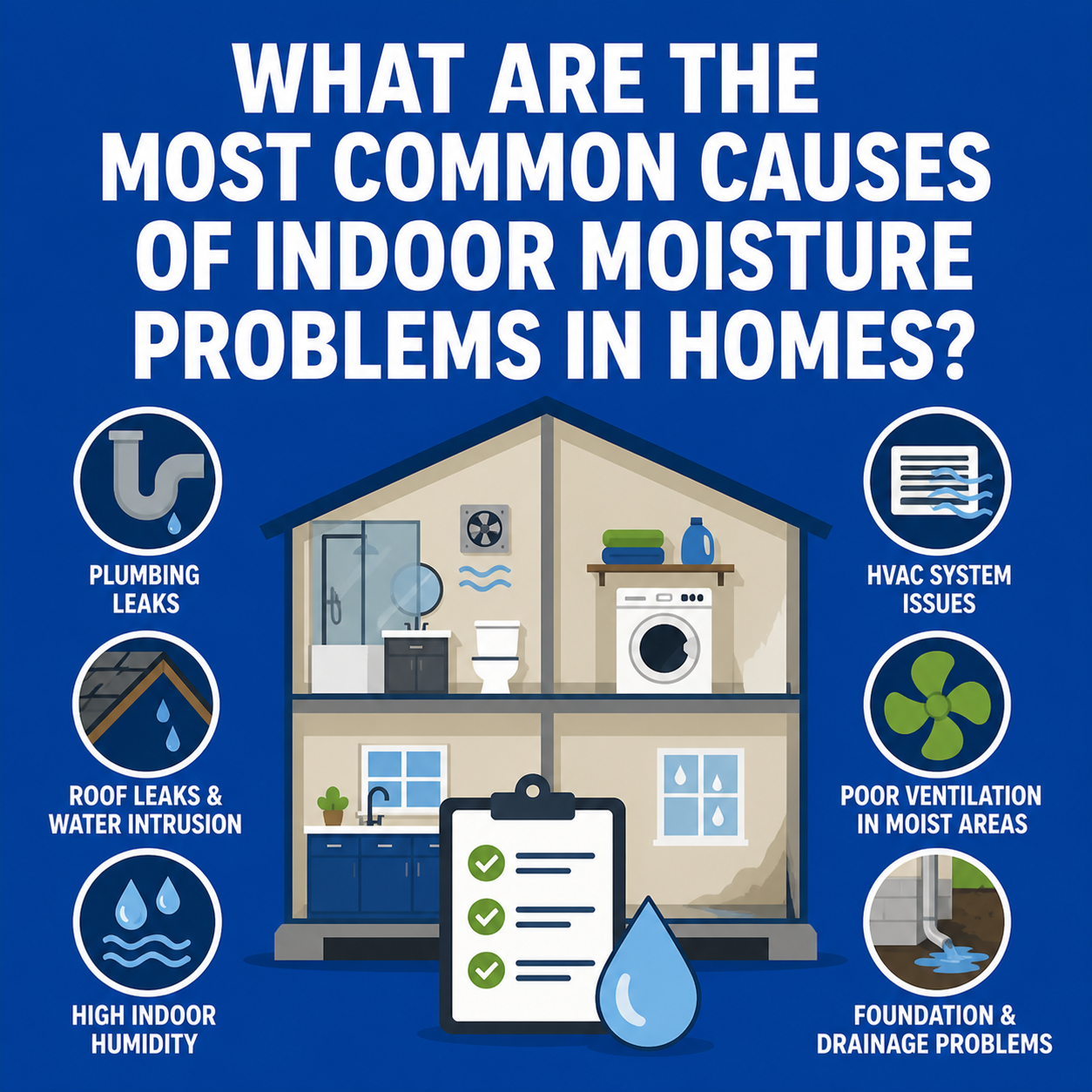
What Are the Most Common Causes of Indoor Moisture Problems in Homes?

Indoor moisture problems are one of the primary contributors to mold growth and building material deterioration. While many homeowners associate moisture issues with obvious leaks or flooding, a significant number of moisture problems develop gradually and may not be immediately visible.
Understanding the most common causes of indoor moisture can help property owners identify potential concerns early and take steps to prevent conditions that may support mold growth.
Why Indoor Moisture Matters
Moisture is the key factor that allows mold to grow. While mold spores are always present in indoor environments, they require sufficient moisture to develop and spread.
When moisture accumulates within a home, it can affect drywall, wood, insulation, flooring, and other building materials. Over time, this can lead to structural concerns, indoor air quality issues, and conditions that require professional assessment.
Maintaining proper moisture control is essential for keeping the indoor environment consistent with a normal fungal ecology.
👉 What Humidity Level Causes Mold Growth in Homes
Plumbing Leaks and Fixture Failures
Plumbing issues are one of the most common sources of indoor moisture problems. These can range from sudden failures to slow, undetected leaks.
- Leaking supply lines under sinks
- Dripping or damaged faucets
- Toilet seal failures
- Appliance leaks from dishwashers, refrigerators, or washing machines
Slow leaks are particularly problematic because they may go unnoticed for extended periods. Moisture can accumulate behind cabinets, within wall cavities, or beneath flooring before any visible signs appear.
Roof Leaks and Exterior Water Intrusion
Water entering the home from the exterior is another frequent cause of moisture issues.
Roof leaks may occur due to damaged shingles, flashing failures, or aging materials. Even small roof leaks can allow water to enter attic spaces and migrate into ceilings or walls.
Exterior wall intrusion can occur around windows, doors, or penetrations where sealing has failed. Improper drainage around the foundation can also allow water to enter the structure.
These types of issues often develop gradually and may not be immediately noticeable until damage becomes more significant.
High Indoor Humidity Levels
Elevated indoor humidity is a major contributor to moisture problems, even in the absence of a direct water source.
When indoor relative humidity consistently exceeds approximately 60 percent, moisture can begin to accumulate on cooler surfaces. This can lead to condensation on walls, ceilings, windows, and HVAC components.
In climates like North Texas, outdoor humidity can contribute to elevated indoor levels, particularly during warmer months.
👉 Why Elevated Humidity Alone Can Create Mold Risk in Texas Homes
HVAC System Issues
Heating and cooling systems can both contribute to and help control indoor moisture. When systems are not functioning properly, they may allow humidity to remain elevated or create localized moisture conditions.
Common HVAC related moisture issues include:
- Condensation at supply registers
- Improperly sealed ductwork allowing humid air infiltration
- Clogged condensate drain lines
- Systems that are oversized or not properly balanced
These conditions can lead to moisture accumulation within ductwork, around vents, or in adjacent building materials.
👉 Can Mold Grow in HVAC Systems and Air Ducts
Poor Ventilation in High Moisture Areas
Areas that regularly generate moisture require proper ventilation to remove humid air.
Bathrooms, kitchens, and laundry rooms are common sources of indoor moisture. Without adequate exhaust ventilation, humidity can remain trapped and settle on nearby surfaces.
For example, bathroom exhaust fans that are not used or not functioning properly can allow moisture from showers to accumulate on walls and ceilings.
Laundry rooms with improperly vented dryers can release significant amounts of moisture into the home.
Over time, repeated exposure to elevated humidity in these areas can create conditions that support mold growth.
Condensation and Temperature Differences
Condensation occurs when warm, moisture laden air comes into contact with cooler surfaces. This is a common but often overlooked source of indoor moisture.
Examples include:
- Condensation on windows during colder weather
- Moisture forming on exterior walls due to temperature differences
- Cooling coils and ductwork within HVAC systems
Poor insulation or air sealing can increase the likelihood of condensation by allowing temperature differentials to occur within building assemblies.
Foundation and Drainage Issues
Moisture can also enter a home from below through foundation or drainage related problems.
Improper grading around the home can cause water to collect near the foundation. Over time, this water may seep into the structure.
Basements or slab on grade homes may experience moisture intrusion due to hydrostatic pressure or inadequate moisture barriers.
These conditions can introduce persistent moisture that affects flooring systems, walls, and lower level materials.
When a Professional Mold Inspection May Be Appropriate
If indoor moisture problems are suspected or if signs such as musty odors, staining, or material deterioration are present, a professional mold inspection may be beneficial.
A licensed Mold Assessment Consultant evaluates moisture sources, building conditions, and overall indoor environmental factors. This may include moisture measurements, visual inspection, and, when appropriate, sampling to assess fungal ecology.
In Texas, mold assessments are regulated by the Texas Department of Licensing and Regulation and are conducted in accordance with applicable rules and standards.
👉 Why Moisture Mapping Is Critical Before Mold Remediation in Texas Homes
Indoor moisture problems can originate from a variety of sources, including plumbing leaks, exterior intrusion, humidity, HVAC issues, and ventilation deficiencies.
Because moisture is the primary driver of mold growth, identifying and addressing these conditions early is essential in maintaining a healthy indoor environment.
For homeowners experiencing ongoing moisture concerns or signs of potential mold, a professional evaluation can help identify the source and provide clear guidance on appropriate next steps.
Dennis Butts is a Texas licensed Mold Assessment Consultant and principal of NTX Enviro Consulting Services, providing mold inspections, remediation protocols, and post remediation verification services throughout North Texas.
Worried about Moisture Problems?
NTX Enviro provides professional mold inspections and moisture evaluations for homeowners throughout North Texas.