📞 (972) 643-8379 Monday to Friday 8:00 am - 5:00 pm, Saturday & Sunday - CLOSED

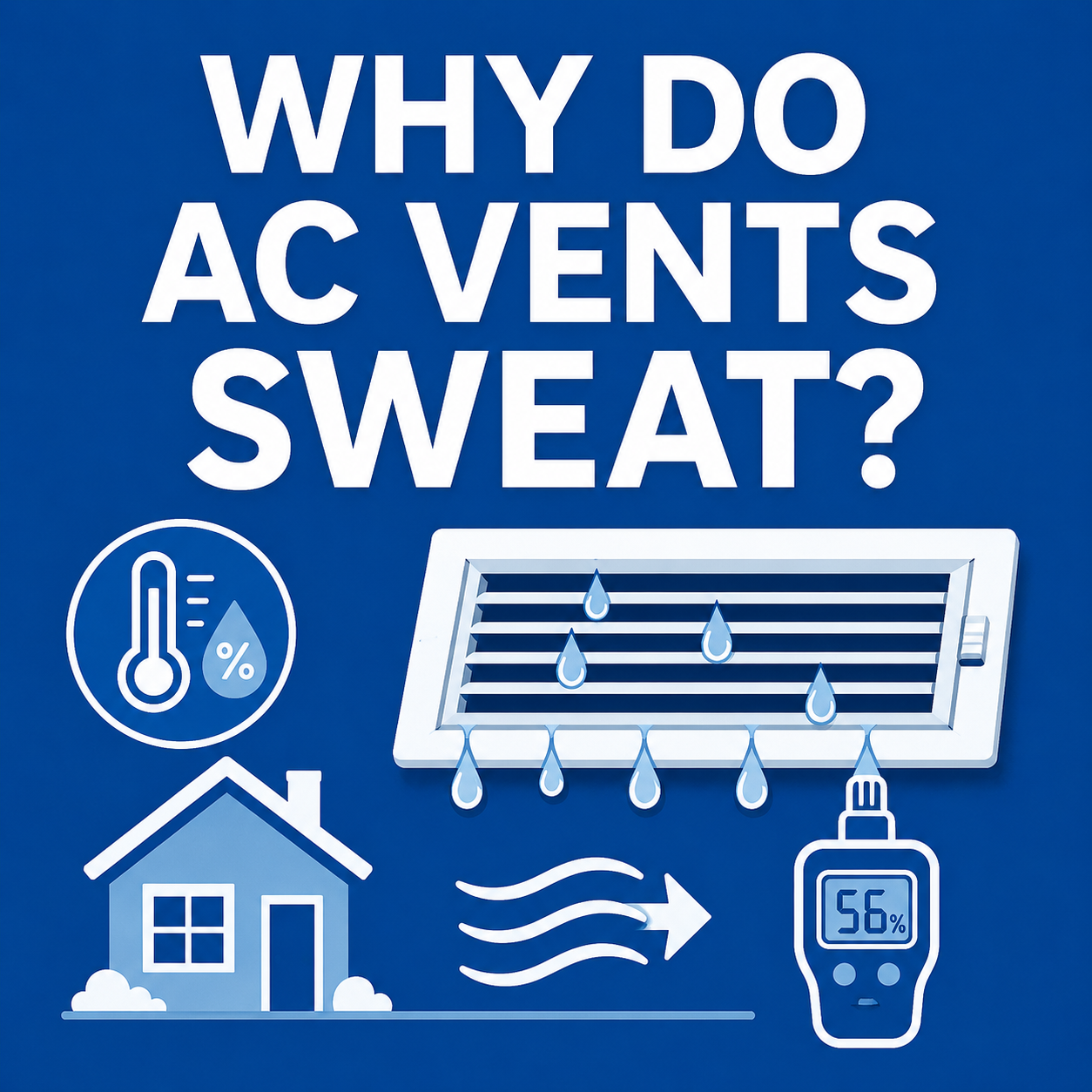
Why Is There Condensation on My Air Conditioning Vents?

Air conditioning systems play an important role in maintaining comfort during North Texas summers. While many homeowners expect their air conditioning system to cool the home and reduce humidity, some become concerned when they notice water droplets forming on supply vents or air conditioning registers.
Condensation on air conditioning vents is not normal under typical operating conditions. Although it may appear to be a minor issue, persistent condensation can indicate elevated indoor humidity levels, air leakage, insulation deficiencies, or HVAC performance problems. Left unaddressed, these conditions may contribute to moisture accumulation within ceilings, walls, or other building materials.
Understanding why condensation forms on air conditioning vents can help homeowners identify potential moisture concerns before more significant problems develop.
Why Condensation Forms on Air Conditioning Vents
Condensation occurs when warm, moisture-laden air comes into contact with a surface that is colder than the surrounding air’s dew point temperature. This is the same process that causes water droplets to form on a cold beverage glass during a humid day.
Air conditioning supply vents often contain air that is significantly cooler than the surrounding room air. If indoor humidity levels become elevated, moisture in the air can condense on the metal or plastic surfaces of the vent.
The greater the difference between the vent temperature and the room’s dew point temperature, the more likely condensation is to occur.
In North Texas, this issue is particularly common during summer months when outdoor humidity levels increase and cooling systems operate continuously.
Elevated Indoor Humidity Is Often the Primary Cause
One of the most common reasons homeowners observe sweating air vents is elevated indoor humidity.
Indoor humidity can increase due to several factors, including:
- Oversized HVAC systems that cool the home too quickly without adequately removing moisture
- Improper thermostat settings
- Fresh air infiltration through gaps and openings in the building envelope
- Poor attic ventilation
- Plumbing leaks
- Unvented combustion appliances
- Frequent opening of exterior doors
- Outdoor air entering through attic penetrations or wall cavities
Most residential environments should maintain indoor relative humidity between approximately 30 and 50 percent. When humidity levels consistently exceed 60 percent, the risk of condensation and mold growth increases.
High humidity often develops gradually and may go unnoticed until visible condensation appears on vents, windows, or other cool surfaces.
Air Leakage Around Vent Registers
Condensation can also occur when warm, humid air leaks into the ceiling cavity surrounding the supply register.
Many HVAC supply boots pass through unconditioned attic spaces before connecting to the conditioned living space below. If gaps exist between the drywall ceiling and the supply boot, attic air may enter around the vent assembly.
During North Texas summers, attic temperatures frequently exceed 120 degrees Fahrenheit. Although hot attic air may not seem capable of creating condensation, it often contains significant moisture. When that humid air contacts the cold surfaces of the supply boot or vent register, condensation can form.
Signs that air leakage may be contributing to the problem include:
- Condensation limited to one or two vents
- Water staining around supply registers
- Ceiling discoloration near vents
- Drafts felt around vent edges
- Dirt streaks around supply grilles
Sealing gaps between the supply boot and surrounding drywall is often part of correcting this condition.
Missing or Damaged Duct Insulation
Insulation helps prevent cold air traveling through ductwork from cooling surrounding building materials to temperatures below the dew point.
When insulation becomes damaged, compressed, disconnected, or improperly installed, cold surfaces may become exposed to humid air. This can allow condensation to develop on ductwork, supply boots, and nearby ceiling materials.
In some cases, homeowners may only notice staining on the ceiling while the actual moisture source remains hidden within the attic above.
During a moisture investigation, inspectors often evaluate accessible ductwork, insulation conditions, and temperature differentials to determine whether insulation deficiencies may be contributing to the problem.
HVAC System Performance Issues
Certain HVAC performance problems can also increase the likelihood of vent condensation.
Examples include:
- Restricted airflow caused by dirty filters
- Improper refrigerant charge
- Frozen evaporator coils
- Duct leakage
- Incorrect blower settings
- Poor system design
When airflow becomes restricted, supply air temperatures may become excessively cold. Extremely cold vent surfaces are more likely to reach temperatures below the indoor dew point, allowing moisture to condense.
An HVAC contractor may be needed to evaluate equipment operation when mechanical deficiencies are suspected.
Can Condensation Lead to Mold Growth?
Condensation itself is not mold. However, persistent moisture accumulation can create conditions favorable for mold growth.
When condensation repeatedly wets ceiling drywall, wood framing, insulation, or other building materials, moisture can accumulate over time. If materials remain damp for extended periods, fungal growth may develop.
This is one reason condensation should not be ignored simply because the amount of water appears minor.
Many homeowners first discover a moisture problem after observing:
- Musty odors
- Ceiling staining
- Paint bubbling
- Discoloration around vents
- Visible microbial growth near registers
The longer moisture conditions persist, the greater the potential for damage to building materials.
When Should a Professional Inspection Be Considered?
A professional inspection may be appropriate when:
- Condensation occurs repeatedly on supply vents
- Water staining develops around registers
- Indoor humidity remains elevated
- Musty odors are present
- Visible discoloration or suspected mold growth is observed
- Previous repairs have not resolved the issue
A comprehensive evaluation may include moisture measurements, thermal imaging, humidity assessment, HVAC observations, and inspection of accessible building materials.
Identifying the underlying moisture source is often more important than addressing the visible condensation itself. Successful correction typically requires determining why the moisture is occurring rather than simply cleaning or replacing affected materials.
Condensation on air conditioning vents is often a sign that humidity, air leakage, insulation deficiencies, or HVAC performance issues are allowing moisture to accumulate within the home. While the problem may initially appear cosmetic, persistent condensation can contribute to damage of building materials and create conditions that support mold growth.
Understanding why condensation develops and addressing the underlying cause can help protect indoor air quality, reduce moisture-related concerns, and prevent more extensive repairs in the future.
Related Articles
👉 Why Attic Moisture Problems Often Go Unnoticed in Texas Homes
👉 Why Elevated Humidity Alone Can Create Mold Risk in Texas Homes
👉 Can Air Purifiers Remove Mold Spores From Indoor Air
Dennis Butts is a Texas licensed Mold Assessment Consultant and principal of NTX Enviro Consulting Services, providing mold inspections, remediation protocols, and post remediation verification services throughout North Texas.
NTX Enviro provides professional mold inspections and moisture evaluations for homeowners throughout North Texas.

[…] Why Is There Condensation on My Air Conditioning Vents? […]