General information explaining how mold develops, conditions that contribute to growth, and common homeowner questions.
Many homeowners associate mold with visible staining, discoloration, or obvious water damage. However, mold growth often develops in areas that are not readily visible, even in homes that appear clean…
Indoor humidity plays a critical role in mold growth within residential environments. Many homeowners in North Texas experience seasonal humidity changes and may wonder what levels are considered safe, and…
Air purifiers are often marketed as a solution for improving indoor air quality, especially for individuals concerned about allergens, dust, and airborne contaminants. A common question homeowners ask is whether…
A musty odor inside a home is often one of the first concerns that leads property owners to question whether mold may be present. In many cases, however, no visible…
Many homeowners associate mold problems with obvious water damage such as a burst pipe or roof leak. However, in Texas, elevated indoor humidity alone can create conditions favorable to mold…
Attics are one of the most common locations for hidden moisture problems in Texas homes, yet they are rarely inspected unless a major issue arises. Because attics are out of…
Bathroom exhaust fans play a critical role in controlling moisture inside Texas homes, yet they are often overlooked until mold problems develop. When exhaust fans are undersized, improperly vented, or…
Water intrusion around windows and doors is one of the most frequently overlooked sources of mold growth in North Texas homes. Because these areas often leak slowly and intermittently, moisture…
North Texas has a rich inventory of older homes, many of which were built before 1980. These properties often feature unique charm, solid construction, and desirable locations. But they also…
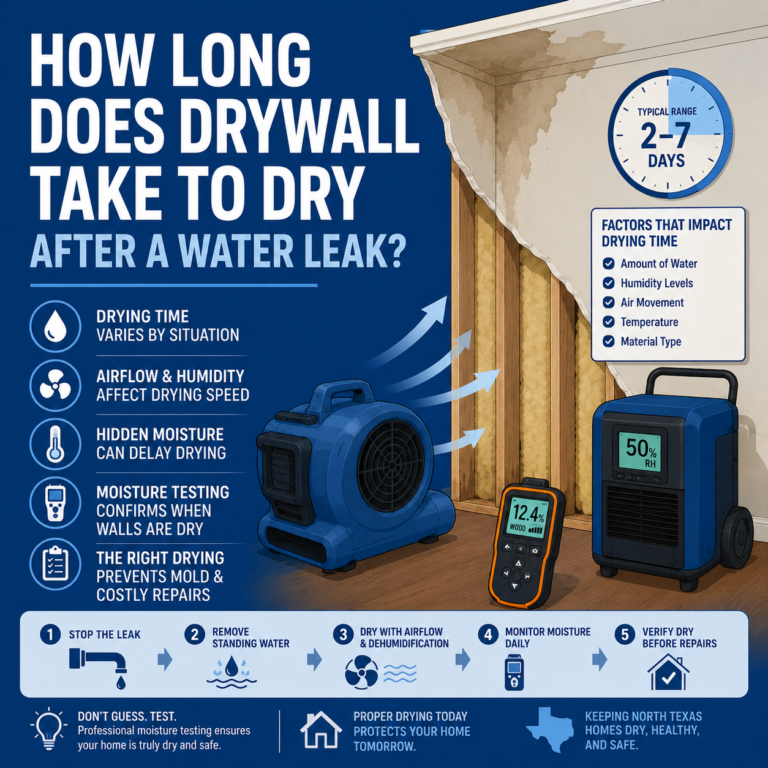
Water damage is one of the most common and costly issues homeowners face. Whether it’s a burst pipe, roof leak, or flood, water intrusion can wreak havoc on your property.…