📞 (972) 643-8379 Monday to Friday 8:00 am - 5:00 pm, Saturday & Sunday - CLOSED

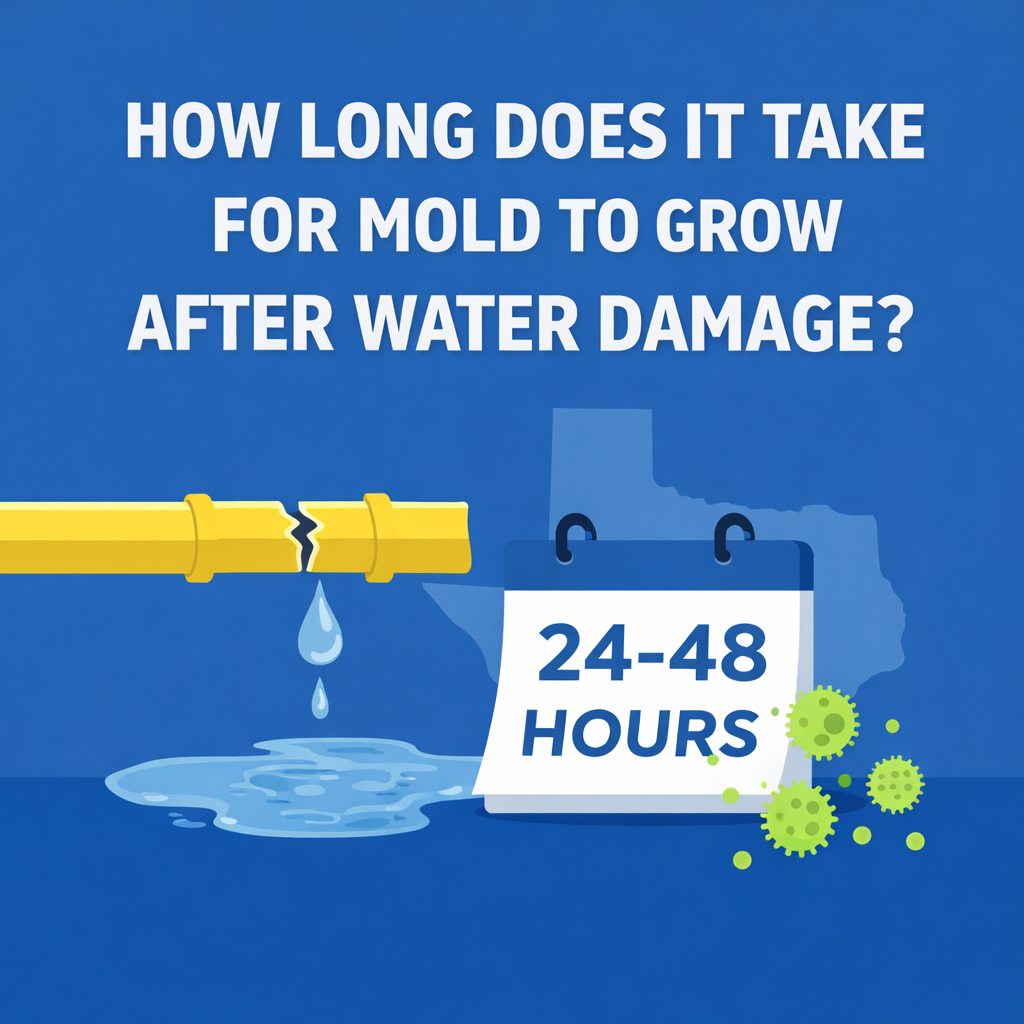
How Long Does It Take for Mold to Grow After Water Damage?

Water damage is one of the most common causes of mold growth in residential and commercial buildings. Whether the source is a plumbing leak, roof intrusion, or flooding event, excess moisture can quickly create conditions that support microbial growth.
A frequent question homeowners ask is how long it takes for mold to begin developing after water exposure. The answer depends on several factors, but under the right conditions, mold growth can begin much sooner than many people expect.
How Quickly Mold Can Begin to Grow
Mold spores are always present in indoor environments, but they require moisture and suitable conditions to begin growing. Once building materials become wet, mold can begin to develop within approximately 24 to 48 hours.
This timeframe is widely recognized in the restoration and indoor environmental industry and is often referred to as the 48 hour window for drying. If materials are not properly dried within this period, the likelihood of mold growth increases significantly.
However, it is important to understand that this is not a strict cutoff. Growth can begin earlier in some cases, especially in warm, humid environments, or it may take longer if conditions are less favorable.
👉 The 48 Hour Rule: How Quickly Mold Can Grow After Water Damage
Factors That Influence Mold Growth Timing
Several variables affect how quickly mold develops after water damage.
Temperature plays a major role. Warm environments accelerate microbial activity, which is why mold growth tends to occur more rapidly during warmer months in North Texas.
Humidity levels also influence growth. Elevated indoor humidity can prolong drying times and allow materials to remain damp longer, increasing the likelihood of mold development.
The type of material affected is another key factor. Porous materials such as drywall, carpet, insulation, and wood can absorb and retain moisture, creating ideal conditions for mold growth. Non-porous materials, such as metal or glass, are less susceptible but can still support surface contamination if moisture and dust are present.
The extent and duration of the water exposure also matter. A small, quickly addressed spill may not result in growth, while a slow, undetected leak can create long-term conditions that support widespread contamination.
Common Areas Affected After Water Damage
Mold growth following water damage often occurs in areas where moisture is retained or not immediately visible.
Wall cavities are a common location, especially when water intrudes from plumbing leaks or exterior sources. Moisture can become trapped behind drywall, allowing mold to develop on hidden surfaces.
Flooring systems can also be affected. Water can migrate beneath carpet, padding, or wood flooring, where it may remain undetected and lead to growth below the surface.
Ceilings and insulation are particularly vulnerable following roof leaks or plumbing failures from above. Water can saturate these materials and create conditions that support mold growth if not properly dried.
HVAC systems may also be impacted if moisture enters ductwork or if elevated humidity persists throughout the home.
👉 Why Air Quality Testing Matters After a Water Leak
Why Drying Within 24 to 48 Hours Matters
The initial response to water damage is critical in preventing mold growth. Prompt drying reduces the amount of time materials remain wet and limits the opportunity for spores to begin growing.
Effective drying typically involves:
- Removing standing water
- Increasing airflow across affected areas
- Using dehumidification to reduce moisture in the air
- Removing or replacing materials that cannot be adequately dried
If drying is delayed or incomplete, moisture can remain trapped within materials even if surfaces appear dry. This can allow mold growth to develop out of sight.
Signs That Mold May Have Developed
After a water event, certain indicators may suggest that mold growth has begun.
Musty or stale odors are often one of the earliest signs. These odors can develop even when no visible growth is present.
Visible staining, discoloration, or deterioration of materials may also indicate microbial activity.
Persistent humidity or condensation in affected areas can suggest that moisture conditions remain unresolved.
In some cases, no obvious signs are present, and growth may be concealed within walls, ceilings, or flooring systems.
When a Professional Mold Inspection May Be Appropriate
If water damage was not addressed within the initial 24 to 48 hour window, or if there are ongoing concerns about moisture or air quality, a professional mold inspection may be warranted.
A licensed Mold Assessment Consultant evaluates both visible and concealed conditions, measures moisture levels, and determines whether the indoor environment is consistent with normal fungal ecology.
Air and surface sampling may be performed when appropriate to support the assessment and help identify abnormal indoor conditions.
In Texas, mold assessments are regulated under the Texas Department of Licensing and Regulation, and inspections are conducted in accordance with applicable rules and industry standards.
Mold can begin to grow within 24 to 48 hours after water damage if conditions are favorable. The key factor is not just the presence of water, but how long materials remain wet.
Prompt drying and proper moisture control are essential in preventing mold growth and minimizing potential damage to building materials.
If drying is delayed, incomplete, or if there are concerns about lingering moisture, a professional evaluation can help determine whether mold growth has occurred and what steps may be necessary to restore the environment.
Dennis Butts is a Texas licensed Mold Assessment Consultant and principal of NTX Enviro Consulting Services, providing mold inspections, remediation protocols, and post remediation verification services throughout North Texas.
Concerned About Mold Growth After Water Damage?
NTX Enviro provides professional mold inspections and moisture evaluations for homeowners throughout North Texas.

[…] 👉 How Long Does It Take for Mold to Grow After Water Damage […]
[…] How Long Does It Take for Mold to Grow After Water Damage […]