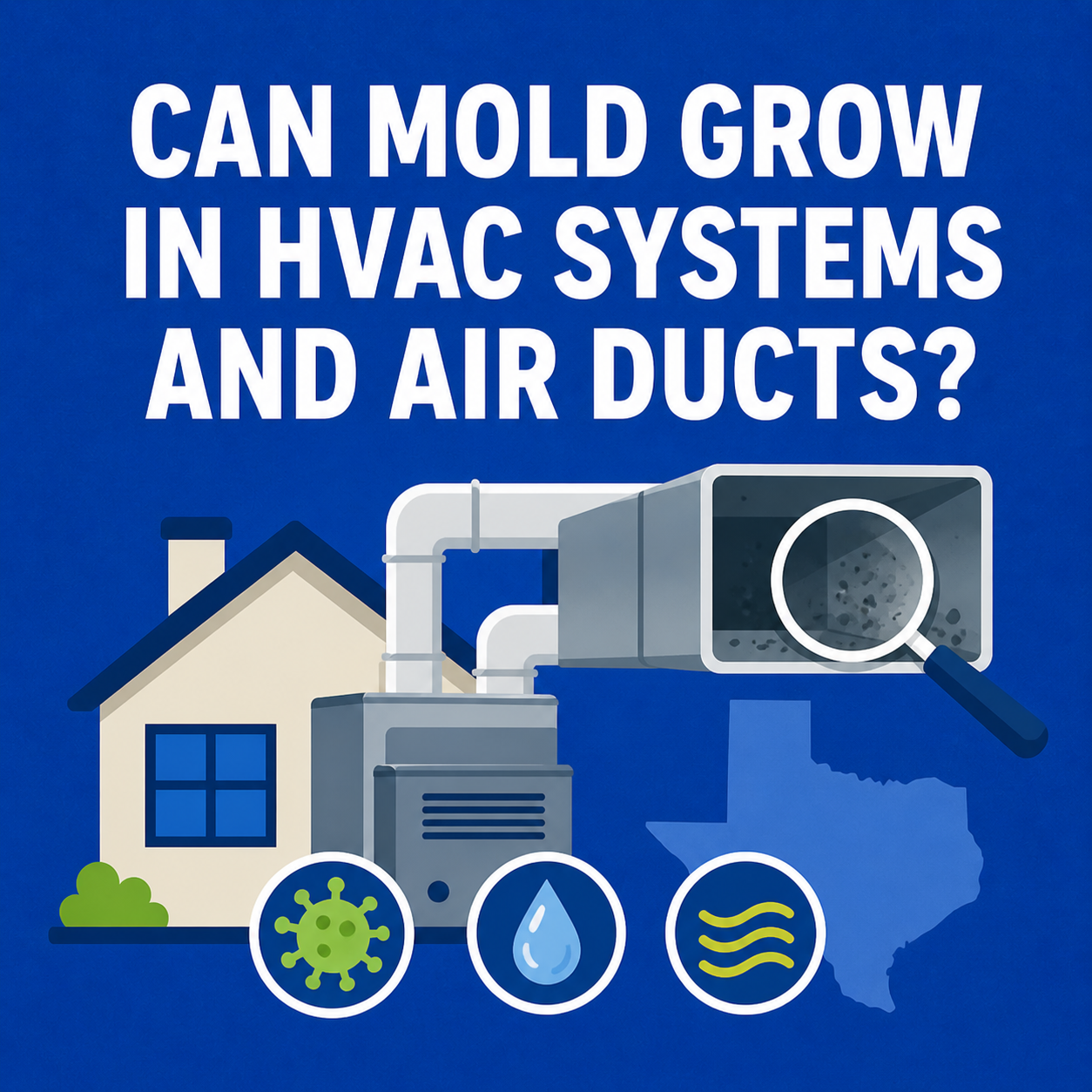
Heating and cooling systems play a central role in maintaining indoor comfort, but they can also influence indoor air quality. A common concern among homeowners is whether mold can grow inside HVAC systems and air ducts, and if so, what that means for the overall indoor environment.
Because HVAC systems circulate air throughout the home, any contamination within the system has the potential to impact multiple areas. Understanding when and how mold can develop in these systems helps property owners recognize potential risks and take appropriate action.
Can Mold Actually Grow in HVAC Systems?
Yes, mold can grow in HVAC systems under the right conditions. Like any other environment, mold requires moisture, a food source, and suitable temperatures to develop.
HVAC systems can provide all three under certain circumstances. Dust and debris that accumulate inside ductwork or on system components can serve as a food source. When combined with moisture, these materials can support microbial growth.
However, it is important to note that mold growth inside HVAC systems is not inevitable. It typically occurs only when specific moisture related issues are present.
Common Sources of Moisture in HVAC Systems
Moisture is the key factor that determines whether mold growth can occur inside an HVAC system. Several conditions can introduce or retain moisture within the system.
Condensation is one of the most common sources. As warm air passes over cooling coils, moisture is removed from the air and collects on the coil surfaces. This is a normal part of system operation, but if drainage is not functioning properly, water can accumulate.
Clogged or improperly sloped condensate drain lines can allow water to back up into the system. This can create standing moisture conditions that support mold growth.
Air leakage around duct connections or supply registers can also introduce humid air into the system, particularly in warm climates like North Texas. This can lead to localized condensation within ductwork.
High indoor humidity levels can further increase the likelihood of moisture accumulation within the system.
👉 Why Elevated Humidity Alone Can Create Mold Risk in Texas Homes
Areas Within HVAC Systems Where Mold May Develop
Certain components of an HVAC system are more prone to moisture and therefore more susceptible to mold growth.
Cooling coils and drip pans are common areas due to frequent condensation. If not properly maintained, these components can retain moisture and debris.
Flexible or internally lined ductwork can also be vulnerable, particularly if dust accumulation and moisture are present together.
Supply registers and the surrounding drywall may show localized growth if there is air leakage or condensation at those points.
In some cases, mold growth may not be directly visible within the system but may still affect air quality if spores are being distributed through airflow.
Signs That Mold May Be Present in the HVAC System
Mold growth within HVAC systems is often not visible without direct inspection. However, there are several indicators that may suggest a potential issue.
A persistent musty or stale odor when the system is operating is one of the most common signs. This odor may be more noticeable when the system first turns on.
Visible dust buildup combined with moisture around vents or registers can also indicate conditions that may support microbial growth.
Unexplained increases in airborne particulate levels or recurring indoor air quality concerns may also warrant further evaluation.
It is important to recognize that these signs do not confirm the presence of mold, but they may indicate conditions that should be assessed.
Why HVAC Mold Issues Should Be Addressed Carefully
When mold is suspected within an HVAC system, it is important to approach the situation carefully. Improper cleaning methods can disturb contamination and potentially distribute particles throughout the home.
Industry guidance, including NADCA standards for HVAC cleaning, emphasizes mechanical cleaning methods rather than relying solely on chemical treatments or fogging. The goal is to physically remove dust and debris that may support microbial growth.
In many cases, HVAC cleaning is recommended as part of a broader effort to address moisture issues and restore normal indoor conditions, rather than as a standalone solution.
When a Professional Mold Inspection May Be Appropriate
If there are concerns about possible mold growth within an HVAC system, a professional mold inspection can help determine whether a problem exists and what steps may be necessary.
A licensed Mold Assessment Consultant evaluates the overall indoor environment, including potential moisture sources, system conditions, and air quality indicators. This may include visual assessment of accessible components and moisture evaluation.
Air sampling may be considered when appropriate to assess whether indoor air conditions are consistent with a normal fungal environment.
In Texas, mold assessments are regulated under the Texas Department of Licensing and Regulation, and inspections are performed in accordance with applicable rules and industry standards.
Preventing Mold Growth in HVAC Systems
Preventative maintenance is one of the most effective ways to reduce the likelihood of mold growth within HVAC systems.
Regularly changing air filters helps reduce dust accumulation within the system. Keeping condensate drain lines clear and properly functioning helps prevent water buildup.
Ensuring that duct connections are properly sealed can reduce the introduction of humid air into the system.
Maintaining indoor humidity levels within an appropriate range also supports overall system performance and reduces moisture related risks.
Routine HVAC inspections by qualified professionals can help identify and address potential issues before they lead to larger concerns.
Mold can grow in HVAC systems and air ducts when moisture and debris are present, but it is not a typical condition in a properly functioning system. The key factor is moisture, whether from condensation, drainage issues, or elevated humidity.
If signs such as musty odors or persistent air quality concerns are present, further evaluation may be warranted to determine whether the HVAC system is contributing to the issue.
Addressing moisture conditions and maintaining the system properly are the most effective ways to prevent mold growth and maintain a healthy indoor environment.
Dennis Butts is a Texas licensed Mold Assessment Consultant and principal of NTX Enviro Consulting Services, providing mold inspections, remediation protocols, and post remediation verification services throughout North Texas.
👉 Schedule a Professional Mold Inspection with NTX Enviro Today