
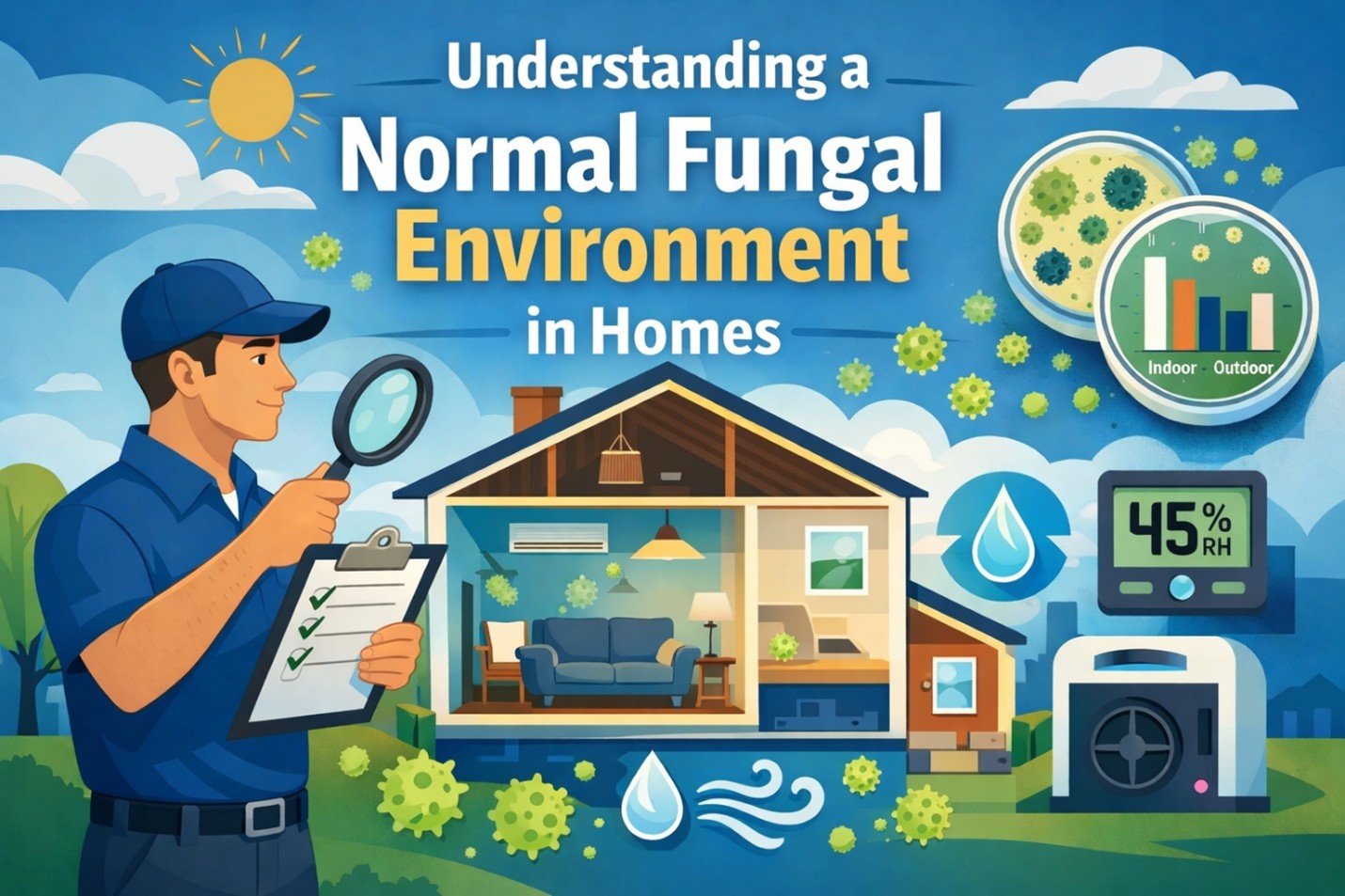
Homeowners often contact a mold inspection company after noticing an odor, discoloration, or a change in indoor air quality. In many cases, laboratory results come back showing what is known as a normal fungal environment. This finding can be confusing and sometimes frustrating if concerns about health or property damage prompted the inspection in the first place. Understanding what a normal fungal environment actually means is an important part of making informed decisions about next steps.
What a Normal Fungal Environment Means
A normal fungal environment indicates that the types and concentrations of airborne or surface fungal spores identified during testing are consistent with what is typically found in clean, well maintained indoor spaces. Mold spores are naturally present in both outdoor and indoor air. Their mere presence does not automatically indicate a mold problem or the need for remediation.
In Texas, licensed mold assessment consultants evaluate results in the context of visual observations, moisture conditions, and comparison to outdoor reference samples. When indoor results are similar to or lower than outdoor levels and no active mold growth is observed, the environment is generally considered normal under accepted assessment practices.
Why Mold Can Be Detected Even When There Is No Problem
It is common for laboratory reports to list multiple mold genera, even when no issue exists. Dust, soil, and normal household activity all contribute to background fungal presence. Spores can enter a home through open doors, windows, HVAC systems, and even on clothing or pets.
Surface samples taken from areas such as carpet backing, concrete slabs, or settled dust may also show minor spore counts. These findings are often consistent with normal background accumulation rather than active amplification. Interpretation by a licensed professional is critical to distinguish between incidental findings and conditions that warrant corrective action.
How Standards Guide Interpretation
Texas mold inspections are governed by the Texas Department of Licensing and Regulation mold statute. Under these rules, assessment conclusions must be based on a combination of visual inspection, moisture evaluation, and analytical data. Laboratory results alone do not determine whether a mold condition exists.
A normal fungal environment conclusion means that, at the time of inspection, conditions did not meet the criteria for identifying mold contamination as defined by state regulations. This protects property owners from unnecessary remediation while ensuring that legitimate mold issues are properly identified and addressed when present.
When Further Action May or May Not Be Needed
If no active mold growth or moisture source is identified and testing reflects a normal fungal environment, remediation is typically not indicated. In these situations, improving general housekeeping, managing indoor humidity, and addressing comfort issues such as ventilation may be sufficient.
However, if odors persist, moisture conditions change, or new water intrusion occurs, a follow up assessment may be appropriate. Mold conditions can evolve over time, which is why professional interpretation and clear documentation are so important.
Understanding the difference between a suspected issue and a confirmed mold condition can help homeowners avoid unnecessary expense and anxiety while still protecting their indoor environment.
👉 DIY Mold Cleanup vs. Professional Assessment: What’s the Difference?
Why Professional Interpretation Matters
Laboratory data without context can easily be misinterpreted. A licensed mold assessment consultant evaluates results using established criteria, field observations, and regulatory standards. This approach ensures conclusions are defensible, accurate, and aligned with state requirements.
A normal fungal environment finding should provide reassurance, not uncertainty. When explained clearly, it confirms that the indoor environment is performing as expected and that no mold related corrective action is required at that time.
👉 Schedule a Professional Mold Inspection with NTX Enviro Today
Dennis Butts is a Texas-licensed Mold Assessment Consultant (MAC) and principal of NTX Enviro Consulting Services. He provides mold inspections, remediation protocols, and post-remediation verification services throughout North Texas.
Pingback: Musty Smell but No Mold What It Means
Pingback: Elevated Humidity Mold Risk Texas Homes Explained