📞 (972) 643-8379 Monday to Friday 8:00 am - 5:00 pm, Saturday & Sunday - CLOSED

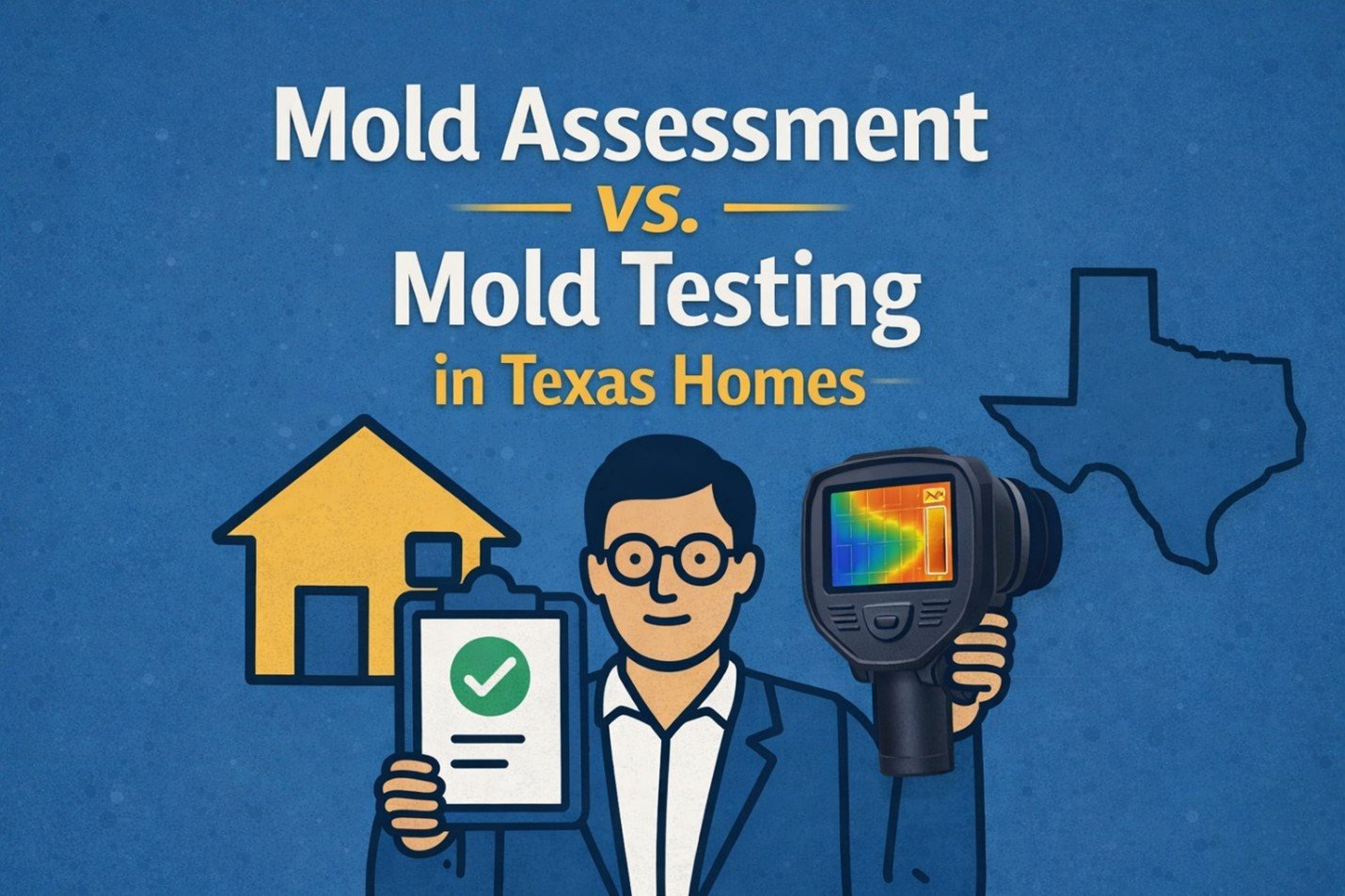
Understanding the Difference Between Mold Assessment and Mold Testing

Homeowners across North Texas often use the terms mold testing and mold inspection interchangeably. In practice, they are not the same service and the distinction matters, especially under Texas mold law. Understanding the difference helps homeowners make informed decisions, avoid unnecessary costs, and ensure compliance with state regulations.
What Mold Assessment Really Means
In Texas, mold assessment is a regulated professional service. A mold assessment is performed by a licensed Mold Assessment Consultant and focuses on identifying whether mold is present, determining the source of moisture, and defining the scope of work needed if remediation is required.
A proper mold assessment typically includes a detailed visual inspection, moisture mapping, building science evaluation, and targeted sampling only when it adds diagnostic value. The goal is not simply to detect spores, but to understand conditions that may be supporting mold growth and how to correct them.
Texas law requires that a Mold Remediation Protocol be issued by a licensed consultant before remediation begins, when remediation is warranted. This framework is governed by the Texas Department of Licensing and Regulation mold statute, which emphasizes assessment driven decisions rather than indiscriminate testing.
What Mold Testing Alone Can and Cannot Tell You
Mold testing generally refers to collecting air or surface samples and sending them to a laboratory for analysis. While lab results can provide useful data, they are only one piece of the puzzle.
Mold spores are present in all indoor environments. A lab report showing the presence of mold does not automatically indicate a problem. Without context such as moisture conditions, building history, and visual findings, test results can be misinterpreted and may lead to unnecessary remediation.
Testing alone cannot identify the moisture source, determine whether growth is active or historical, or establish whether remediation is actually required. In many cases, testing without assessment creates confusion rather than clarity.
👉 DIY Mold Cleanup vs. Professional Assessment: What’s the Difference?
Why Standards Prioritize Assessment Over Testing
Texas mold regulations are designed to protect consumers by separating assessment from remediation and by requiring licensed professionals to interpret findings. This approach reduces conflicts of interest and ensures that remediation decisions are based on building science, not fear driven test results.
Under Texas standards, sampling is a tool used selectively when visual inspection and moisture evaluation indicate a potential issue that cannot be resolved through observation alone. When sampling is performed, results are interpreted in the context of outdoor conditions, occupancy, and the overall fungal ecology of the structure.
This approach aligns with accepted industry guidance and avoids over reliance on raw spore counts or single sample comparisons.
When Mold Testing Is Appropriate
Mold testing can be appropriate in certain situations, such as when there are no visible signs of mold but occupants are reporting odors or health concerns, when evaluating post remediation conditions, or when differentiating between normal background conditions and an abnormal fungal environment.
In these cases, testing should be directed and interpreted by a licensed mold assessment consultant who understands how the data fits into the larger picture of the building.
Choosing the Right Professional
Homeowners should look for a Texas licensed Mold Assessment Consultant who focuses on assessment first, not testing for its own sake. A thorough evaluation should explain findings clearly, outline whether remediation is necessary, and provide defensible documentation that complies with Texas regulations.
The right approach saves money, avoids unnecessary disruption, and provides confidence that decisions are based on facts rather than assumptions.
If you have questions about a potential mold concern or want to understand whether testing is truly needed, a professional assessment is always the best starting point.
Dennis Butts is a Texas licensed Mold Assessment Consultant and principal of NTX Enviro Consulting Services, providing mold inspections, remediation protocols, and post remediation verification services throughout North Texas.
NTX Enviro provides professional mold inspections and moisture evaluations for homeowners throughout North Texas.

[…] Understanding the Difference Between Mold Assessment and Mold Testing […]
[…] Mold Assessment vs. Mold Testing […]