Can Thermal Imaging Detect Mold Behind Walls?
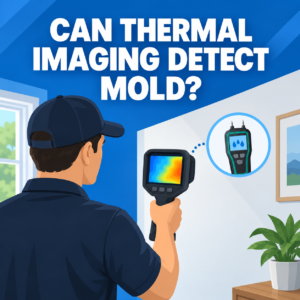
Thermal imaging cannot directly detect mold behind walls. A thermal camera measures surface temperature differences, not fungal growth or moisture content. It may reveal…
Thermal imaging cannot directly detect mold behind walls. A thermal camera measures surface temperature differences, not fungal growth or moisture content. It may reveal…

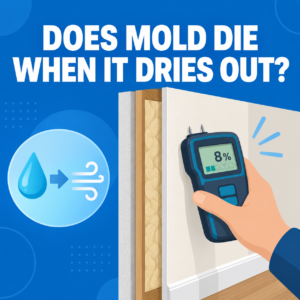
Mold does not necessarily die when it dries out. Removing moisture generally stops active fungal growth, but spores, fragments, and visible growth may remain…

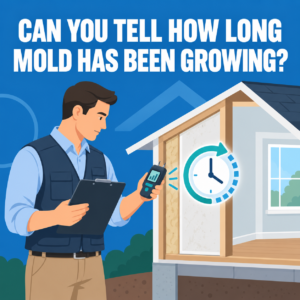
A mold inspection usually cannot determine exactly how long mold has been growing. The types of fungi present, the condition of affected materials, and…

Can mold air testing miss hidden mold? Yes. An air sample measures spores suspended at one location during a short sampling period. Mold concealed…

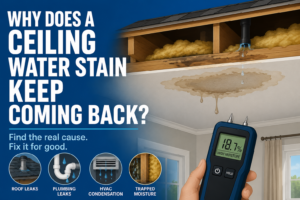
A ceiling water stain usually keeps coming back because the moisture source has not been fully corrected, water remains trapped above the ceiling, or…

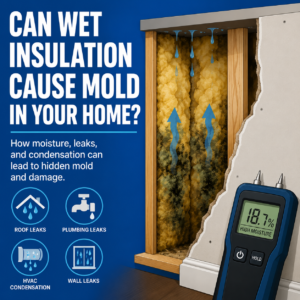
Yes. Wet insulation can contribute to mold growth when moisture remains trapped inside a wall, ceiling, attic, or floor assembly. The insulation itself may…

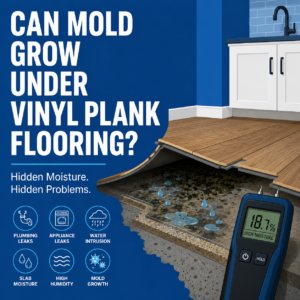
Yes, mold can grow under vinyl plank flooring when moisture becomes trapped beneath the flooring system. The vinyl itself may not support significant mold…

Yes. Mold can grow behind kitchen cabinets when moisture becomes trapped between the cabinet and the wall. Because these areas are rarely visible, plumbing…

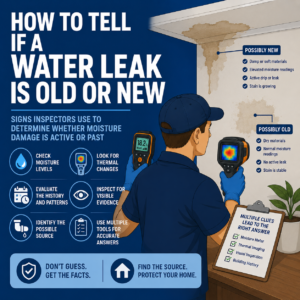
A water stain on a wall or ceiling does not necessarily mean a leak is still active. Many stains remain visible long after building…

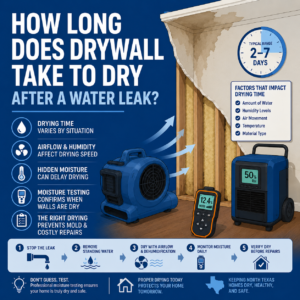
Drywall can begin drying within hours after a water leak, but reaching normal moisture levels often takes several days. The exact drying time depends…