
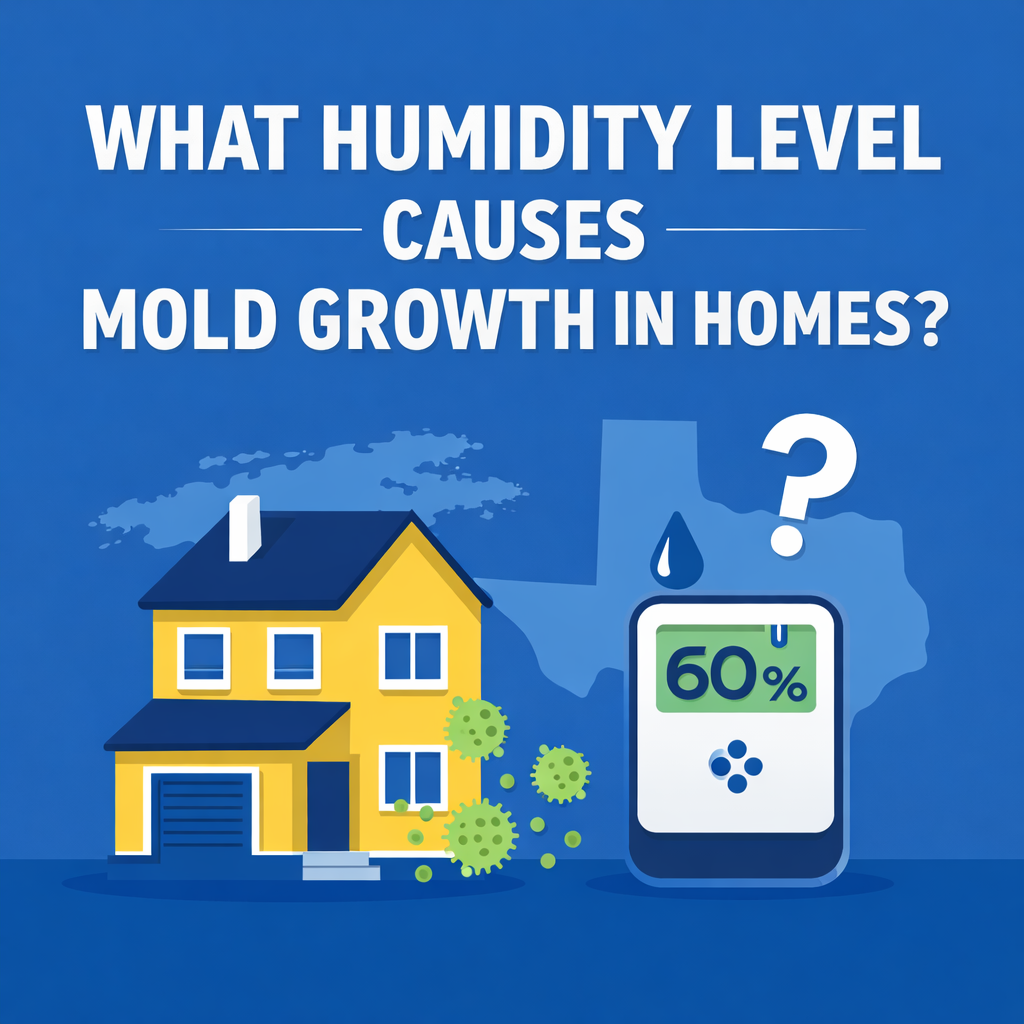
Indoor humidity plays a critical role in mold growth within residential environments. Many homeowners in North Texas experience seasonal humidity changes and may wonder what levels are considered safe, and at what point conditions begin to support mold development.
Understanding how humidity affects indoor environments can help property owners prevent mold growth, protect building materials, and maintain a healthy indoor space.
What Humidity Level Supports Mold Growth
Mold growth is primarily driven by moisture. While mold spores are always present in indoor air, they require sufficient moisture to settle, grow, and multiply.
In general, mold growth can begin when indoor relative humidity consistently exceeds 60 percent. At this level, enough moisture is available in the air to support microbial activity on various surfaces.
However, it is important to understand that mold does not require standing water to grow. Elevated humidity alone can create conditions where surfaces absorb enough moisture to support growth, particularly in areas with limited airflow.
Most building science and industry guidance suggests maintaining indoor relative humidity between 30 percent and 50 percent to reduce the likelihood of mold development.
Why High Humidity Leads to Mold Growth
When humidity levels rise, moisture in the air can condense on cooler surfaces such as walls, ceilings, windows, and HVAC components. This creates localized areas where materials remain damp for extended periods.
Porous materials such as drywall, wood, insulation, and carpet are especially susceptible because they can absorb and retain moisture. Once these materials remain damp long enough, mold spores can begin to grow and spread.
Even in the absence of visible water damage, elevated humidity can support what is often referred to as Condition 2 or Condition 3 environments under IICRC S520 principles, depending on whether growth is present.
👉 The 48-Hour Rule: Why Fast Action After Water Damage Prevents Mold
Common Areas Where Humidity Causes Problems
High indoor humidity does not affect all areas of a home equally. Certain locations are more prone to moisture accumulation and mold growth due to their function, construction, or ventilation characteristics.
Bathrooms are a common source due to showering and limited ventilation. Without proper exhaust, humidity can linger and affect surrounding materials.
Kitchens can also contribute, especially during cooking activities that generate steam. Areas near sinks and dishwashers may experience both humidity and minor leaks.
Attics often develop elevated humidity due to poor ventilation or improper insulation. Warm, moist air rising from the living space can become trapped, leading to condensation on roof decking and framing.
HVAC systems can contribute when not properly maintained or balanced. Condensation within ductwork or on supply registers can create localized moisture conditions.
Closets, exterior walls, and areas behind furniture may also experience reduced airflow, allowing humidity to accumulate and persist.
How to Measure and Control Indoor Humidity
Monitoring indoor humidity is an important step in preventing mold growth. A simple digital hygrometer can provide real time readings of relative humidity levels within a home.
To control humidity effectively, homeowners can take several practical steps:
- Use exhaust fans in bathrooms and kitchens during and after use
- Ensure proper ventilation in attics and crawlspaces
- Maintain HVAC systems to support proper dehumidification
- Use standalone dehumidifiers in areas prone to moisture buildup
- Address water leaks or intrusion sources promptly
In North Texas, seasonal humidity changes can make it challenging to maintain consistent indoor conditions, particularly during warmer months when outdoor humidity is elevated.
When Elevated Humidity Becomes a Concern
Short term increases in humidity are common and not necessarily problematic. However, persistent humidity above 60 percent should be considered a concern, especially if accompanied by other indicators such as:
- Musty or stale odors
- Condensation on windows or surfaces
- Visible staining or material deterioration
- Suspect microbial growth on building materials
When these conditions are present, it may indicate that moisture is not being effectively managed within the home.
When a Professional Mold Inspection May Be Appropriate
If humidity issues persist or there are signs of potential mold growth, a professional evaluation can help determine whether further action is needed.
A licensed Mold Assessment Consultant will evaluate environmental conditions, measure moisture levels, and assess whether the indoor environment is consistent with normal fungal ecology. This may include identifying hidden moisture sources and determining whether mold growth is present.
In Texas, mold assessments are regulated under the Texas Department of Licensing and Regulation, and inspections are conducted in accordance with applicable rules and industry standards.
Indoor humidity is one of the most important factors influencing mold growth in homes. While mold spores are always present, sustained humidity above 60 percent can create conditions that allow growth to occur.
Maintaining indoor humidity between 30 percent and 50 percent, addressing moisture sources promptly, and ensuring proper ventilation are key steps in preventing mold issues.
For homeowners experiencing persistent humidity or signs of moisture related concerns, a professional mold inspection can provide clarity and help ensure that conditions are properly evaluated and addressed.
Dennis Butts is a Texas licensed Mold Assessment Consultant and principal of NTX Enviro Consulting Services, providing mold inspections, remediation protocols, and post remediation verification services throughout North Texas.
👉 Schedule a Professional Mold Inspection with NTX Enviro Today