📞 (972) 643-8379 Monday to Friday 8:00 am - 5:00 pm, Saturday & Sunday - CLOSED

Can Wet Drywall Be Saved After a Water Leak?

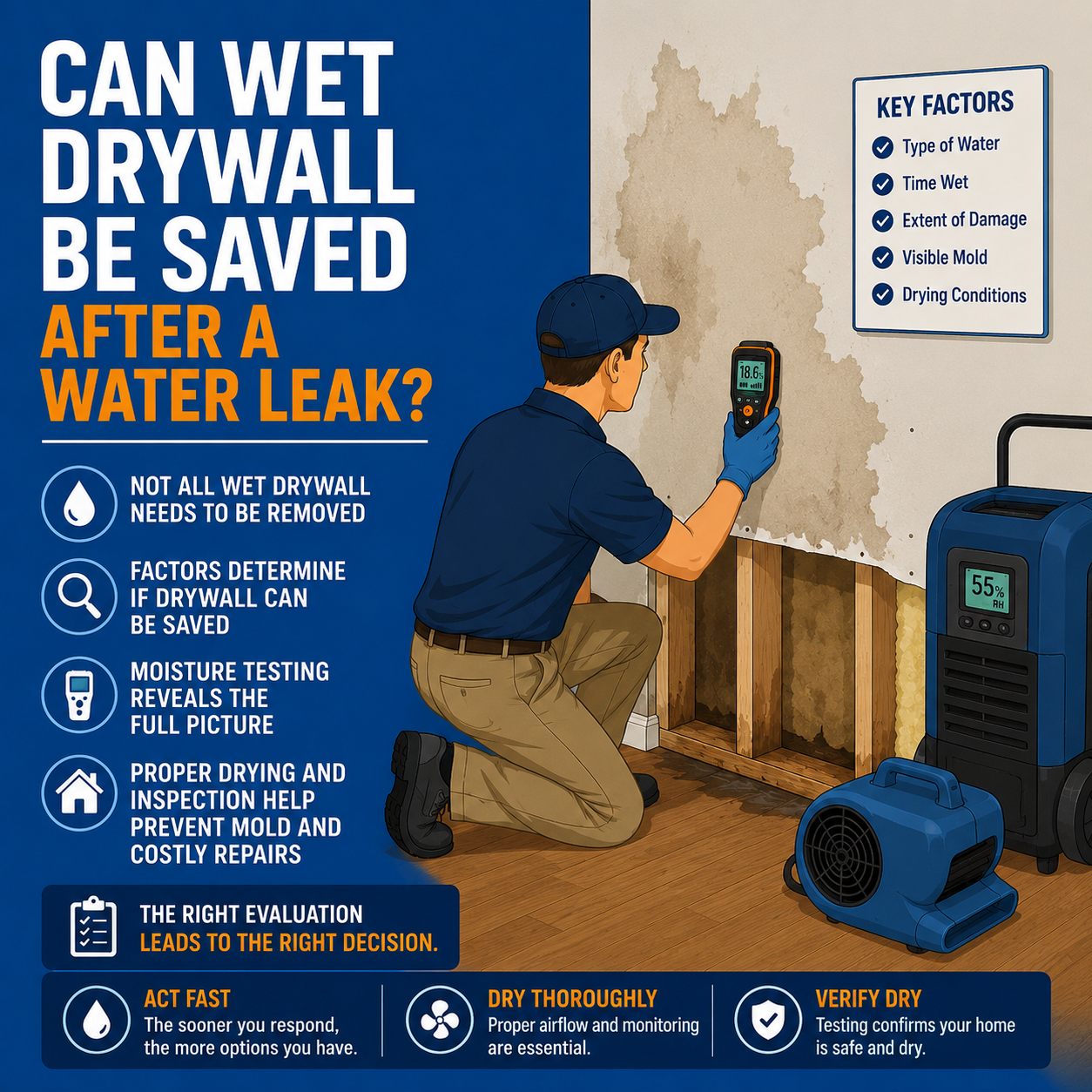
Whether wet drywall can be saved depends on how much water entered the material, how long it remained wet, the source of the water, and whether mold has begun to develop. In many cases, drywall exposed to clean water for a short period can be successfully dried. However, prolonged moisture or contaminated water often requires removal and replacement.
Not Every Wet Wall Needs to Be Demolished
One of the most common misconceptions after a plumbing leak is that every piece of wet drywall must immediately be removed.
That is not always true.
Drywall is a porous material that absorbs water readily, but it can also release moisture if drying begins quickly and the moisture source has been corrected.
During inspections, it is common to find drywall that has elevated moisture content but remains structurally sound because drying efforts started soon after the leak occurred.
The key is determining whether the material has been damaged beyond recovery or whether it can safely return to normal moisture levels.
What Determines Whether Drywall Can Be Saved?
Several factors influence the decision.
Source of the Water
- The type of water is often the most important consideration.
- Category 1 water from a broken supply line generally presents a much lower contamination risk than water originating from a sewage backup or floodwater.
- Even clean water can become contaminated if it remains trapped inside building materials for an extended period.
How Long the Drywall Stayed Wet
- Time matters.
- Microbial growth can begin developing within 24 to 48 hours under favorable conditions.
- The longer drywall remains damp, the greater the likelihood that mold will develop inside the paper facing or wall cavity.
Extent of Water Absorption
- Minor wetting near the bottom of a wall may dry successfully.
- However, drywall that has become saturated throughout its thickness often loses structural integrity.
- Soft drywall, swollen seams, crumbling gypsum, or loose paper facing usually indicate permanent damage.
How Inspectors Evaluate Wet Drywall
Professional assessments rely on multiple observations rather than a single measurement.
An inspection may include:
- Moisture meter readings
- Thermal imaging
- Visual examination
- Relative humidity measurements
- Building history
- Inspection of adjacent materials
- Evaluation of potential hidden moisture inside the wall cavity
These tools help determine whether moisture remains and whether concealed damage may exist behind the finished surface.
Drywall May Look Dry Before It Actually Is
One challenge after a water loss is that painted drywall often appears completely normal while moisture remains trapped inside.
Surface dryness can be misleading.
Moisture commonly remains inside:
- Wall cavities
- Insulation
- Bottom plates
- Baseboards
- Stud faces
This is one reason professional drying contractors continue monitoring moisture levels until materials reach acceptable drying goals rather than relying solely on appearance.
When Removal Is Usually Recommended
Drywall replacement is often appropriate when:
- The drywall has softened or deteriorated.
- Mold growth is visible.
- The paper facing has separated.
- The wall was affected by contaminated water.
- Moisture remained for several days before drying began.
- Hidden microbial growth is suspected inside the wall cavity.
Removing damaged materials also allows the wall cavity to be inspected for additional concealed damage.
Why North Texas Homes Present Unique Challenges
Many North Texas homes are constructed on slab-on-grade foundations with fiberglass-insulated exterior walls.
During the long cooling season, elevated indoor humidity and high attic temperatures can slow drying if airflow is limited.
Summer thunderstorms may also introduce water through roof leaks, window failures, or building envelope deficiencies, allowing moisture to remain hidden inside walls long after the visible leak has stopped.
Because these conditions are often concealed, moisture mapping is an important part of determining the actual extent of damage.
Can You Simply Paint Over Water Damage?
Painting over a water stain does not address the underlying moisture problem.
If moisture remains inside the wall, mold can continue developing behind the paint where it is no longer visible.
The moisture source should always be corrected and the wall verified dry before cosmetic repairs begin.
When Should a Mold Assessment Be Considered?
A licensed Mold Assessment Consultant may recommend further evaluation if:
- The drywall remained wet for several days.
- A musty odor developed.
- Visible mold is present.
- Moisture readings remain elevated after drying.
- The leak source is uncertain.
- Hidden wall cavity damage is suspected.
The objective is to determine whether mold has developed and whether remediation is necessary before reconstruction begins.
Frequently Asked Questions
Can drywall dry on its own?
Sometimes. Minor wetting from clean water may dry naturally if humidity is low and airflow is adequate, but hidden moisture often remains longer than expected.
Does stained drywall always need replacement?
No. Water stains indicate previous moisture exposure but do not automatically mean the drywall has lost structural integrity or contains mold.
Can mold grow behind drywall even if the wall looks normal?
Yes. Concealed mold growth may occur inside wall cavities where moisture remains trapped.
How do professionals know when drywall is dry?
Inspectors and restoration professionals use moisture meters and compare readings with unaffected building materials to verify that drying goals have been achieved.
Should insulation behind wet drywall also be inspected?
Yes. Wet insulation can retain moisture much longer than drywall and may require replacement depending on the material and extent of water exposure.
Wet drywall does not always require replacement, but it should never be judged by appearance alone. The source of the water, how long the wall remained wet, the extent of moisture absorption, and the condition of surrounding materials all influence whether the drywall can be successfully dried or should be removed. A thorough moisture investigation helps ensure hidden damage is identified before repairs begin.
Related Articles
- How Do I Know If a Water Leak Has Caused Hidden Mold?
- Why Moisture Mapping Is Critical Before Mold Remediation in Texas Homes
- How Long Does It Take for Mold to Grow After Water Damage? The 48 Hour Rule
Dennis Butts is a Texas licensed Mold Assessment Consultant and principal of NTX Enviro Consulting Services, providing mold inspections, remediation protocols, and post remediation verification services throughout North Texas.
NTX Enviro provides professional mold inspections and moisture evaluations for homeowners throughout North Texas.