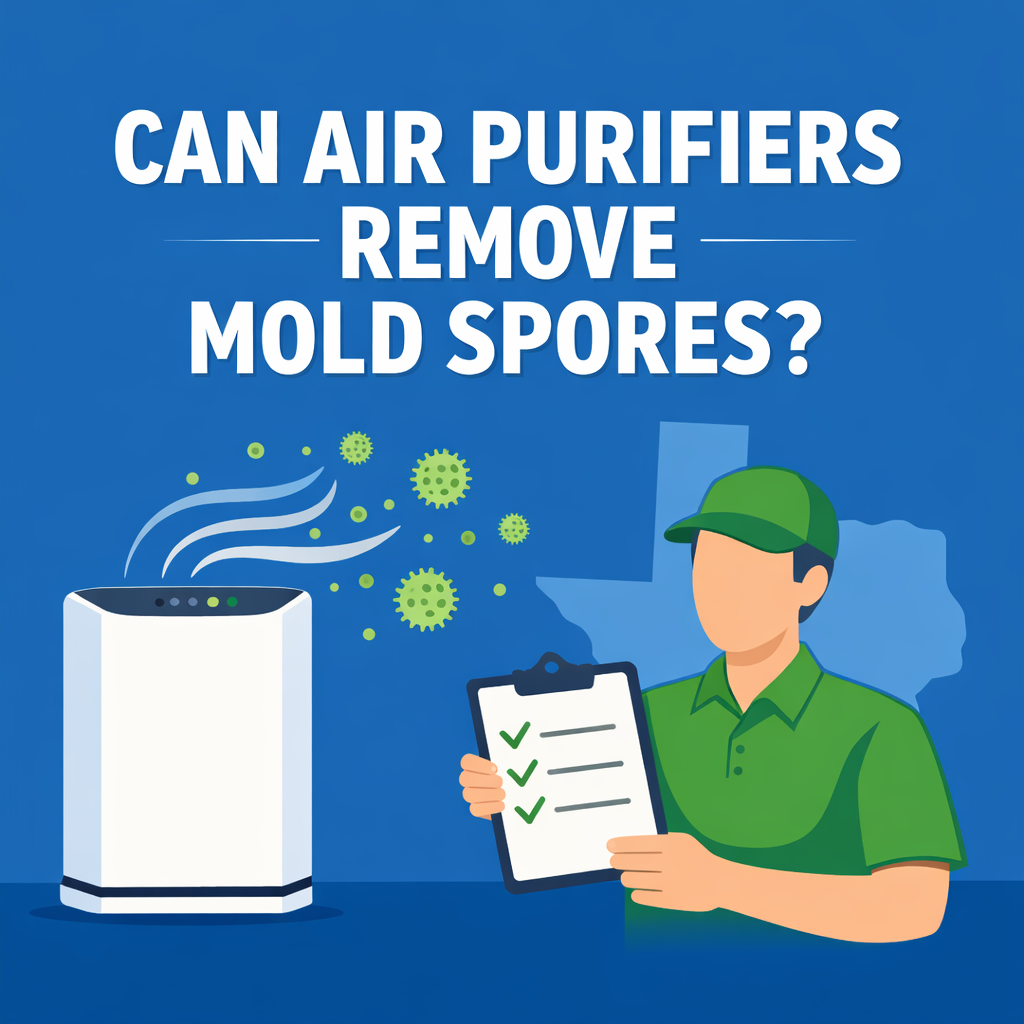
Air purifiers are often marketed as a solution for improving indoor air quality, especially for individuals concerned about allergens, dust, and airborne contaminants. A common question homeowners ask is whether these devices can remove mold spores from indoor air. While air purifiers can play a role in reducing airborne particles, their effectiveness in addressing mold-related concerns depends on several important factors.
Understanding how mold spores behave, how air purifiers function, and what limitations exist can help property owners make informed decisions about indoor air quality and when professional evaluation may be appropriate.
How Mold Spores Exist in Indoor Air
Mold spores are microscopic particles that are naturally present in both indoor and outdoor environments. In most buildings, a certain level of airborne spores is expected and considered part of a normal fungal ecology. These spores can enter a home through open doors and windows, HVAC systems, or by attaching to clothing and personal belongings.
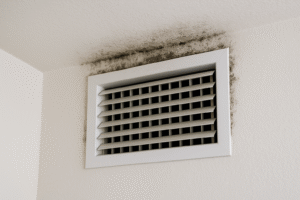
When moisture is present, spores can settle onto surfaces and begin to grow. Once growth occurs, additional spores may be released into the air, increasing indoor concentrations. It is important to recognize that mold issues are not solely defined by airborne spores, but rather by the presence of active growth and the conditions that support it.
Air sampling is sometimes used during a mold inspection to evaluate whether indoor spore levels are consistent with outdoor conditions or if an abnormal indoor source may be present.
How Air Purifiers Work
Air purifiers are designed to remove airborne particles using various filtration technologies. The most common and effective type for particulate removal is a High Efficiency Particulate Air filter, commonly referred to as a HEPA filter.
HEPA filters are capable of capturing very small particles, including many mold spores. Common indoor species, such as Aspergillus and Penicillium, typically fall within the 2 to 10 micron size range, making them effectively removable through HEPA filtration. When functioning properly, a HEPA-equipped air purifier can reduce the concentration of airborne spores circulating within a space.
Some air purifiers also incorporate additional technologies such as activated carbon filters for odors or ultraviolet light systems intended to inactivate microorganisms. While these features may provide supplemental benefits, the primary mechanism for removing mold spores from the air remains mechanical filtration.
Limitations of Air Purifiers for Mold Control
Although air purifiers can reduce airborne spores, they do not address the underlying cause of mold growth. This is a critical distinction. Mold issues are driven by moisture, not simply by the presence of spores.
Several limitations should be considered:
Air purifiers only treat the air that passes through the unit. They do not remove spores that have settled on surfaces such as drywall, carpet, or furnishings.
They do not eliminate active mold growth. If mold is present on building materials, it will continue to release spores regardless of air filtration.
They are limited by room size, airflow patterns, and placement. Areas with poor circulation may not benefit fully from a single unit.
They do not correct moisture problems such as leaks, condensation, or elevated humidity levels.
Because of these limitations, air purifiers should be viewed as a supplemental tool rather than a primary solution for mold-related concerns.
When Air Purifiers May Be Helpful
Air purifiers can still provide value in certain situations when used appropriately.
During or after remediation activities, air filtration devices equipped with HEPA filters are often used to capture airborne particles generated during cleaning or removal processes. This helps reduce cross-contamination and supports the restoration of normal indoor conditions.
In homes with elevated dust or allergen levels, air purifiers may improve general air quality, which can be beneficial for occupants with sensitivities.
They may also help reduce transient increases in airborne spores following disturbances such as cleaning, HVAC operation, or movement within the space.
However, these benefits are most effective when the underlying environment has already been corrected and does not support ongoing mold growth.
The Role of Moisture Control in Mold Prevention
The most effective way to control mold is to manage moisture. Without a moisture source, mold growth cannot be sustained, regardless of the number of spores present in the air.
Common contributors to indoor moisture include:
Roof or plumbing leaks
Improper drainage around the foundation
High indoor humidity levels
HVAC system issues leading to condensation
Poor ventilation in bathrooms, kitchens, or attics
Maintaining indoor relative humidity below approximately 60 percent, promptly addressing water intrusions, and ensuring proper ventilation are key steps in preventing mold growth.
Air purifiers do not address any of these conditions. As a result, relying solely on filtration without correcting moisture issues will not resolve a mold problem.
When a Professional Mold Inspection May Be Appropriate
If a home has experienced a water event, persistent humidity issues, or visible signs of suspect microbial growth, a professional mold inspection may be warranted.
A licensed Mold Assessment Consultant in Texas evaluates several factors, including:
Visual observations of building materials
Moisture measurements to identify active or historical water issues
Assessment of conditions consistent with mold growth
Air or surface sampling when appropriate to evaluate fungal ecology
The goal of an inspection is not simply to detect spores, but to determine whether conditions exist that require corrective action. This includes identifying the source of moisture and defining the extent of any impact.
In situations where air purifiers are being considered due to ongoing concerns, it is often beneficial to first determine whether an underlying mold or moisture issue is present.
Air purifiers can remove some mold spores from indoor air, particularly when equipped with HEPA filtration. However, they do not address the root cause of mold growth and should not be relied upon as a standalone solution.
Effective mold control requires identifying and correcting moisture sources, removing affected materials when necessary, and restoring the indoor environment to a normal fungal ecology. Air purifiers may serve as a supportive measure, but they cannot replace proper assessment and remediation practices.
For homeowners experiencing ongoing air quality concerns, musty odors, or suspected mold conditions, a professional evaluation can provide clarity and help ensure that any issues are addressed appropriately and in accordance with Texas regulations.
Dennis Butts is a Texas licensed Mold Assessment Consultant and principal of NTX Enviro Consulting Services, providing mold inspections, remediation protocols, and post remediation verification services throughout North Texas.
👉 Schedule a Professional Mold Inspection with NTX Enviro Today