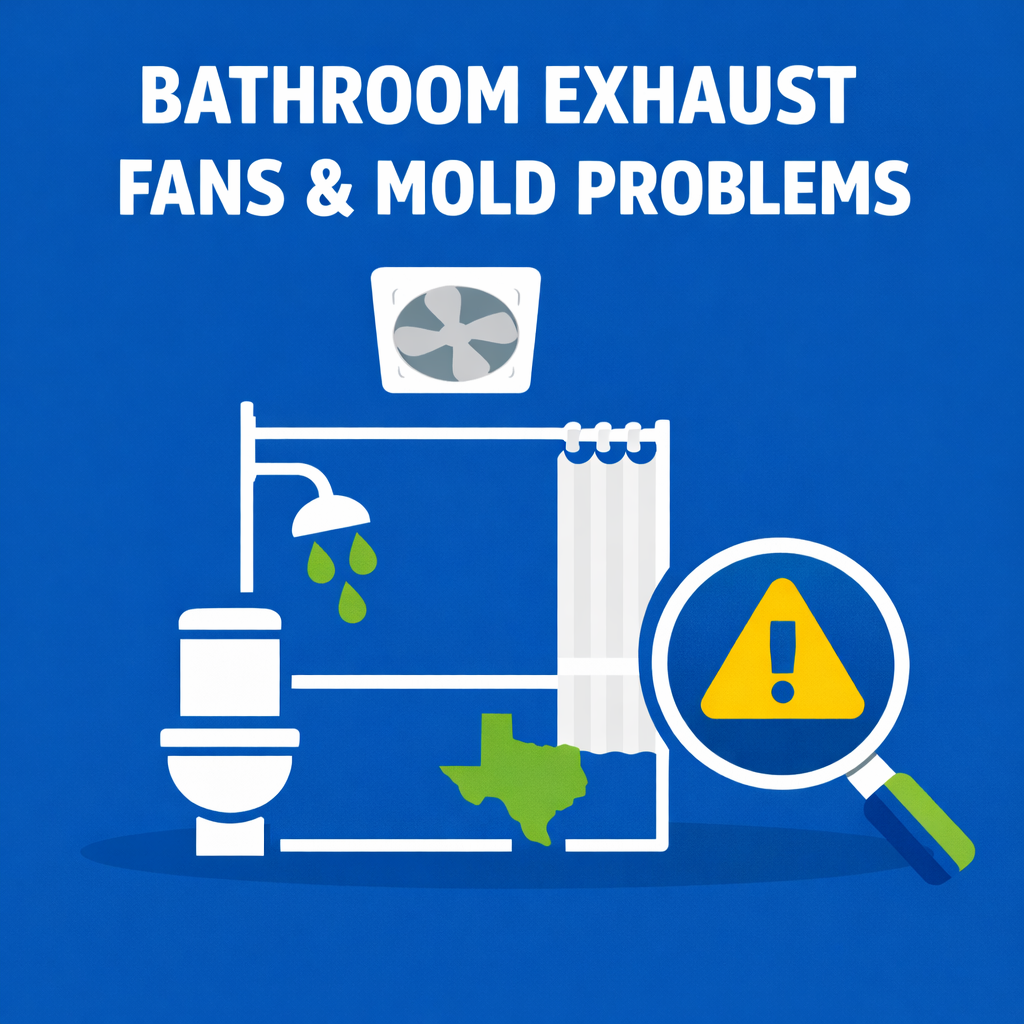
Bathroom exhaust fans play a critical role in controlling moisture inside Texas homes, yet they are often overlooked until mold problems develop. When exhaust fans are undersized, improperly vented, or not used consistently, moisture can accumulate in walls, ceilings, and attic spaces, creating conditions favorable for mold growth.
Why Bathrooms Are High Moisture Areas
Bathrooms generate large amounts of moisture from showers, baths, and sinks. In North Texas, already high ambient humidity can compound this issue. Without effective ventilation, warm moist air condenses on cooler surfaces such as drywall, ceiling materials, and framing components.
Over time, repeated moisture exposure can lead to water staining, material deterioration, and microbial growth, even if the bathroom appears clean and well maintained.
Common Exhaust Fan Problems
Many bathroom fans are either undersized for the room or not vented to the exterior of the home. Fans that terminate in attics or wall cavities can introduce moisture directly into concealed building materials. In some cases, fans are functional but rarely used or turned off too soon, preventing adequate moisture removal.
Other issues include clogged fan housings, damaged ducting, or backdraft dampers that no longer seal properly. Each of these conditions can allow moisture to remain trapped where mold growth can occur.
👉 The Hidden Mold Risks in North Texas Homes Built Before 1980
How Mold Develops from Poor Ventilation
When moisture lingers in ceiling cavities or wall assemblies, mold often develops on the back side of drywall or within insulation. These areas are not visible during normal use and may go unnoticed until odors, staining, or elevated indoor fungal levels are detected.
Because the moisture source is intermittent, mold growth may appear patchy or seasonal, making it difficult for homeowners to identify the cause without a professional assessment.
When a Mold Assessment Is Warranted
A licensed mold assessment consultant can evaluate whether bathroom related moisture has resulted in conditions consistent with mold growth. This typically includes a visual inspection, moisture measurements, and sampling when appropriate to characterize the indoor environment.
In Texas, remediation decisions must be based on documented findings. A proper assessment ensures that any remediation scope addresses both the affected materials and the underlying moisture issue.
Preventing Future Problems
Improving bathroom ventilation is one of the most effective ways to reduce mold risk. This may include upgrading to a properly sized exhaust fan, ensuring it vents to the exterior, and allowing the fan to run long enough after use to remove residual moisture.
Addressing ventilation issues early can help prevent hidden moisture damage and reduce the likelihood of future mold remediation.
👉 The 48-Hour Rule: Why Fast Action After Water Damage Prevents Mold
Bathroom exhaust fans are a small component with a big impact on indoor moisture control. In Texas homes, improper ventilation can quietly contribute to mold growth in concealed spaces. Homeowners noticing recurring condensation, odors, or ceiling discoloration should consider a professional mold assessment to determine whether hidden moisture issues are present.
Looking for a mold inspector you can trust?
👉 Schedule a Professional Mold Assessment with NTX Enviro Today
Dennis Butts is a Texas-licensed Mold Assessment Consultant (MAC) and principal of NTX Enviro Consulting Services. He provides mold inspections, remediation protocols, and post-remediation verification services throughout North Texas.