📞 (972) 643-8379 Monday to Friday 8:00 am - 5:00 pm, Saturday & Sunday - CLOSED

Why Does Mold Keep Coming Back After Remediation?

One of the most frustrating situations homeowners face is discovering mold growth months after remediation was completed. Understandably, many assume the remediation failed or that the mold was never removed in the first place.
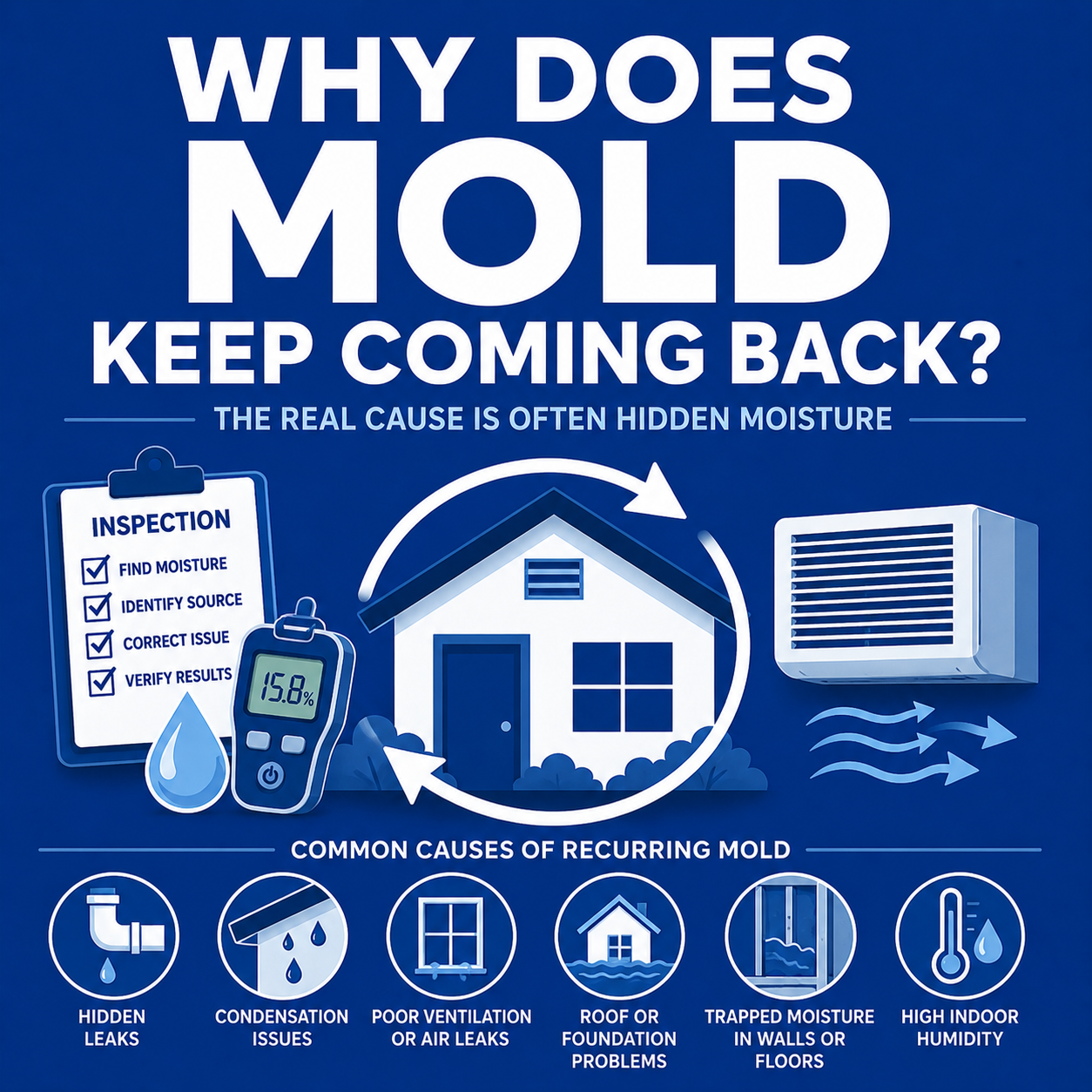
In reality, recurring mold growth does not always indicate poor remediation. In many cases, the original mold contamination was successfully addressed, but the underlying moisture conditions that allowed mold to develop were not fully corrected.
Mold requires moisture to grow. If moisture continues to enter the building through leaks, humidity problems, condensation, or hidden building deficiencies, new mold growth can develop even after remediation has been completed properly.
Understanding why mold sometimes returns can help property owners identify the real source of the problem and prevent repeated remediation expenses.
Remediation Removes Mold, Not Moisture Sources
One of the most common misconceptions is that mold remediation permanently solves a mold problem.
The purpose of remediation is to remove mold contamination and affected materials. Remediation alone does not guarantee that future mold growth cannot occur.
Successful long-term results require two separate objectives:
- Removal of existing mold contamination
- Correction of the conditions that allowed mold growth to develop
If moisture intrusion continues after remediation, new mold growth may eventually occur regardless of how thoroughly the original remediation was performed.
This is why identifying and correcting moisture sources is often the most important part of the process.
Hidden Moisture Sources Are Frequently Missed
Many recurring mold problems originate from moisture sources that remain concealed after repairs appear complete.
Examples may include:
- Slow plumbing leaks inside walls
- Window and door leakage
- Roof leaks
- Building envelope penetrations
- Condensation within wall cavities
- Foundation moisture intrusion
- HVAC condensate drainage problems
A repaired area may appear dry and clean while moisture continues to affect adjacent building materials that were not originally identified.
In some cases, the visible mold was treated successfully, but the actual moisture source was never completely located.
Months later, new mold growth develops and appears to be the same problem returning.
Elevated Humidity Can Create New Mold Growth
Recurring mold is not always associated with a leak.
In North Texas, elevated indoor humidity is a common contributor to mold growth, particularly during summer months.
Humidity-related mold often develops on:
- Supply vents
- Exterior walls
- Closet contents
- Stored belongings
- Window frames
- Attic framing
- HVAC components
If indoor humidity remains elevated following remediation, mold may develop in entirely different locations than the original affected area.
Homeowners sometimes believe the original mold has returned when the actual issue is ongoing humidity control deficiencies.
Common causes of elevated indoor humidity include:
- Oversized HVAC systems
- Improper thermostat settings
- Duct leakage
- Building air leakage
- Inadequate ventilation
- Excessive outdoor air infiltration
When humidity control problems remain unresolved, mold growth may continue despite previous remediation efforts.
Related Articles
👉 Why Elevated Humidity Alone Can Create Mold Risk in Texas Homes
👉 What Humidity Level Causes Mold Growth in Homes
Building Materials Can Retain Hidden Moisture
Some building materials dry much more slowly than homeowners realize.
Materials that commonly retain moisture include:
- Wood framing
- Subfloors
- Insulation
- Carpet padding
- Wall cavities
- Cabinetry
- Structural sheathing
Although visible surfaces may appear dry, moisture can remain trapped inside concealed spaces for extended periods.
If drying efforts were incomplete or moisture monitoring was inadequate, residual moisture may continue supporting microbial growth after repairs have been completed.
This is one reason moisture verification is often an important component of restoration projects.
HVAC Systems Can Reintroduce Contamination
In some situations, HVAC systems contribute to recurring mold concerns.
This does not necessarily mean mold is actively growing throughout the duct system. Instead, HVAC-related conditions may create ongoing moisture or particulate distribution issues.
Examples include:
- Condensation at supply boots
- Dirty evaporator coils
- Improperly insulated ductwork
- Duct leakage
- Elevated humidity within HVAC components
- Airflow deficiencies
If moisture conditions exist within portions of the HVAC system, mold may continue to develop even after remediation has been completed elsewhere in the home.
Because HVAC systems influence air movement throughout the building, unresolved HVAC issues can affect multiple areas simultaneously.
The Original Scope May Not Have Captured the Entire Problem
Mold growth often extends beyond what is initially visible.
For example, visible growth beneath a window may actually be connected to moisture damage extending into wall cavities, framing members, insulation, or adjacent rooms.
Similarly, a roof leak may affect multiple concealed areas before visible symptoms appear indoors.
If the original assessment did not identify all affected materials, remediation may successfully address the areas identified while additional impacted materials remain undiscovered.
This is not always the result of poor workmanship. Hidden conditions can be difficult to identify without invasive investigation or destructive access.
When recurring mold develops shortly after remediation, additional evaluation is often warranted to determine whether previously concealed damage exists.
Why Verification Is Important After Remediation
One of the best ways to reduce the likelihood of recurring problems is ensuring that remediation is followed by appropriate verification.
Verification helps confirm:
- Mold contamination has been addressed
- Moisture sources have been corrected
- Affected materials have been properly cleaned or removed
- Clearance objectives have been achieved when applicable
While verification cannot guarantee that future moisture events will never occur, it can provide confidence that conditions were acceptable at the time remediation was completed.
Related Article
👉 Why Post Remediation Verification Is Critical After Mold Removal in Texas
When Should Additional Evaluation Be Considered?
A follow-up inspection may be appropriate when:
- Mold reappears in the same location
- New mold growth develops nearby
- Musty odors persist after remediation
- Moisture staining returns
- Indoor humidity remains elevated
- Condensation issues continue
- Occupants suspect ongoing moisture intrusion
A thorough evaluation can help determine whether the issue involves a new moisture event, unresolved building deficiencies, hidden damage, or environmental conditions that continue to support mold growth.
Mold that returns after remediation does not always mean the remediation failed. In many cases, recurring mold growth is the result of unresolved moisture intrusion, elevated indoor humidity, hidden building deficiencies, or previously unidentified affected materials. Because mold requires moisture to grow, long-term success depends on both removing contamination and correcting the conditions that allowed it to develop.
Understanding the true source of recurring mold growth can help property owners avoid repeated remediation efforts and focus on addressing the underlying cause of the problem.
Related Articles
👉 Why Moisture Mapping Is Critical Before Mold Remediation in Texas Homes
👉 Why Elevated Humidity Alone Can Create Mold Risk in Texas Homes
👉 Why Post Remediation Verification Is Critical After Mold Removal in Texas
Dennis Butts is a Texas licensed Mold Assessment Consultant and principal of NTX Enviro Consulting Services, providing mold inspections, remediation protocols, and post remediation verification services throughout North Texas.
NTX Enviro provides professional mold inspections and moisture evaluations for homeowners throughout North Texas.