📞 (972) 643-8379 Monday to Friday 8:00 am - 5:00 pm, Saturday & Sunday - CLOSED

How to Tell If a Water Leak Is Old or New

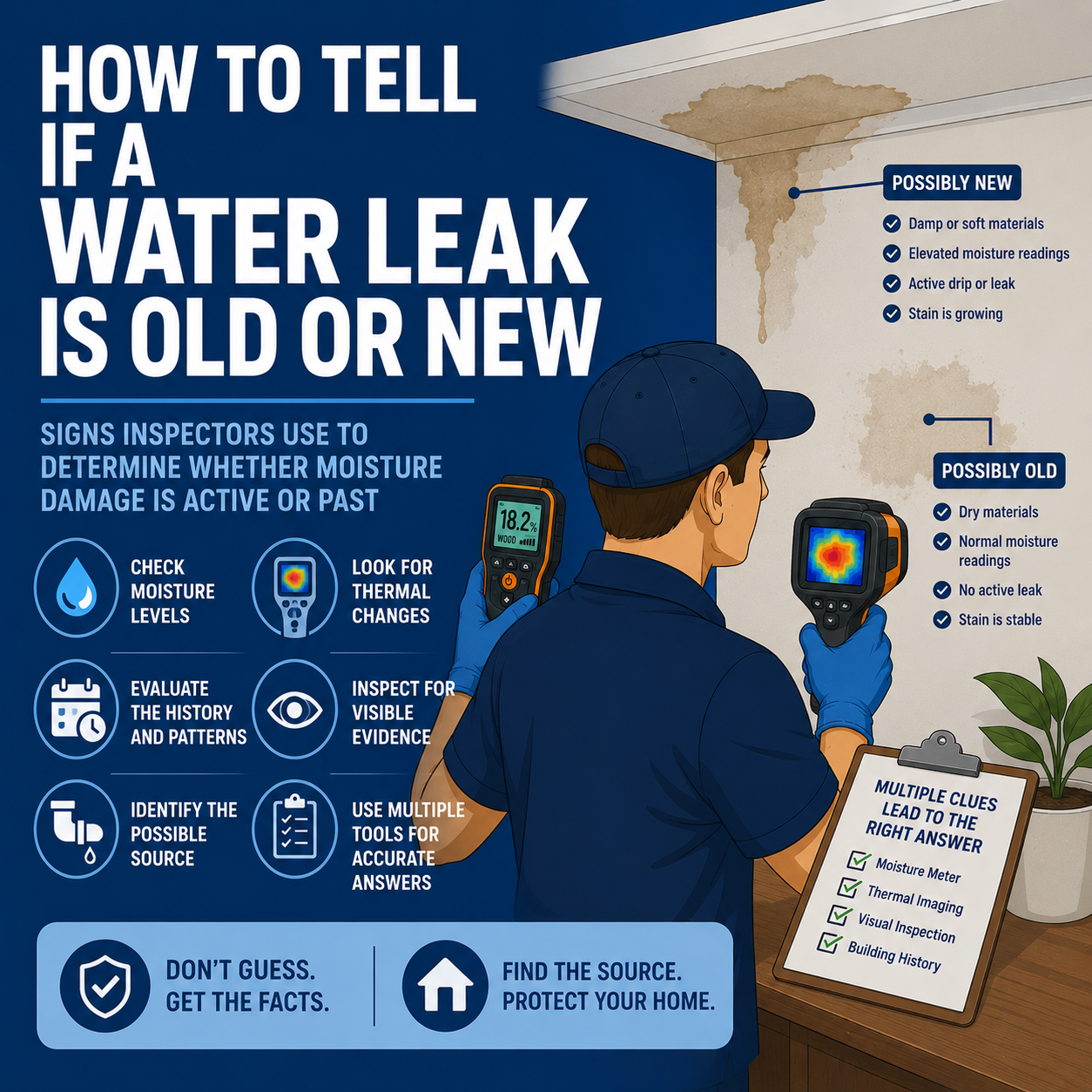
A water stain on a wall or ceiling does not necessarily mean a leak is still active. Many stains remain visible long after building materials have dried. Determining whether a leak is old or new requires evaluating moisture levels, building conditions, and evidence of ongoing water intrusion rather than relying on appearance alone.
Water Stains Can Last for Years
Homeowners are often surprised to learn that drywall can remain permanently stained even after a leak has been repaired.
Minerals, dirt, rust, and other contaminants carried by the water frequently leave discoloration behind. Once the building materials have dried, those stains often remain visible until the surface is repainted or replaced.
The stain itself does not indicate whether moisture is still present.
Signs a Leak May Still Be Active
During a moisture investigation, inspectors look for evidence that water is continuing to enter the building.
Common indicators include:
- Elevated moisture meter readings
- Damp or soft drywall
- Peeling paint
- Bubbling drywall tape
- New staining that continues to expand
- Water droplets or condensation
- Musty odors associated with persistent moisture
These findings suggest that additional investigation is needed to identify the current source of water intrusion.
Signs the Leak May Be Old
Some conditions indicate that moisture exposure likely occurred in the past rather than continuing today.
These include:
- Dry moisture meter readings
- Stable water stains that have not changed
- No evidence of elevated humidity
- No visible deterioration
- No active plumbing or roof leak
- Historical documentation of previous repairs
Even when the leak has been corrected, previous water damage may still require cosmetic repairs or evaluation for concealed mold if materials remained wet for an extended period.
Why Moisture Meters Are So Important
Visual observations alone cannot determine whether a leak is active.
Professional inspectors use moisture meters to compare suspect materials with nearby dry building materials.
If readings are similar throughout the surrounding area, the stain may simply represent historic damage.
If readings remain elevated, further investigation is often necessary.
Moisture mapping helps identify whether the affected area is isolated or part of a larger moisture problem.
Thermal Imaging Adds Valuable Information
Thermal cameras identify temperature differences that may indicate moisture movement.
However, a thermal image alone cannot confirm a leak.
Cooler temperatures may also result from:
- Air conditioning ducts
- Missing insulation
- Air leakage
- Structural framing
Thermal imaging is most effective when combined with moisture measurements and a thorough visual inspection.
Why the Source Matters
Knowing where the water originated helps determine both the risk and the appropriate repairs.
Common sources include:
Plumbing Leaks
Supply line failures, drain leaks, and appliance connections often create localized damage.
Roof Leaks
Heavy North Texas thunderstorms, hail damage, and flashing failures frequently allow rainwater to enter ceilings and exterior walls.
Window and Door Leaks
Improper flashing, failed sealants, or building envelope deficiencies may allow water intrusion during wind-driven rain.
HVAC Problems
Condensation, clogged drain lines, and improperly insulated ductwork can create recurring moisture that is mistaken for roof leaks.
Each source requires a different repair strategy.
Can Mold Grow from an Old Leak?
Yes.
If building materials remained wet long enough before the leak was repaired, mold may have developed even though the materials are now dry.
Conversely, a recent leak that is dried quickly may never support mold growth.
This is why moisture history is just as important as current moisture conditions.
When Should You Schedule a Professional Inspection?
Professional evaluation may be appropriate if:
- You do not know where the stain came from.
- The stain appears to be growing.
- Moisture readings remain elevated.
- You notice a musty odor.
- The property recently experienced storm damage.
- You are buying or selling the home.
- Previous repairs cannot be verified.
Identifying whether the leak is active allows repairs to focus on correcting the actual source rather than treating only the cosmetic damage.
Frequently Asked Questions
Can a dry water stain still indicate mold?
Yes. Mold may have developed while the materials were wet even if they have since dried.
Does a brown ceiling stain always mean the roof is leaking?
No. Plumbing leaks, HVAC condensate, and previous water damage can produce similar staining.
Can moisture meters determine how old a leak is?
No. Moisture meters identify current moisture conditions but cannot determine exactly when water entered the material.
Should I repaint over an old water stain?
Only after confirming that the leak has been repaired and the materials are completely dry.
Why do inspectors use both moisture meters and thermal cameras?
Each tool provides different information. Moisture meters verify moisture, while thermal imaging helps locate areas that may require further evaluation.
Determining whether a water leak is old or new involves much more than looking at a stain. Professional inspectors evaluate moisture content, building conditions, thermal patterns, and the history of the property to determine whether water intrusion is ongoing or represents past damage. Identifying the difference helps homeowners make informed decisions about repairs while avoiding unnecessary demolition.
Related Articles
- How Do I Know If a Water Leak Has Caused Hidden Mold?
- Why Moisture Mapping Is Critical Before Mold Remediation in Texas Homes
- What Are the Most Common Causes of Indoor Moisture Problems in Homes?
Dennis Butts is a Texas licensed Mold Assessment Consultant and principal of NTX Enviro Consulting Services, providing mold inspections, remediation protocols, and post remediation verification services throughout North Texas.
NTX Enviro provides professional mold inspections and moisture evaluations for homeowners throughout North Texas.