📞 (972) 643-8379 Monday to Friday 8:00 am - 5:00 pm, Saturday & Sunday - CLOSED

Does Mold Die When It Dries Out in Your Home?

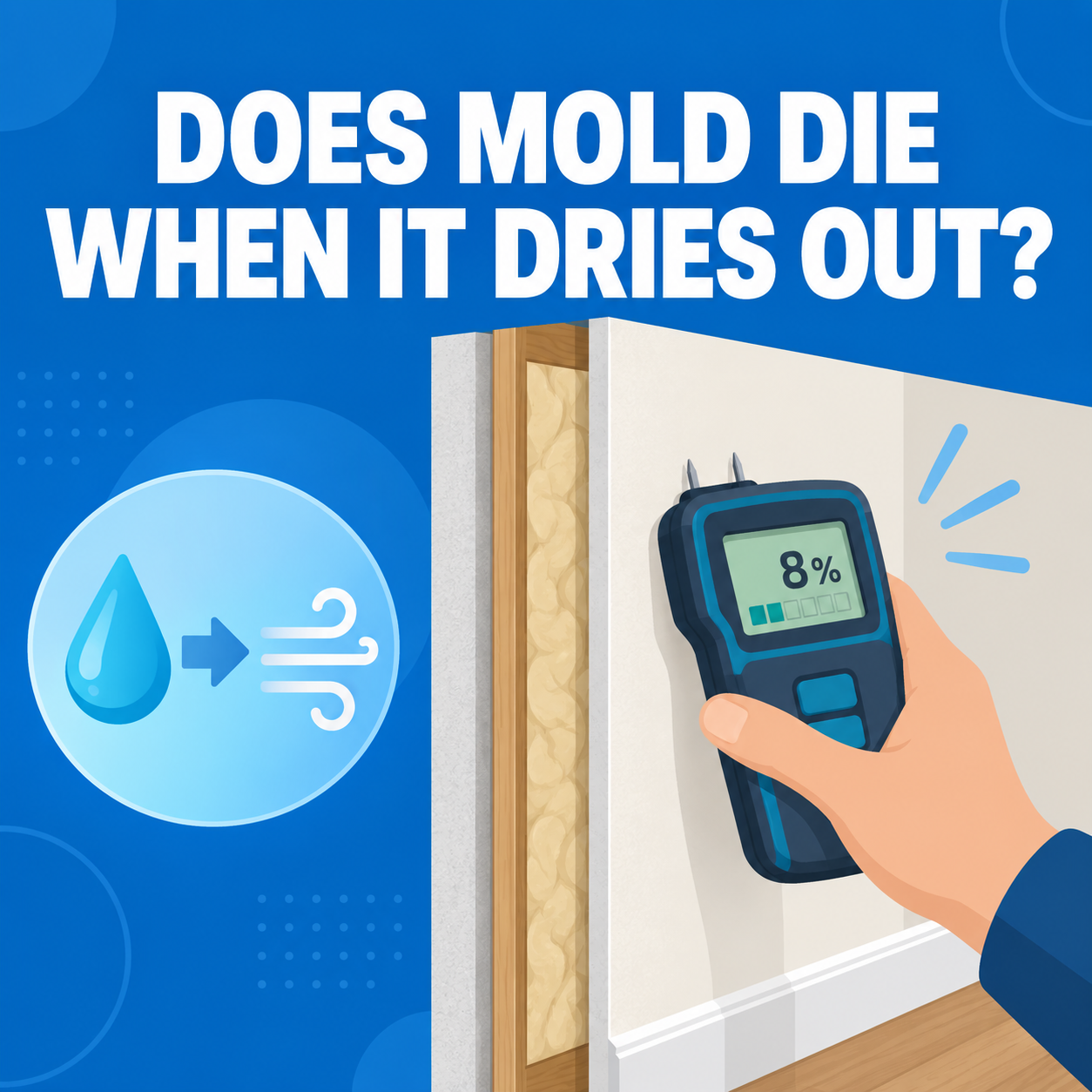
Mold does not necessarily die when it dries out. Removing moisture generally stops active fungal growth, but spores, fragments, and visible growth may remain on the material. Some fungal structures may survive dry conditions and become active again if sufficient moisture returns. Drying the area is essential, but it is not the same as removing mold contamination.
This distinction matters when a homeowner discovers mold after a plumbing leak, roof leak, appliance failure, or period of elevated indoor humidity. A dry moisture reading is encouraging because it indicates that the material may no longer be supporting active growth. It does not establish that the affected material is clean or that remediation is unnecessary.
What Happens to Mold When Moisture Is Removed?
Mold requires available moisture to grow. When a wet building material dries sufficiently, active growth generally stops because the fungus no longer has the moisture needed to continue colonizing the surface.
What happens next depends on several factors:
- The type of fungus
- The material on which it grew
- How long the material remained wet
- Temperature and indoor humidity
- Whether the surface was cleaned
- Whether the material becomes wet again
- The ability of the fungal structures to tolerate drying
Some fungal structures may lose viability during extended dry conditions. Others can remain viable and tolerate periods without sufficient moisture for active growth. Even when the mold is no longer viable, fungal spores, fragments, staining, and damaged material may remain.
Dry conditions control continued growth. They do not automatically return the affected area to an acceptable indoor condition.
Does Mold Die When It Dries Out Completely?
Complete drying may reduce fungal viability, but it should not be assumed that all mold has died simply because the material is dry.
Different fungi tolerate dry conditions differently. Conditions also vary within the same wall, cabinet, flooring assembly, or insulation cavity. The exposed surface may be dry while moisture remains within another material layer or in a concealed space.
More importantly, whether every fungal structure remains alive is usually not the most useful question during a building investigation. The practical questions are:
- Has the moisture source been identified and corrected?
- Are the affected materials now dry?
- Is fungal growth or contamination still present?
- Can the material be effectively cleaned?
- Has the material deteriorated or become unsuitable for continued use?
- Is there evidence of concealed damage?
The answers help determine the appropriate next steps more reliably than trying to prove whether the growth is alive or dead.
Is Dry or Dead Mold Still a Concern?
Dry or nonviable mold should not automatically be considered harmless.
Fungal spores and fragments can remain on surfaces after the material dries. They may be disturbed during demolition, cleaning, renovation, air movement, or ordinary occupant activity. The EPA notes that dead mold may still cause allergic reactions in some people and explains that simply killing mold is not an adequate substitute for removing it.
The condition of the material must also be considered. Drywall, insulation, carpet padding, and other porous materials can be difficult to clean effectively after fungal growth has become established. Wood framing and certain other materials may sometimes be cleaned, depending on their condition and the requirements of the remediation plan.
The goal of remediation is not merely to make fungal growth inactive. It is to correct the moisture problem and remove contamination from materials that can be cleaned or remove materials that cannot be adequately restored.
Can Dry Mold Start Growing Again?
Fungal growth may resume if affected materials are exposed to sufficient moisture again.
A wall cavity may dry after a roof leak and then become wet during the next severe storm. Condensation may disappear during cooler weather and return during the North Texas cooling season. A slow plumbing leak may stop temporarily before recurring. Elevated indoor humidity may also fluctuate with HVAC operation, ventilation, occupancy, and outdoor conditions.
If fungal structures remain on a suitable material and moisture returns, the conditions may once again support growth. New growth can also develop from the fungal spores normally present in indoor and outdoor air.
This is why applying paint or an encapsulating coating over an uncorrected moisture problem is not a dependable solution. The surface may look improved temporarily while the underlying condition continues.
Why a Dry Moisture Reading Does Not Prove the Problem Is Resolved
A moisture meter provides information about conditions at the time and location of the reading. It does not show how wet the material was previously or prove that moisture will not return.
During mold and moisture investigations, it is common to find dry materials with visible staining or fungal growth. Several explanations are possible:
- The leak stopped before the inspection.
- Rainwater entered during an earlier storm and later evaporated.
- Air conditioning or dehumidification dried the material.
- The moisture source is intermittent.
- The affected surface dried while concealed materials remained wet.
- The homeowner shut off a plumbing fixture or appliance.
- The area experiences seasonal condensation.
Moisture readings should therefore be interpreted with visible conditions, thermal patterns, material deterioration, occupant observations, weather history, and the suspected source of water.
A dry reading is one piece of evidence. It is not proof that fungal growth never occurred or that no corrective work is needed.
Drying Versus Mold Remediation
Drying and mold remediation serve related but different purposes.
| Drying | Mold remediation |
|---|---|
| Removes excess moisture from materials and air | Removes fungal growth and contamination |
| Helps stop continued fungal growth | Addresses materials already affected |
| Uses extraction, dehumidification, airflow, or controlled heat | Uses controlled removal and cleaning procedures |
| Verifies moisture conditions | Verifies cleanliness and completion of the remediation scope |
| Does not necessarily remove spores or fungal fragments | Is intended to remove affected materials or clean salvageable surfaces |
A water-damage response may prevent mold growth when wet materials are identified and dried promptly. Once fungal growth has developed, drying alone does not remove what is already present.
This is one reason early moisture detection is important. Finding and drying wet materials before growth becomes established can substantially change the amount of work required.
Can Mold Be Killed Instead of Removed?
Homeowners are often drawn to products or treatments that claim to kill mold. However, killing mold does not remove the remaining spores, fragments, damaged material, or underlying moisture source.
The EPA does not recommend routine reliance on biocides as a substitute for proper mold cleanup. Its guidance emphasizes removing mold and correcting the moisture problem rather than simply attempting to make the organisms nonviable.
This distinction is especially important on porous building materials. A chemical treatment may contact the exposed surface without adequately addressing growth within the material or behind it. Surface discoloration may also remain even if fungal viability is reduced.
The appropriate response depends on the material, extent of growth, source of moisture, accessibility, and applicable remediation requirements.
How an Inspector Evaluates Previously Wet Materials
When an area is dry during an assessment, the investigation does not end with the moisture reading. The inspector may evaluate:
- Visible fungal growth or suspected growth
- Water staining and migration patterns
- Swelling, delamination, or deterioration
- Current moisture levels compared with surrounding materials
- Plumbing, roofing, HVAC, or exterior conditions
- Occupant reports and repair history
- Conditions within accessible adjoining areas
- The need for environmental sampling
- The possibility of concealed damage
- Whether additional invasive investigation is appropriate
Laboratory testing may help identify fungal conditions, but it does not replace the physical investigation. Air sampling also cannot prove that every concealed surface is free of growth.
The objective is to understand what became wet, why it became wet, whether the condition remains active, and what materials may have been affected.
North Texas Conditions That Can Allow Mold to Return
North Texas homes experience a combination of high summer humidity, long air-conditioning seasons, severe thunderstorms, hail-related roof damage, and large temperature differences between indoor and outdoor surfaces.
These conditions can contribute to recurring moisture through:
- Intermittent roof leaks
- Wind-driven rain
- Condensation on HVAC components or supply registers
- Poorly controlled indoor humidity
- Plumbing leaks within slab-on-grade homes
- Air leakage around exterior penetrations
- Inadequate drainage around the foundation
- Moisture entering wall or attic assemblies
An affected area may dry between events, creating the impression that the problem has corrected itself. If the source remains, the material can become wet again and support renewed fungal growth.
When a Professional Mold Assessment May Be Appropriate
A professional assessment may be appropriate when visible growth remains after an area dries, a musty odor continues, the moisture source is uncertain, or concealed materials may have been affected.
An assessment can help determine:
- The apparent extent of the affected area
- Whether additional areas should be investigated
- The likely moisture source
- Whether sampling would provide useful information
- Which materials appear affected
- Whether a remediation protocol is warranted
- What limitations prevent concealed areas from being evaluated
In Texas, licensing requirements may apply depending on the extent and circumstances of the mold project. A licensed Mold Assessment Consultant can evaluate the condition independently and, when warranted, develop a remediation protocol describing the required scope and clearance criteria.
Frequently Asked Questions
How long can mold survive without moisture?
There is no single survival period that applies to every type of mold or building condition. Some fungal structures tolerate drying better than others. Regardless of viability, spores and fragments may remain until the affected surface is properly cleaned or removed.
Does running a dehumidifier kill mold?
A dehumidifier can reduce indoor humidity and help limit continued growth, but it does not remove existing fungal growth from building materials. The moisture source and affected materials must still be evaluated.
Can I paint over mold after the wall dries?
Painting over visible or suspected fungal growth is not a substitute for cleaning or removing affected material. The moisture source should be corrected, and the material should be evaluated before coatings are applied.
If mold is no longer growing, does it still need remediation?
Existing fungal growth generally still requires appropriate removal or cleaning. Drying stops the conditions supporting continued growth, but it does not remove the contamination already present.
Can mold return after the area has been cleaned?
Yes. Mold can grow again if moisture returns or the original source was not adequately corrected. Successful remediation must be paired with effective moisture management.
Mold does not necessarily die when it dries out. Drying removes the moisture needed for active growth, but fungal spores, fragments, staining, and damaged materials may remain. Some fungal structures may also tolerate dry conditions and become active when moisture returns.
A dry moisture reading is an important finding, but it does not prove that an affected surface is clean or that the underlying problem has been permanently corrected. The proper response includes identifying the moisture source, evaluating the affected materials, removing fungal contamination when necessary, and preventing the area from becoming wet again.
Related Articles
- The 48 Hour Rule
- Why Does Mold Keep Coming Back After Remediation?
- How Do I Know If a Water Leak Has Caused Hidden Mold?
- Understanding the Difference Between Mold Assessment and Mold Testing
Dennis Butts is a Texas licensed Mold Assessment Consultant and principal of NTX Enviro Consulting Services, providing mold inspections, remediation protocols, and post remediation verification services throughout North Texas.
NTX Enviro provides professional mold inspections and moisture evaluations for homeowners throughout North Texas.