📞 (972) 643-8379 Monday to Friday 8:00 am - 5:00 pm, Saturday & Sunday - CLOSED

What Do Moisture Meter Readings in Walls Really Mean?

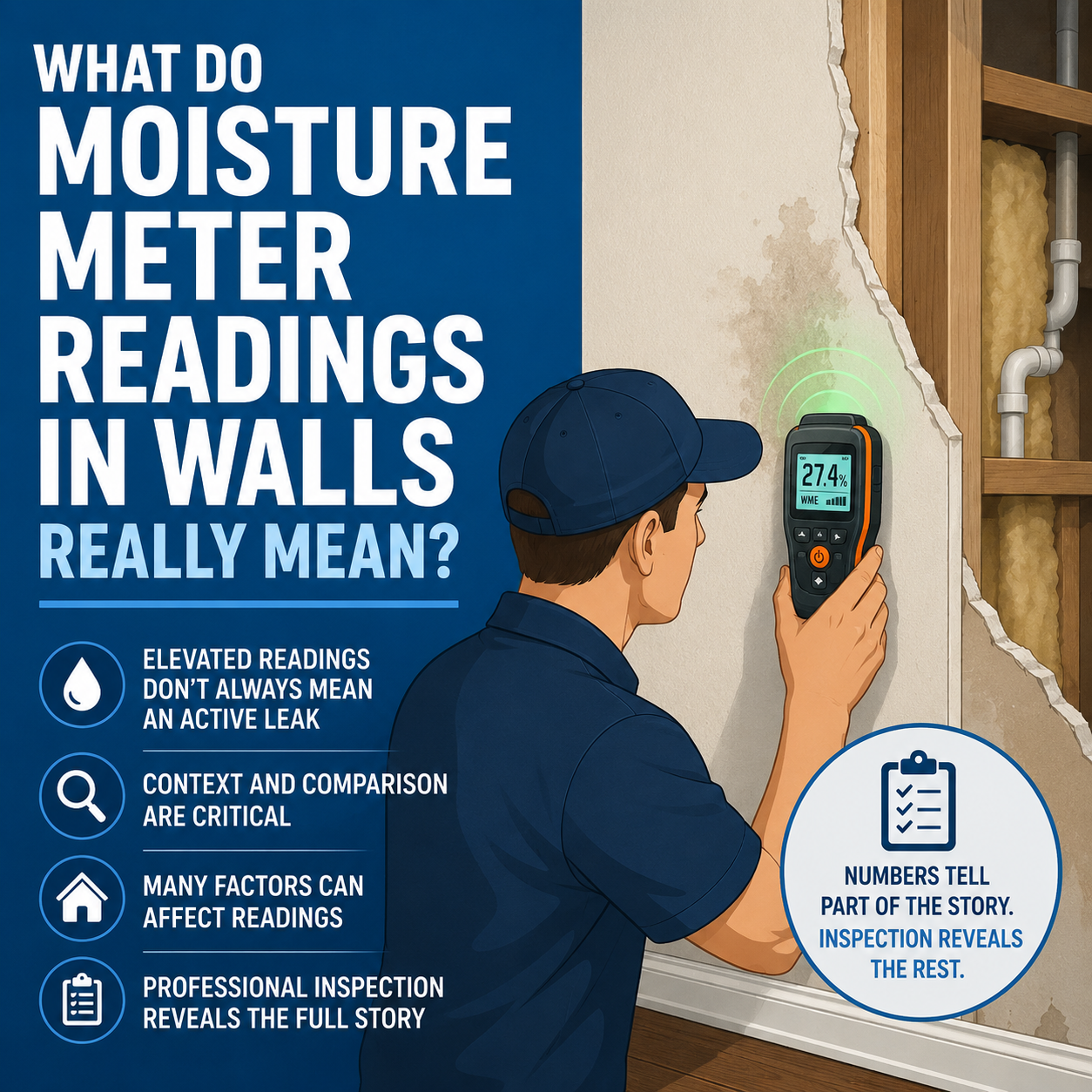
Finding elevated moisture meter readings inside a wall can be concerning, but the numbers alone rarely tell the entire story. A moisture meter is an important diagnostic tool, yet it cannot determine the source of moisture or confirm whether mold is present. Understanding what those readings actually mean helps homeowners make better decisions about repairs and further evaluation.
What Does a Moisture Meter Measure?
One of the biggest misconceptions homeowners have is that a moisture meter directly measures the amount of water inside a wall.
In reality, most non-invasive moisture meters measure changes in the electrical properties of building materials. Increased moisture affects these properties, allowing the meter to identify areas that differ from surrounding materials.
Pin-style meters work differently by measuring electrical resistance between two probes inserted into the material.
Neither type of meter identifies mold or determines whether water damage is old or new.
Instead, moisture meters help inspectors identify areas that deserve closer evaluation.
Why Elevated Readings Do Not Always Mean There Is an Active Leak
During inspections, elevated readings are sometimes discovered even though no plumbing leak or roof leak is currently occurring.
Several factors can influence moisture meter readings, including:
- Recent water intrusion that has already been repaired
- Condensation inside exterior walls
- Building materials that naturally retain moisture
- High indoor humidity
- Construction adhesives
- Metal corner beads, fasteners, or piping behind drywall
This is why readings are always interpreted alongside other inspection findings rather than by themselves.
Why Inspectors Compare Surrounding Areas
A single moisture reading has very little value without context.
Professional inspectors typically establish a baseline by measuring nearby materials that appear dry. Those readings are then compared with the area of concern.
For example, if multiple walls throughout the home produce similar readings, the result may simply reflect the moisture content of the building materials under current environmental conditions.
However, if one isolated area shows significantly elevated readings while surrounding materials remain dry, additional investigation is often warranted.
Looking for patterns is much more useful than focusing on one number.
Moisture Meters Cannot Confirm Mold Growth
Many homeowners assume that a high moisture reading means mold is growing inside the wall.
That is not necessarily true.
Mold requires moisture, but moisture alone does not confirm microbial growth.
Likewise, mold can remain present long after building materials have dried.
Professional mold assessments combine moisture measurements with:
- Visual observations
- Thermal imaging
- Building history
- Indoor humidity measurements
- Airflow evaluation
- When appropriate, environmental sampling
The objective is to understand why moisture is present and whether conditions have supported microbial growth.
Why Thermal Imaging Is Often Used Together With Moisture Meters
Moisture meters and thermal cameras complement one another.
Thermal imaging identifies temperature differences that may indicate moisture, missing insulation, or air leakage.
A thermal anomaly alone does not confirm water damage, but it helps inspectors determine where moisture meter readings should be taken.
Likewise, elevated moisture readings without a corresponding thermal anomaly may suggest an older condition, differences in construction materials, or another explanation.
Using both tools together provides a more complete understanding of what is occurring inside the building.
Common Sources of Elevated Moisture Readings
Some of the most common causes encountered during residential inspections include:
- Plumbing leaks
- Roof leaks
- Window leaks
- Door flashing deficiencies
- Exterior siding or masonry failures
- HVAC condensate problems
- Bathroom or kitchen plumbing
- Condensation caused by elevated indoor humidity
In North Texas homes, severe thunderstorms, wind-driven rain, and prolonged cooling seasons frequently contribute to hidden moisture intrusion that is not immediately visible from the living space.
When Additional Investigation May Be Appropriate
Further evaluation may be recommended when elevated readings are accompanied by:
- Visible staining
- Soft drywall
- Peeling paint
- Musty odors
- Repeated moisture after rainfall
- Elevated indoor humidity
- Thermal imaging anomalies
- Previous water damage
Depending on the findings, limited exploratory openings may be necessary to verify concealed conditions before repairs or remediation begin.
Opening the wall is often the only way to determine the full extent of hidden damage.
Frequently Asked Questions
What is considered a high moisture meter reading?
There is no single number that applies to every building material or every moisture meter. Professional inspectors compare readings with surrounding materials and interpret them within the overall inspection.
Can a moisture meter detect mold?
No. Moisture meters detect changes associated with moisture, not mold growth.
Should I replace drywall because of one high reading?
Not necessarily. Additional investigation is usually needed to determine whether the elevated reading represents active moisture, residual moisture, or another condition.
Can humidity affect moisture meter readings?
Yes. Elevated indoor humidity can increase moisture content in some building materials and may influence readings, particularly during humid North Texas summers.
Why did the inspector use both a thermal camera and a moisture meter?
Each tool provides different information. Thermal imaging helps locate potential problem areas, while moisture meters help verify whether elevated moisture is actually present.
Moisture meter readings are valuable diagnostic information, but they should never be interpreted in isolation. Experienced inspectors evaluate the entire building, compare readings across multiple areas, consider environmental conditions, and identify the underlying source of moisture before making recommendations. Understanding the limitations of the equipment helps homeowners avoid unnecessary repairs while ensuring legitimate moisture problems are properly addressed.
Related Articles
- Why Moisture Mapping Is Critical Before Mold Remediation in Texas Homes
- How Do I Know If a Water Leak Has Caused Hidden Mold?
- What Are the Most Common Causes of Indoor Moisture Problems in Homes?
Dennis Butts is a Texas licensed Mold Assessment Consultant and principal of NTX Enviro Consulting Services, providing mold inspections, remediation protocols, and post remediation verification services throughout North Texas.
NTX Enviro provides professional mold inspections and moisture evaluations for homeowners throughout North Texas.



[…] What Do Moisture Meter Readings in Walls Really Mean? […]