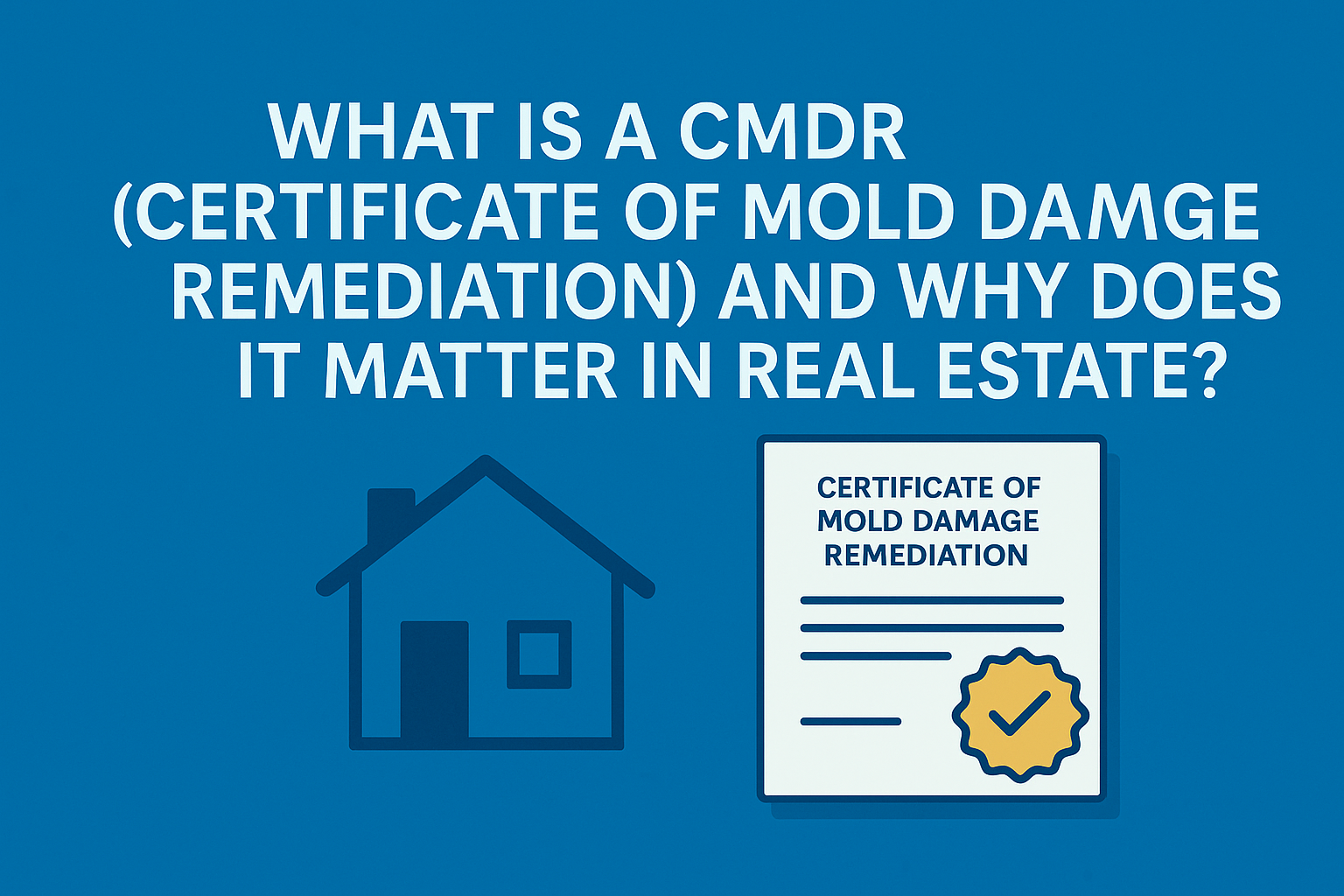
Mold is one of the most common concerns in Texas homes, especially after storms, plumbing leaks, or flooding. For homeowners and buyers, the biggest question isn’t just whether mold has been removed, but whether it was handled properly. That’s where the CMDR (Certificate of Mold Damage Remediation) comes in.
In this post, NTX Enviro explains what a CMDR is, why it matters in real estate, and how it protects both homeowners and contractors under the Texas Mold Law.
What Is a CMDR?
The Certificate of Mold Damage Remediation (CMDR) is a state-issued document regulated by the Texas Department of Insurance (TDI).
- It confirms that mold remediation was completed according to Texas law.
- It documents that the mold problem has been properly addressed by licensed professionals.
- It provides legal protection for homeowners during insurance claims and real estate transactions.
Who Issues a CMDR?
The CMDR involves two licensed parties:
- Mold Assessment Consultant (MAC) – Conducts inspections, testing, and provides the remediation protocol.
- Mold Remediation Contractor (MRC) – Performs the remediation work according to the MAC’s protocol.
Once remediation is complete, the MAC verifies the work passed clearance. Both the MAC and MRC then complete their sections of the CMDR, which is filed with the homeowner. If no Post Remediation Clearance inspection is conducted, the Mold Assessment Consultant will issue a Final Status Notice. Even if the Post Remediation Clearance inspection is not done, a licensed Mold Remediation Contractor is still required to issue a CMDR for every mold project they conduct.
Why the CMDR Matters in Real Estate
- Protects Property Value
A home with a documented CMDR shows that past mold problems were handled legally and properly. Without it, buyers may assume mold damage was ignored or poorly remediated, lowering the home’s value.
- Provides Transparency
Buyers want confidence that the property they’re purchasing is safe. The CMDR provides written proof that remediation was conducted by licensed professionals, not hidden or DIY cleanup.
- Required by Lenders and Insurers
In many cases, lenders and insurance companies request a CMDR before approving financing or coverage for a property with a history of mold.
- Legal Protection
If disputes arise during or after a sale, the CMDR protects the seller by proving they followed Texas Mold Law and remediated the issue correctly.
👉 What Every Homebuyer Should Know About Mold Before Closing
What the CMDR Includes
A completed CMDR form provides:
- Property Information: Address and ownership details.
- Verification of Remediation: Confirmation that the work passed clearance (if conducted).
- Signatures: Once a successful Post Remediation Clearance inspection has been achieved, both the licensed MAC and MRC must sign. If no Post Remediation Clearance inspection is conducted, the Mold Assessment Consultant will issue a Final Status Notice. Even if the Post Remediation Clearance inspection is not done, a licensed Mold Remediation Contractor is still required to issue a CMDR for every mold project they conduct.
This official document is then kept by the homeowner and can be presented during future transactions.:
How the CMDR Protects Homeowners
For homeowners, the CMDR serves as more than just paperwork, it’s peace of mind.
- Insurance Claims: Insurers may deny future claims if remediation wasn’t documented.
- Future Resale: The CMDR proves the issue was addressed correctly, preventing lower offers from buyers.
- Legal Assurance: If disputes arise, the CMDR demonstrates compliance with Texas regulations.
👉 Without a CMDR, homeowners risk losing insurance coverage, property value, or buyer confidence.
Common Misunderstandings About the CMDR
- “I don’t need one if I cleaned it myself.”
→ Wrong. DIY cleanup doesn’t qualify for a CMDR and offers no legal protection. - “It’s only for large projects.”
→ Not true. Any remediation involving a licensed mold remediation contractor should result in a CMDR, regardless of size. - “It’s just a formality.”
→ The CMDR is a legal document recognized by insurers, lenders, and buyers.
👉 DIY Mold Cleanup vs. Professional Assessment: What’s the Difference?
Common Misunderstandings About the CMDR
Imagine two Texas homeowners:
- Homeowner A has a roof leak repaired and hires licensed professionals for remediation. They receive a CMDR. When they sell their home five years later, they show the buyer proof that the past mold problem was professionally resolved. The sale closes smoothly.
- Homeowner B chooses a handyman to clean visible mold but never receives a CMDR. During the sale, the buyer’s inspector finds moisture stains. Without documentation, the buyer backs out or demands a significant price reduction.
The difference? The CMDR protects both property value and peace of mind.
How to Get a CMDR
- Schedule a Mold Assessment. A licensed consultant inspects the property, conducts testing, and writes a remediation protocol.
- Hire a Licensed Remediation Contractor. The contractor completes the remediation following the protocol.
- Verification & Clearance Testing. The consultant verifies the work was successful.
- Receive Your CMDR. Once clearance is passed, the MAC and MRC finalize the certificate.
The Certificate of Mold Damage Remediation (CMDR) is one of the most important documents homeowners can have after a mold problem. It’s more than just a form, it’s proof that remediation was done correctly, legally, and with full transparency.
In real estate transactions, the CMDR can mean the difference between closing smoothly and losing a sale. For homeowners, it ensures protection from future disputes and insurance complications.
Need a CMDR for your property?
👉 Schedule a Professional Mold Inspection with NTX Enviro Today
Dennis Butts is a Texas-licensed Mold Assessment Consultant (MAC) and principal of NTX Enviro Consulting Services. He provides mold inspections, remediation protocols, and post-remediation verification services throughout North Texas.