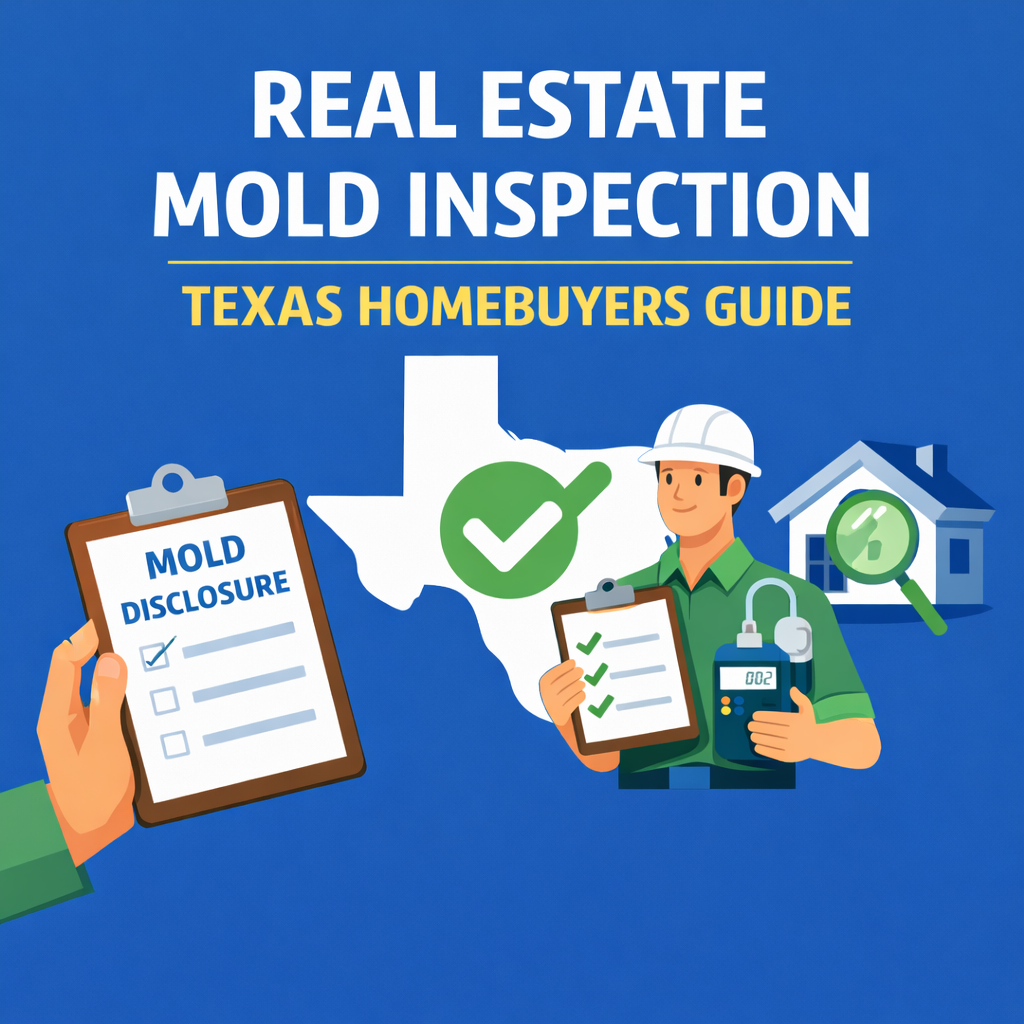
During a real estate transaction, sellers are required to complete a property condition disclosure. Many buyers assume that if mold is not disclosed, there is no issue. Unfortunately, disclosure forms are not a substitute for a professional mold assessment.
In Texas, mold conditions are often hidden behind walls, beneath flooring, or within attic and HVAC systems. A seller may be unaware of elevated moisture or concealed mold growth. Even when prior water damage is disclosed, the extent of resulting microbial contamination may not be fully understood without proper evaluation.
Relying solely on a disclosure form can leave buyers exposed to unexpected remediation costs after closing.
What Disclosures Are Designed to Do
Seller disclosure forms are intended to communicate known conditions. They rely on the current owner’s knowledge and recollection. They are not technical inspections, and they do not involve moisture measurements, thermal imaging, or laboratory sampling.
If a prior roof leak, plumbing leak, or flooding event is disclosed, that information is helpful. However, it does not confirm whether materials were properly dried, whether mold developed, or whether contamination remains in concealed spaces.
👉 What Every Homebuyer Should Know About Mold Before Closing
Why Mold Is Frequently Missed During Transactions
Standard home inspections focus on structural, mechanical, and safety components. While inspectors may note visible staining or moisture concerns, most are not licensed to perform regulated mold assessments in Texas.
Mold growth can occur behind baseboards, inside wall cavities, beneath vinyl flooring, or in areas that appear cosmetically sound. Without moisture mapping and targeted inspection methods, these conditions may go undetected.
In competitive markets, buyers may waive certain contingencies. However, skipping environmental evaluation can create significant financial exposure later.
The Role of a Licensed Mold Assessment Consultant
A licensed Mold Assessment Consultant performs an independent evaluation of visible conditions, moisture levels, and when appropriate, indoor air sampling. The goal is to determine whether conditions consistent with mold growth are present and whether further action is warranted.
An assessment provides documented findings, photographs, moisture readings, and laboratory results when sampling is performed. This documentation can be critical for negotiating repairs, requesting remediation, or making informed decisions before closing.
When Mold Testing May Be Recommended
Testing is not always necessary in every transaction. However, it may be recommended when:
- There is a history of water intrusion
- Musty odors are present
- Visible staining or past repairs are observed
- Elevated humidity conditions are detected
- The property has been vacant for an extended period
A licensed consultant can determine whether sampling will provide meaningful information based on site conditions.
Why Early Evaluation Matters
Addressing mold concerns before closing allows buyers to make informed decisions while negotiation leverage still exists. After closing, responsibility typically shifts to the new owner.
A professional mold inspection does not create problems that were not already present. Instead, it provides clarity about existing conditions and potential risks.
Real estate disclosures are valuable tools, but they are not technical environmental assessments. For buyers seeking confidence in their investment, a licensed mold inspection offers independent documentation and objective findings.
If you are purchasing a home in North Texas and want clarity regarding potential mold or moisture issues, scheduling a professional mold assessment can help protect your investment before closing.
Looking for independent mold inspection services during your real estate transaction?
👉 Schedule a Professional Mold Inspection with NTX Enviro Today
Dennis Butts is a Texas-licensed Mold Assessment Consultant (MAC) and principal of NTX Enviro Consulting Services. He provides mold inspections, remediation protocols, and post-remediation verification services throughout North Texas.