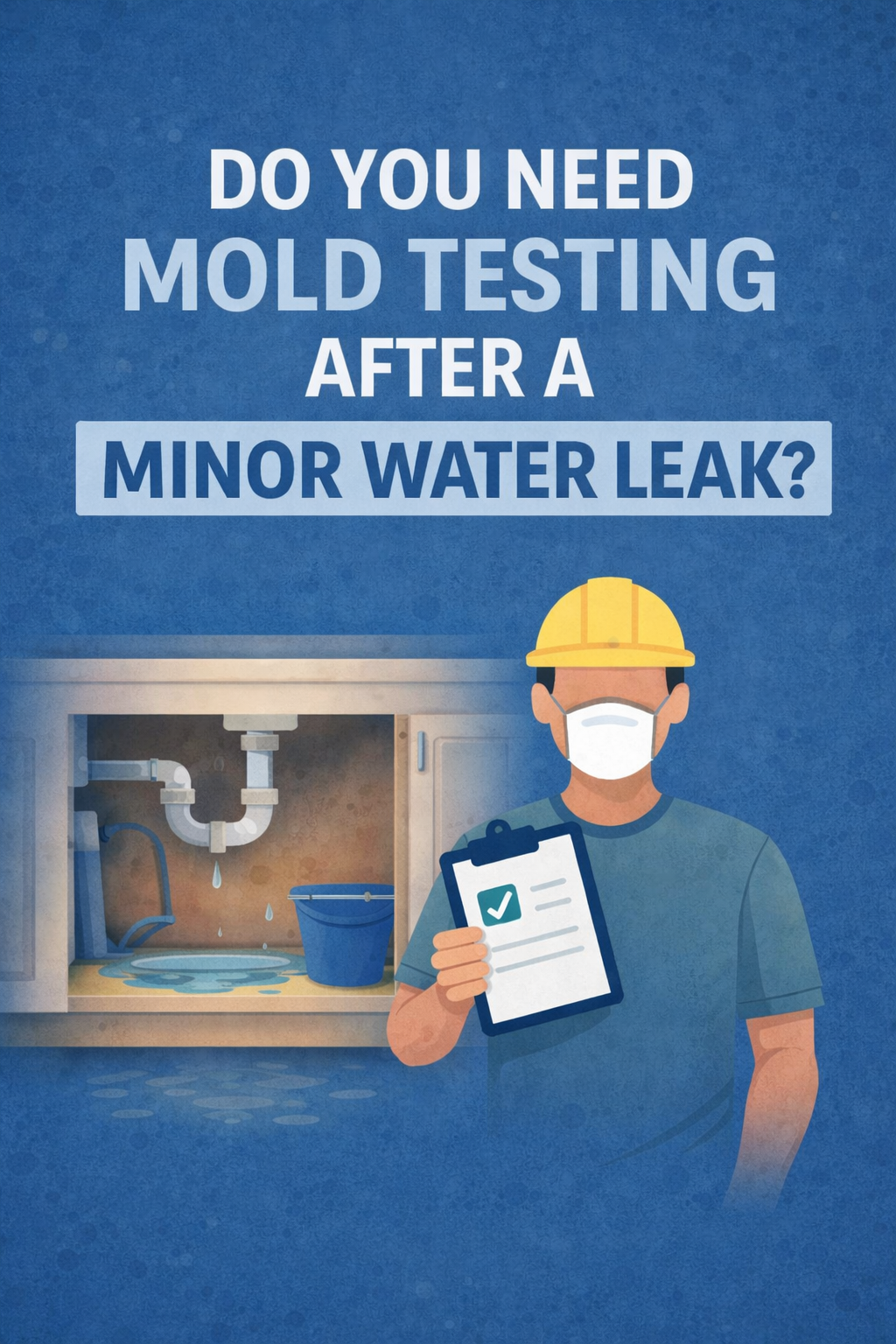
Not every water leak looks like a disaster. A small drip under a sink, a brief toilet overflow, or a short lived washing machine leak may seem insignificant once the visible water is cleaned up. Many homeowners assume that if the area dries quickly, there is no reason to worry about mold.
In reality, even minor water leaks can create conditions that allow mold growth to begin, especially when moisture reaches porous materials or hidden spaces. The challenge is knowing when mold testing is truly necessary and when it is not.
In this post, NTX Enviro explains when mold testing makes sense after a minor water leak, what factors increase risk, and how professional assessment helps homeowners avoid unnecessary expense or missed problems.
Why Minor Leaks Can Still Cause Mold
Mold does not require flooding to grow. It only needs moisture and a food source. Common building materials such as drywall, wood, insulation, and particle board absorb water quickly and may not dry evenly.
Even small leaks can introduce moisture into:
- Cabinet bases and toe kicks
- Drywall behind plumbing fixtures
- Subflooring beneath sinks or appliances
- Wall cavities near supply lines
The 48-Hour Rule: Why Fast Action After Water Damage Prevents Mold
Situations Where Mold Testing Is Often Recommended
Mold testing is not automatically required after every small leak. However, certain conditions increase the likelihood that testing is appropriate.
- The leak went unnoticed for more than a day
- Water contacted drywall, wood, or insulation
- There is a musty or stale odor after drying
- The area feels damp days later
- The leak occurred in a bathroom, kitchen, or laundry room
- Occupants experience allergy or respiratory symptoms indoors
In these cases, air or surface sampling may help determine whether hidden mold growth has occurred, even when no visible mold is present.
When Mold Testing May Not Be Necessary
There are also situations where testing may not be needed.
- The leak was discovered immediately
- Only non porous materials were affected
- The area was thoroughly dried within hours
- No odors or symptoms are present
- Moisture readings confirm normal conditions
A professional mold inspection focuses on facts, not assumptions. In many cases, a visual assessment combined with moisture mapping can confirm that mold testing is not required, saving homeowners unnecessary cost.
Why Visual Inspection Alone Has Limits
Homeowners often rely on visual checks to decide whether mold is present. While this is a reasonable first step, it has limitations.
- Mold frequently grows behind finished surfaces
- Cabinet bases can trap moisture below sight lines
- Subfloor damage may not be visible from above
- HVAC airflow can distribute spores beyond the leak area
This is why professional inspections use moisture meters and thermal imaging in addition to visual assessment.
Health Considerations After Minor Leaks
Even small amounts of hidden mold growth can affect indoor air quality. Airborne spores and fragments may contribute to symptoms such as:
- Sneezing or nasal congestion
- Eye or throat irritation
- Worsening asthma or allergies
- Headaches or fatigue
Mold Testing and Texas Regulations
In Texas, mold assessment and sampling are regulated activities when performed as part of a professional evaluation. Licensed Mold Assessment Consultants follow procedures established by the Texas Department of Licensing and Regulation.
Testing may be especially important when documentation is needed for insurance claims or real estate transactions. If remediation becomes necessary, proper assessment and clearance may support issuance of a Certificate of Mold Damage Remediation, which is explained in What Is a CMDR and Why Does It Matter in Real Estate.
Why Early Evaluation Saves Time and Money
Many homeowners delay evaluation after minor leaks because the damage appears small. Unfortunately, delayed assessment often leads to larger problems later.
- Hidden mold may spread beyond the original leak area
- Repairs may require removal of finished materials
- Insurance claims may be harder to document
- Real estate transactions may be delayed or disrupted
Early inspection and targeted testing help confirm whether a problem exists before it expands. In many cases, early evaluation provides reassurance that no further action is needed.
Not every minor water leak requires mold testing, but some absolutely do. The key is understanding how long the leak lasted, what materials were affected, and whether moisture may be trapped in hidden areas.
A professional mold inspection helps homeowners make informed decisions based on evidence, not guesswork. Whether testing is recommended or not, proper evaluation protects indoor air quality, property value, and peace of mind.
If your home has experienced a water leak and you are unsure whether mold testing is necessary, a licensed assessment can provide clear answers.
👉 Schedule a Professional Mold Inspection with NTX Enviro Today
Dennis Butts is a Texas-licensed Mold Assessment Consultant (MAC) and principal of NTX Enviro Consulting Services. He provides mold inspections, remediation protocols, and post-remediation verification services throughout North Texas.