Water leaks are one of the most common issues homeowners face, whether from plumbing failures, roof leaks, appliance overflows, or storm related water intrusion. Once the visible water is cleaned up and surfaces appear dry, many people assume the problem is resolved.
Unfortunately, that is often not the case.
Hidden moisture can remain inside walls, flooring, insulation, and HVAC systems long after a leak occurs. When this happens, mold growth can develop quietly, releasing spores into the air without any visible warning signs. This is why air quality testing plays a critical role after a water leak.
In this post, NTX Enviro explains why indoor air quality testing matters after water damage, how it works, and when it should be performed to protect your health and property.
Why Water Leaks Create Hidden Mold Risks
Mold requires moisture and a food source to grow. After a water leak, both are usually present.
Porous materials such as drywall, wood, carpet, insulation, and framing absorb water quickly. Even when surfaces dry, moisture can remain trapped below the surface. Within as little as 24 to 48 hours, mold can begin to develop.
Hidden mold growth can occur in areas that are not visible during a routine walkthrough, including behind walls, under flooring, inside cabinetry, and within HVAC components. Air quality testing helps identify these issues before they become widespread.
What Air Quality Testing Measures
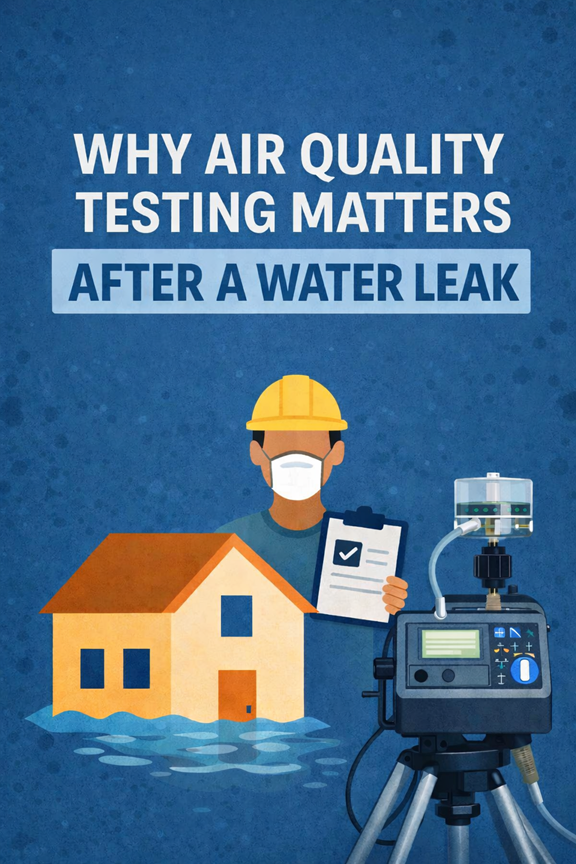
Air quality testing for mold focuses on measuring airborne fungal spores and fragments inside a building and comparing them to outdoor levels.
A professional mold assessment typically includes:
- Indoor air samples collected from affected or suspect areas
- An outdoor air sample for baseline comparison
- Laboratory analysis to identify mold types and concentrations
Because mold spores are naturally present everywhere, the goal is not zero spores. Instead, testing evaluates whether indoor air quality reflects a normal fungal environment or indicates indoor amplification caused by hidden mold growth.
Air testing is especially valuable when visible mold is not present but odors, health symptoms, or water damage history raise concerns.
When Air Quality Testing Is Most Important
Air quality testing is not necessary for every minor spill, but it becomes critical in several common scenarios.
- After plumbing leaks inside walls or ceilings
- Following roof leaks or storm related water intrusion
- When water damage affected drywall, flooring, or insulation
- If musty or stale odors remain after cleanup
When occupants experience allergy or respiratory symptoms indoors - Before closing on a property with known water damage history
If you are buying or selling a home, this type of testing is often recommended alongside a visual inspection.
Health Concerns Linked to Poor Indoor Air Quality
Airborne mold spores and fragments can impact indoor air quality even when mold growth is hidden. Exposure may contribute to symptoms such as:
- Sneezing, coughing, or congestion
- Eye, nose, or throat irritation
- Worsening asthma or allergy symptoms
- Headaches or fatigue
Is Mold Making You Sick? Common Symptoms Explained
Testing does not diagnose medical conditions, but it can help determine whether indoor air quality may be contributing to symptoms reported by occupants.
Why Visual Inspections Alone Are Not Enough
Many homeowners rely on visual inspections to determine whether mold is present. While visual assessment is important, it has limitations.
- Mold often grows behind finished surfaces
- Water damaged materials may look normal once dried
- Odors may be subtle or intermittent
- HVAC systems can distribute spores throughout the home
Air quality testing provides data that visual inspections alone cannot. When combined with moisture mapping and thermal imaging, it offers a more complete picture of indoor conditions.
Texas Regulations and Professional Testing
In Texas, mold assessments and sampling are regulated under the Texas Mold Law. Licensed Mold Assessment Consultants follow established procedures and documentation requirements enforced by the Texas Department of Licensing and Regulation.
When water damage or suspected mold exceeds regulatory thresholds, professional assessment helps ensure compliance and protects homeowners during insurance claims or real estate transactions. If remediation is required, proper testing and clearance documentation may be necessary to support issuance of a Certificate of Mold Damage Remediation.
What Is a CMDR (Certificate of Mold Damage Remediation) and Why Does It Matter in Real Estate?
Why Early Testing Saves Money
One of the biggest misconceptions about air quality testing is that it is only needed when mold is obvious. In reality, early testing often prevents more expensive problems later.
- Identifying hidden mold early can reduce the scope of remediation
- Documentation supports insurance claims
- Testing helps avoid unnecessary demolition
- Clear results reduce uncertainty during real estate deals
Waiting until mold becomes visible usually means the problem has already expanded beyond the initial area of water damage.
After a water leak, drying visible surfaces is only part of the solution. Hidden moisture and unseen mold growth can continue to affect indoor air quality long after cleanup appears complete.
Air quality testing provides objective data that helps determine whether mold growth has occurred, whether indoor conditions are normal, and whether further action is needed. When combined with professional inspection methods, it plays a key role in protecting health, property value, and peace of mind.
If your home or building has experienced water damage, air quality testing can provide answers before small issues turn into costly problems.
If your property has experienced a water leak and you want clear answers about indoor air quality, NTX Enviro can help.
Schedule a professional mold inspection and air quality assessment with NTX Enviro to protect your home, your health, and your investment.
👉 Schedule a Professional Mold Inspection with NTX Enviro Today
Dennis Butts is a Texas-licensed Mold Assessment Consultant (MAC) and principal of NTX Enviro Consulting Services. He provides mold inspections, remediation protocols, and post-remediation verification services throughout North Texas.