📞 (972) 643-8379 Monday to Friday 8:00 am - 5:00 pm, Saturday & Sunday - CLOSED

Can Thermal Imaging Detect Mold Behind Walls?

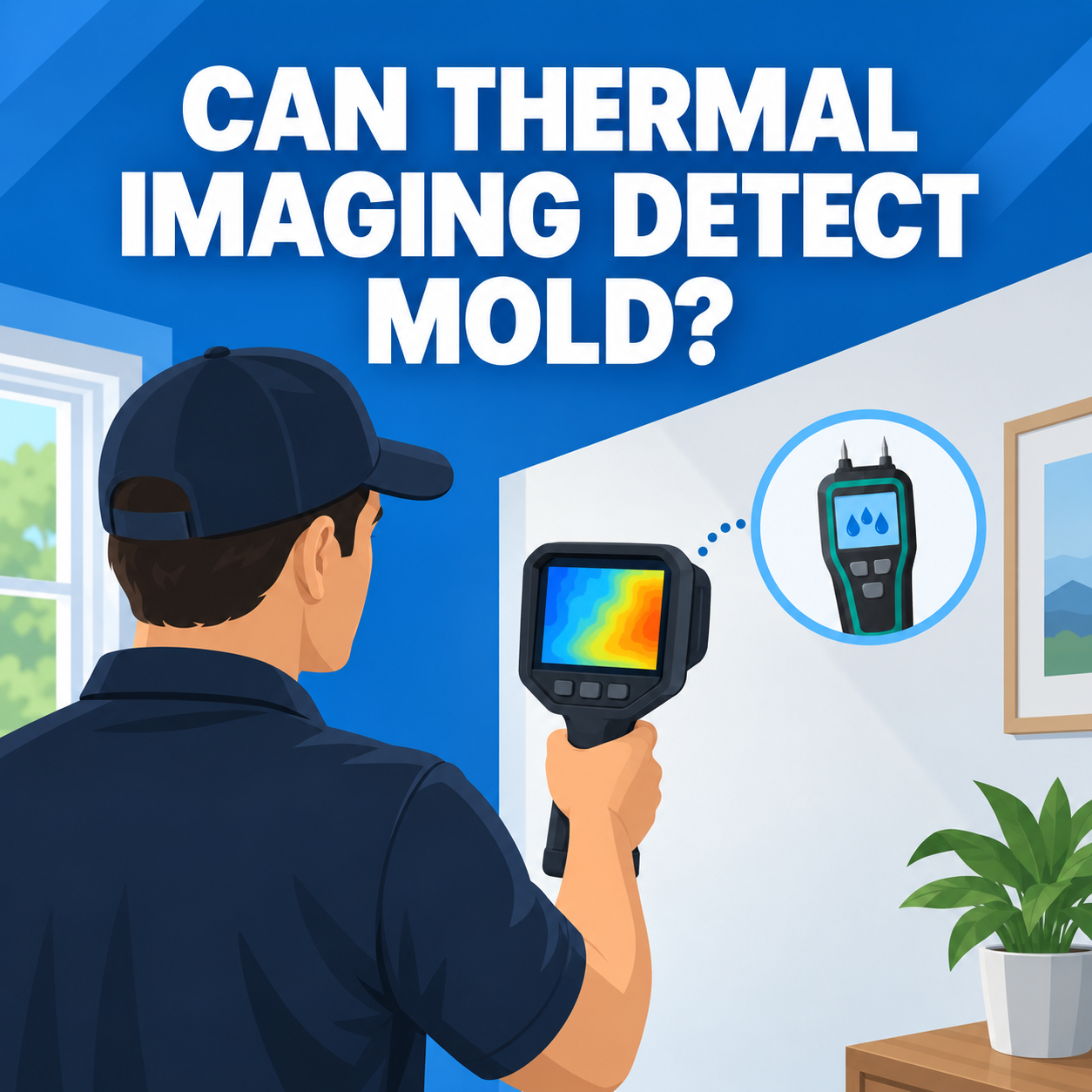
Thermal imaging cannot directly detect mold behind walls. A thermal camera measures surface temperature differences, not fungal growth or moisture content. It may reveal patterns associated with wet materials, condensation, air leakage, or missing insulation, helping an inspector identify areas that need moisture measurements or further investigation.
This makes thermal imaging a useful screening tool during a mold and moisture assessment, but it is not an X-ray and does not allow an inspector to see through walls. A thermal pattern must be interpreted in context and confirmed using other inspection methods before concluding that a moisture problem exists.
How Does a Thermal Imaging Camera Work?
A thermal imaging camera detects infrared energy emitted by surfaces and converts that information into an image representing surface temperatures.
The colors displayed on the screen do not identify specific materials or substances. They represent differences in temperature within the selected range. Depending on the camera settings, cooler areas may appear blue or purple while warmer areas appear yellow, orange, or white.
The camera is showing temperature patterns, not:
- Mold growth
- Moisture content
- Plumbing pipes
- Electrical wiring
- Structural damage
- Conditions deep inside a wall
A thermal image may reveal where a surface is warmer or cooler than the surrounding area. The inspector must then determine what could be causing that difference.
Can Thermal Imaging Detect Mold Directly?
No. Thermal imaging cannot directly detect or identify mold.
Mold does not produce a unique thermal signature that allows a camera to distinguish it from drywall, dust, staining, insulation, or other materials. A thermal camera also cannot determine whether a surface contains fungal spores or whether concealed fungal growth is present inside a wall cavity.
Thermal imaging may contribute to a mold investigation because mold growth is associated with moisture. Wet materials can sometimes create recognizable surface temperature patterns due to evaporation, differences in thermal conductivity, or changes in how the material stores and transfers heat.
The camera may help locate a condition that could support mold growth. It does not detect the mold itself.
Why Wet Materials May Look Different on a Thermal Image
Moisture can influence the surface temperature of a material in several ways.
Evaporation may cool a wet surface. Wet materials may also store or transfer heat differently from dry materials. During certain environmental conditions, these differences can create visible thermal patterns.
For example, water from a roof leak may migrate across the back of ceiling drywall. If conditions are favorable, the affected area may appear cooler than the surrounding ceiling. A plumbing leak inside a wall may create a vertical or irregular temperature pattern extending away from the source.
However, wet areas do not always appear cooler. Their appearance depends on:
- Indoor and outdoor temperatures
- Recent HVAC operation
- Air movement
- Evaporation
- Sun exposure
- Material type and thickness
- Insulation
- The amount and location of moisture
- How recently the water intrusion occurred
A wet material may sometimes appear warmer than surrounding materials. It may also show no meaningful thermal difference at all.
What Else Can Create a Similar Thermal Pattern?
Many building conditions can resemble moisture on a thermal image. This is one of the primary reasons thermal findings require confirmation.
Possible causes include:
- Missing, compressed, or displaced insulation
- Air leakage around exterior walls or attic penetrations
- HVAC supply air moving within a wall or ceiling cavity
- Plumbing lines carrying hot or cold water
- Electrical components
- Framing members
- Direct sunlight or shaded exterior surfaces
- Differences in building materials
- Reflections from certain surfaces
- Recently operated appliances
- Temperature changes from occupant activity
A cool area below an air-conditioning register may result from supply air leakage rather than water. A rectangular pattern in a wall may show missing insulation. A warm line may correspond to a hot-water pipe.
Without confirmation, interpreting every temperature anomaly as moisture can lead to incorrect conclusions and unnecessary damage to the home.
How Thermal Findings Are Confirmed
When a suspicious thermal pattern is observed, the next step is usually to evaluate the area with a moisture meter.
A noninvasive moisture meter may be used to compare the suspect area with materials believed to be dry. Pin-type measurements may also be appropriate when conditions and access allow. These readings help determine whether the thermal anomaly is consistent with elevated moisture.
A professional investigation may include:
- Comparing the suspect area with surrounding materials
- Taking moisture readings at multiple locations
- Looking for staining, swelling, deterioration, or other visible evidence
- Evaluating nearby plumbing, roofing, HVAC, or exterior components
- Reviewing the history of leaks or water intrusion
- Inspecting accessible adjoining areas
- Using a borescope or recommending limited exploratory openings when justified
- Considering environmental sampling when it would answer a defined question
No single instrument should be expected to answer every question. Thermal imaging helps direct the investigation, while moisture measurements and physical observations help determine whether the pattern is meaningful.
Can a Thermal Camera Find a Plumbing Leak?
A thermal camera may help locate a temperature pattern associated with a plumbing leak, but it does not confirm that a pipe is leaking.
Water moving through or around building materials can create a recognizable pattern. The usefulness of the image depends on the temperature difference between the water, surrounding materials, and indoor environment.
A very slow leak may not produce a visible thermal anomaly. A leak that stopped before the inspection may also be difficult to identify once the materials reach a similar temperature.
When a plumbing leak is suspected, moisture measurements and evaluation by a qualified plumbing professional may still be necessary. Thermal imaging can help narrow the search area, but it should not be treated as definitive leak detection.
Can Thermal Imaging Find Roof Leaks?
Thermal imaging can sometimes identify moisture patterns below a roof leak, particularly when water has affected ceiling drywall or insulation.
Roof leaks can be intermittent. A ceiling may be dry during an inspection even though water enters during wind-driven rain. In North Texas, severe thunderstorms and hail can damage roofing components without causing an obvious interior leak after every storm.
The effectiveness of thermal imaging may depend on when the inspection occurs. A recently active leak may create a more noticeable pattern than an area that has been dry for several days.
Roofing observations, moisture readings, staining patterns, weather history, and accessible attic conditions should be evaluated together. The thermal image alone cannot identify the exact roof defect or prove that fungal growth is present.
Can Thermal Imaging Rule Out Hidden Mold?
No. A normal thermal scan cannot rule out hidden mold.
Concealed fungal growth may be present even when the surface shows no unusual temperature pattern. This can occur when:
- The material was previously wet but has since dried
- Moisture is too limited to create a detectable temperature difference
- Insulation separates the affected material from the visible surface
- The growth is located deep within a wall or cabinet assembly
- Indoor conditions reduce the temperature contrast
- The camera angle or surface properties limit the reading
This limitation is important in homes with a known water-loss history, persistent musty odors, prior repairs, or visible evidence of water migration. The absence of a thermal anomaly does not prove that the wall cavity is clean or unaffected.
Why Environmental Conditions Matter
Thermal imaging is most useful when adequate temperature differences exist. If all surfaces and materials are close to the same temperature, subtle anomalies may not be visible.
HVAC operation, outdoor weather, solar heating, and recent rainfall can affect what the camera displays. An exterior wall exposed to afternoon sunlight may remain warmer than an interior wall for hours. Air-conditioning may make areas near supply registers appear cooler. Attic heat may influence ceilings and upper wall surfaces.
Reflective materials can create additional problems. Glass, polished metal, glossy tile, and some painted surfaces may reflect infrared energy from nearby objects or the inspector. The apparent temperature may not accurately represent the material itself.
Proper interpretation requires an understanding of the building, the environmental conditions, and the limitations of the equipment.
Thermal Imaging Versus Moisture Measurement
Thermal cameras and moisture meters perform different functions.
| Thermal imaging | Moisture measurement |
|---|---|
| Displays surface temperature patterns | Evaluates moisture conditions within its measurement capabilities |
| Allows rapid scanning of large areas | Provides readings at specific locations |
| Helps identify areas for closer investigation | Helps confirm whether a suspect area is elevated |
| Does not directly detect water | Responds to material properties associated with moisture |
| Does not detect mold | Does not detect mold |
| Can be affected by insulation, airflow, sunlight, and reflections | Can be affected by material type, density, metal, and measurement depth |
Both tools require interpretation. A moisture meter does not identify mold any more than a thermal camera does. Together, they can provide stronger evidence than either instrument used alone.
When a Professional Mold Assessment May Be Appropriate
A professional assessment may be appropriate when a thermal anomaly is accompanied by:
- Elevated moisture readings
- Visible water staining or material deterioration
- A persistent musty odor
- A known plumbing or roof leak
- Recurring condensation
- Previous water damage
- Unexplained flooring or cabinet damage
- Concern about concealed fungal growth
A Texas licensed Mold Assessment Consultant can evaluate the building history, accessible materials, moisture conditions, and potential fungal impact. Environmental sampling may be performed when it is appropriate to the investigation, but sampling should not replace the physical assessment of the building.
If concealed damage is suspected, limited exploratory investigation may be needed. The need for destructive access should be based on the combined evidence rather than a thermal image alone.
Frequently Asked Questions
Can a thermal camera see through drywall?
No. A thermal camera measures the temperature of the visible surface. Patterns inside the wall may influence that surface temperature, but the camera does not create a picture of the wall cavity.
What color is moisture on a thermal camera?
Moisture has no universal thermal color. Its displayed color depends on whether the affected surface is warmer or cooler than surrounding materials and on the camera’s selected temperature scale.
Does a cold spot on a wall always mean water?
No. Cold spots can result from missing insulation, air leakage, HVAC operation, plumbing lines, or differences in building materials. Moisture measurements are needed to evaluate the pattern.
Can thermal imaging prove that a wall is dry?
No. A normal thermal pattern does not prove that every material within the wall is dry. Direct moisture measurements and evaluation of the building history may still be necessary.
Should every mold inspection include thermal imaging?
Thermal imaging can be a useful screening tool, but its usefulness depends on the building conditions and purpose of the assessment. It should support the investigation rather than replace moisture measurements, visual observations, or professional judgment.
Thermal imaging cannot directly detect mold behind walls. It measures surface temperature differences that may help an inspector locate patterns associated with moisture, air leakage, insulation deficiencies, plumbing lines, or other building conditions.
A suspicious thermal pattern should be confirmed through moisture measurements and evaluated with visible conditions, building history, and the potential source of water. Likewise, a normal thermal image cannot rule out previously wet materials or concealed fungal growth.
The value of thermal imaging lies in helping an experienced inspector determine where to investigate further, not in providing a stand-alone mold diagnosis.
Related Articles
- Why Moisture Mapping Is Critical Before Mold Remediation in Texas Homes
- What Do Moisture Meter Readings in Walls Really Mean?
- How Do I Know If a Water Leak Has Caused Hidden Mold?
- What to Expect During a Mold Inspection
Dennis Butts is a Texas licensed Mold Assessment Consultant and principal of NTX Enviro Consulting Services, providing mold inspections, remediation protocols, and post remediation verification services throughout North Texas.
NTX Enviro provides professional mold inspections and moisture evaluations for homeowners throughout North Texas.