📞 (972) 643-8379 Monday to Friday 8:00 am - 5:00 pm, Saturday & Sunday - CLOSED

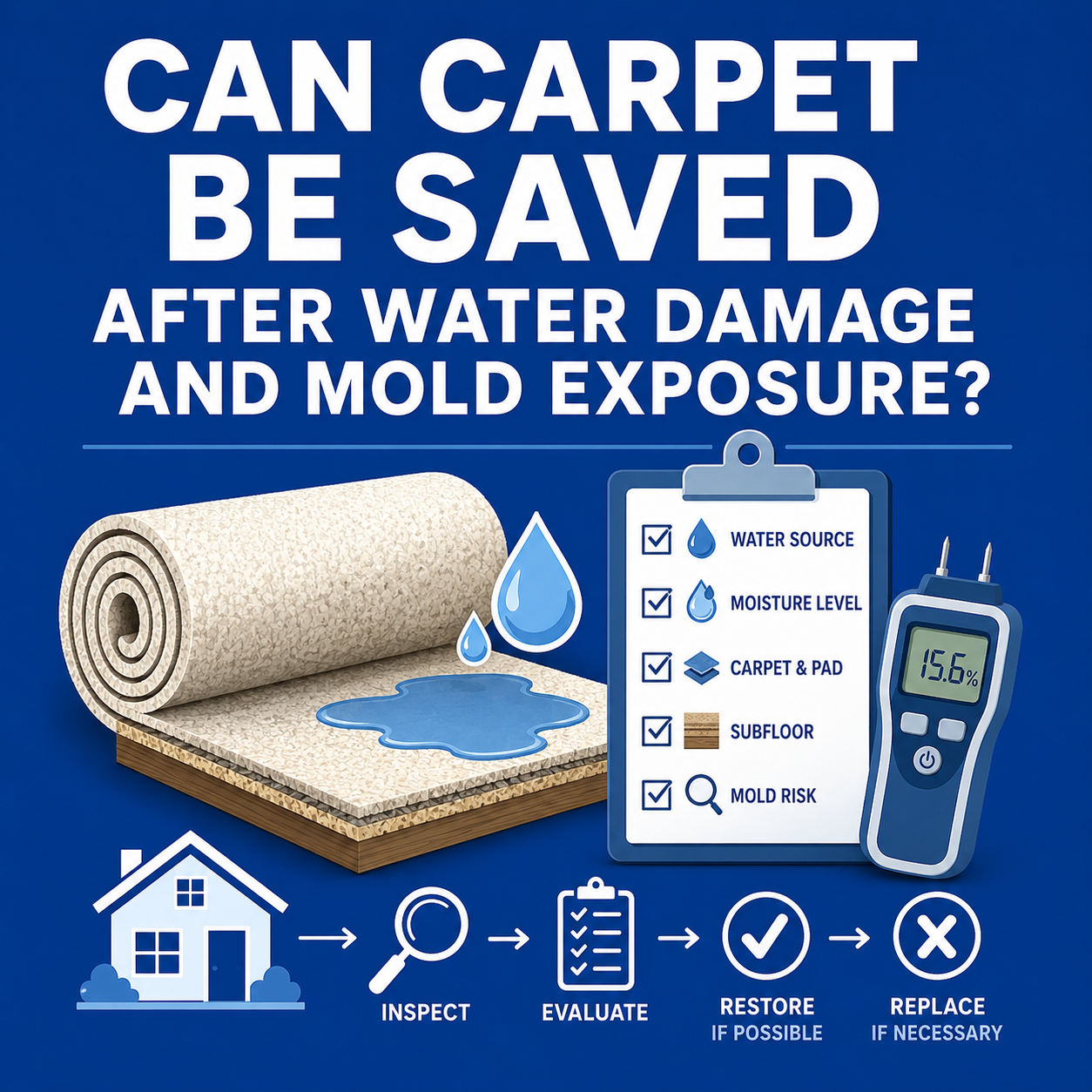
Can Carpet Be Saved After Water Damage and Mold Exposure?

When a water leak affects carpeting, one of the first questions homeowners ask is whether the carpet can be saved or if it must be replaced.
The answer depends on several factors, including the source of the water, how long the materials remained wet, whether mold growth has developed, and the condition of the underlying carpet pad and subfloor.
In some situations, carpet can be successfully dried and returned to service. In others, replacement may be the most appropriate option due to contamination concerns or damage to materials that cannot be adequately cleaned.
Understanding the factors that influence this decision can help property owners make informed choices following a water damage event.
The Source of the Water Matters
Not all water damage is treated the same way.
The source of the water often plays a significant role in determining whether carpet can be salvaged.
Water losses are generally classified into categories based on the level of contamination present.
Examples may include:
- Clean water from a supply line leak
- Water from appliance failures
- Water containing contaminants from washing machines or dishwashers
- Sewage backups
- Floodwater entering from outside
A small clean-water supply line leak discovered quickly may present a very different situation than a sewage backup or storm-related flooding event.
As contamination levels increase, the likelihood that carpet can be safely restored often decreases.
How Long Was the Carpet Wet?
Time is often one of the most important factors in determining whether carpet can be saved.
Even clean water can create conditions favorable for microbial growth if materials remain wet for an extended period.
Carpet fibers may initially appear dry on the surface while moisture remains trapped beneath the carpet, within the carpet pad, or inside the subfloor.
This hidden moisture can allow mold growth to develop out of sight.
Factors affecting drying potential include:
- Duration of water exposure
- Indoor temperature and humidity
- Airflow conditions
- Carpet construction
- Pad material
- Subfloor type
The longer moisture remains trapped within building materials, the more difficult restoration becomes.
The Carpet Pad Is Often the Bigger Concern
Many homeowners focus on the carpet itself, but the underlying carpet pad is frequently the more significant issue.
Carpet pads can absorb and retain large amounts of water. Once saturated, they may dry very slowly, particularly when trapped between carpet and subfloor materials.
Even when carpet fibers appear clean and dry, moisture may remain within the pad.
In some situations, the carpet may be salvageable while the pad requires replacement.
Inspectors and remediation contractors often evaluate both materials independently when determining the appropriate corrective action.
What If Mold Growth Is Present?
The presence of mold growth changes the evaluation considerably.
Visible mold may develop on:
- Carpet backing
- Carpet pad
- Tack strips
- Subfloor materials
- Adjacent baseboards
- Drywall near floor level
One challenge with carpeting is that mold growth frequently develops beneath the carpet where it cannot be easily observed without lifting materials.
In many cases, visible mold on the carpet surface represents only a portion of the affected area.
When mold growth has developed extensively within porous materials, replacement is often considered because effective cleaning of all affected components may not be practical or verifiable.
Each situation should be evaluated based on site-specific conditions and the extent of contamination present.
What About Carpet Tack Strips and Subfloors?
Even when carpet appears salvageable, underlying building materials may have sustained damage.
Carpet tack strips are commonly affected because they sit directly against the subfloor and often remain wet longer than surrounding materials.
Similarly, wood subfloors may absorb moisture and support fungal growth if drying is delayed.
Inspection of underlying materials may reveal:
- Elevated moisture content
- Water staining
- Wood deterioration
- Mold growth
- Corrosion of fasteners
Failure to address moisture conditions below the carpet can result in recurring odors, moisture problems, or future mold growth.
For this reason, the evaluation should extend beyond the visible carpet surface.
Why Odors Often Persist After Water Damage
One reason homeowners question whether carpet should be replaced is the presence of lingering odors.
Odors may result from:
- Moisture remaining within materials
- Microbial activity
- Contaminants introduced by the water source
- Deterioration of building materials
Even when visible signs of water damage have disappeared, persistent odors may indicate that moisture or contamination remains concealed within the flooring assembly.
Identifying the source of the odor is often necessary before determining whether cleaning, drying, or replacement is appropriate.
When Is a Professional Evaluation Recommended?
A professional inspection may be beneficial when:
- Carpet has remained wet for more than a brief period
- Mold growth is visible or suspected
- Musty odors are present
- Water has affected multiple rooms
- The source of water was contaminated
- Moisture intrusion has occurred repeatedly
- The extent of damage is uncertain
An assessment may include moisture measurements, thermal imaging, evaluation of accessible building materials, and identification of conditions contributing to moisture retention.
The goal is not simply determining whether carpet is wet. It is understanding the condition of the entire flooring system and identifying any hidden damage that may require corrective action.
Whether carpet can be saved after water damage depends on several factors, including the source of the water, the duration of exposure, the condition of the carpet pad, and whether mold growth has developed. While some water damage events can be addressed through prompt drying and restoration, others may require removal of affected materials to adequately address moisture and contamination concerns.
Because moisture often remains hidden beneath carpet and within underlying building materials, a thorough evaluation can help determine the most appropriate course of action and reduce the risk of ongoing moisture-related problems.
Related Articles
👉 How Long Does It Take for Mold to Grow After Water Damage
👉 Do You Need Mold Testing After a Minor Water Leak
👉 Why Air Quality Testing Matters After a Water Leak
Dennis Butts is a Texas licensed Mold Assessment Consultant and principal of NTX Enviro Consulting Services, providing mold inspections, remediation protocols, and post remediation verification services throughout North Texas.
NTX Enviro provides professional mold inspections and moisture evaluations for homeowners throughout North Texas.