📞 (972) 643-8379 Monday to Friday 8:00 am - 5:00 pm, Saturday & Sunday - CLOSED

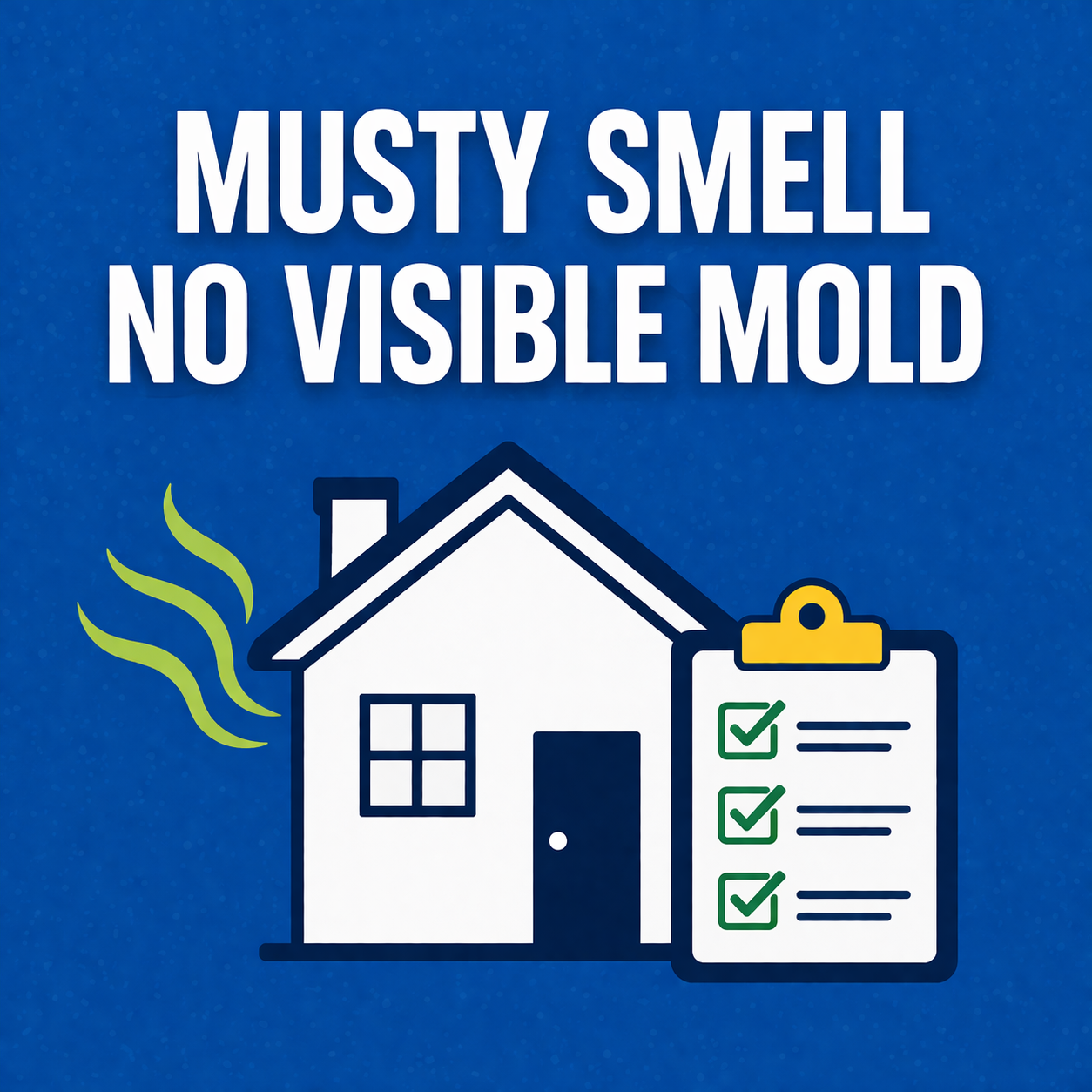
Why Does My House Smell Musty but No Mold Is Visible

A musty odor inside a home is often one of the first concerns that leads property owners to question whether mold may be present. In many cases, however, no visible mold growth is observed during a routine walkthrough. This can create confusion and uncertainty, especially when the odor persists over time.
A musty smell is typically associated with microbial activity or moisture-related conditions, but it does not always mean that visible mold growth is present. Understanding why this occurs can help homeowners identify potential sources and determine when a professional evaluation may be appropriate
What Causes a Musty Odor in a Home
Musty odors are generally produced by microbial volatile organic compounds, often referred to as MVOCs. These compounds are released during the metabolic processes of mold and other microorganisms. Even when visible growth is not apparent, these compounds can still be present in indoor air.
In addition to mold, musty odors can also originate from:
- Damp building materials such as drywall, wood, or carpet
- Dust accumulation in humid environments
- Organic debris within HVAC systems
- Long-term moisture exposure in enclosed areas
It is important to recognize that odor alone is not a reliable indicator of active mold growth, but it is often associated with conditions that support microbial activity.
Why Mold May Not Be Visible
There are several reasons why a musty smell may be present even when no visible mold is observed.
Hidden Growth Behind Materials
Mold can develop behind drywall, under flooring, or within wall cavities where it is not visible during a standard inspection. These concealed areas may be affected by past or ongoing moisture intrusion.
HVAC System Contamination
Air handling systems can distribute odors throughout the home. Dust and debris within ductwork, coils, or return plenums can support microbial growth, even if living spaces appear clean.
Settled Spores and Residual Contamination
Even after a moisture event has been addressed, residual contamination may remain in the form of settled spores or dust. These conditions are often consistent with what is defined as Condition 2 under IICRC S520 guidelines.
👉 Understanding a Normal Fungal Environment
Porous Materials Retaining Odor
Materials such as carpet, padding, and insulation can absorb and retain odors from prior moisture exposure. In some cases, the odor persists even after materials appear dry.
Common Areas Where Musty Odors Originate
Musty odors often originate from areas that are not frequently accessed or visually inspected. Some of the most common locations include:
Bathrooms and Laundry Areas
High humidity levels and intermittent moisture can contribute to persistent odors, especially when ventilation is limited.
Attics and Crawlspaces
These areas are prone to temperature fluctuations and condensation, which can create conditions suitable for microbial activity.
👉 Why Attic Moisture Problems Often Go Unnoticed in Texas Homes
HVAC Systems and Ductwork
Dust accumulation combined with moisture can lead to odor development within air distribution systems.
Closets and Exterior Wall Cavities
Poor airflow and proximity to exterior walls can result in localized humidity buildup, particularly in North Texas climates.
The Role of Humidity and Indoor Conditions
Humidity plays a significant role in the development of musty odors. Elevated indoor relative humidity can allow microbial activity to persist even without visible mold growth.
In North Texas, seasonal humidity fluctuations can contribute to indoor conditions that support odor development, particularly during warmer months.
👉 How Humidity in North Texas Affects Mold Growth Indoors
Maintaining indoor humidity below recommended levels and ensuring proper ventilation can help reduce the likelihood of persistent odors.
When a Professional Mold Inspection May Be Appropriate
A musty odor that persists without an identifiable source may warrant a professional mold assessment, particularly when:
- The odor is localized to a specific area
- There has been a history of water intrusion or leaks
- HVAC systems are suspected as a source
- Occupants are concerned about indoor air quality
A licensed Mold Assessment Consultant can evaluate the property using a combination of visual inspection, moisture measurements, and, when appropriate, analytical sampling. The goal is to determine whether conditions are consistent with normal fungal ecology or if further action is needed.
It is important to note that under Texas regulations, mold assessments must be performed independently from remediation activities to ensure objective findings and recommendations.
A musty smell in a home without visible mold growth is not uncommon and does not always indicate a significant problem. However, it often points to underlying moisture conditions or residual contamination that should be evaluated.
Addressing the root cause of moisture, improving ventilation, and maintaining appropriate humidity levels are key steps in preventing odor recurrence. When the source cannot be readily identified, a professional assessment can provide clarity and help guide next steps.
Dennis Butts is a Texas licensed Mold Assessment Consultant and principal of NTX Enviro Consulting Services, providing mold inspections, remediation protocols, and post remediation verification services throughout North Texas.
Concerned About A Musty Smell?
NTX Enviro provides professional mold inspections and moisture evaluations for homeowners throughout North Texas.