📞 (972) 643-8379 Monday to Friday 8:00 am - 5:00 pm, Saturday & Sunday - CLOSED

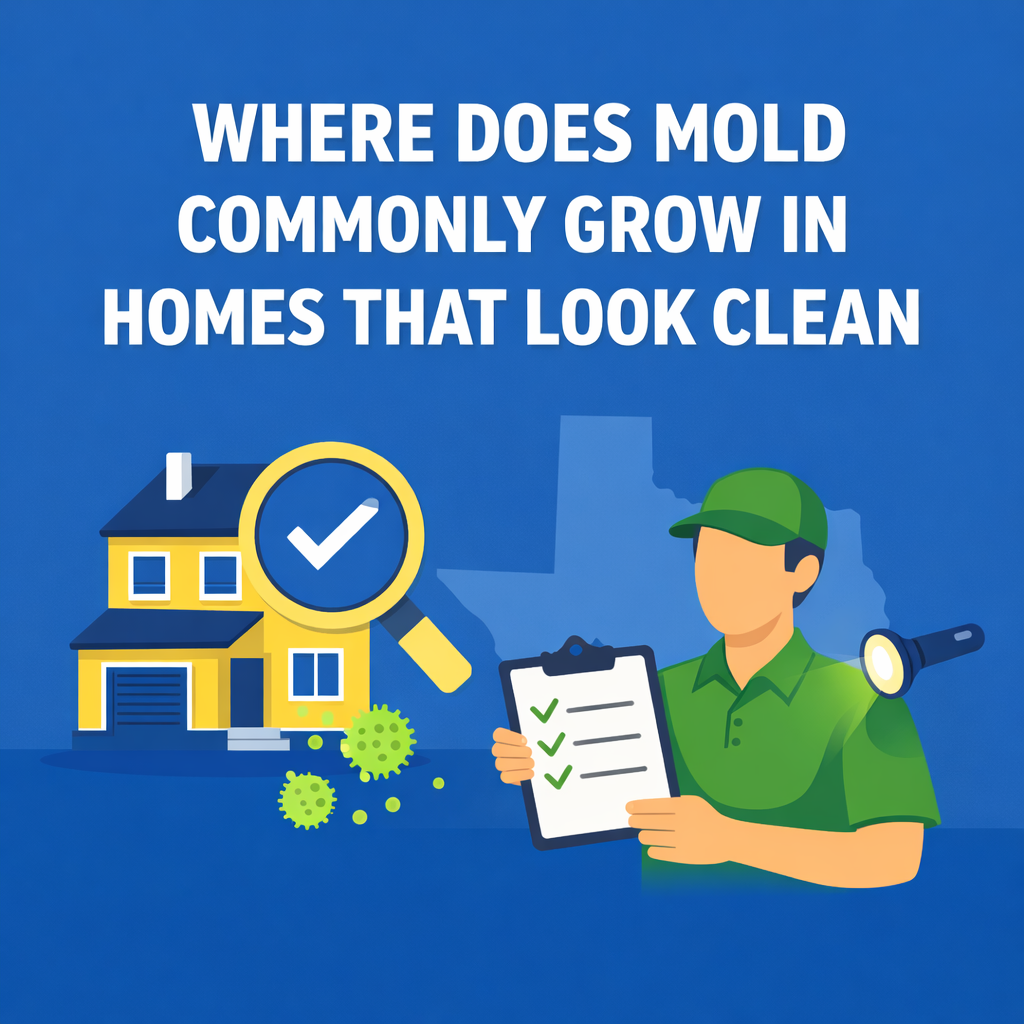
Where Does Mold Commonly Grow in Homes That Look Clean?

Many homeowners associate mold with visible staining, discoloration, or obvious water damage. However, mold growth often develops in areas that are not readily visible, even in homes that appear clean and well maintained.
A home can look spotless while still having conditions that support mold growth behind surfaces, within building materials, or in areas that are rarely inspected. Understanding where mold commonly develops can help property owners identify potential concerns before they become more significant.
Why Mold Can Develop in Clean Homes
Cleanliness and mold growth are not directly related. Mold is driven by moisture, not dust or general housekeeping. Even in homes that are regularly cleaned, hidden moisture conditions can create an environment where mold develops out of sight.
Moisture can originate from plumbing leaks, condensation, elevated humidity, or prior water damage that was not fully addressed. When moisture is present in concealed areas, mold can grow without any visible indication on the surface.
In many cases, the first sign of a hidden issue is not visual, but rather a musty or stale odor.
👉 Why Does My House Smell Musty but No Mold Is Visible
Behind Walls and Within Wall Cavities
Wall cavities are one of the most common locations for hidden mold growth. Plumbing lines, exterior wall penetrations, and insulation can all contribute to moisture accumulation inside walls.
Small leaks from supply lines, drain lines, or exterior intrusion may go unnoticed for extended periods. Because drywall can conceal these conditions, mold may develop on the back side of the material or on framing components.
Temperature differences between indoor and outdoor environments can also lead to condensation inside exterior walls, particularly in areas with poor insulation or air sealing.
Under Flooring and Beneath Materials
Mold can also develop beneath flooring materials, especially following water events such as leaks, appliance failures, or minor flooding.
Carpet padding, engineered wood flooring, and subfloor materials can retain moisture even after the surface appears dry. If these materials are not properly dried or removed, mold growth can occur below the visible surface.
In some cases, homeowners may not notice any issue until flooring begins to warp, discolor, or emit an odor.
👉 Do You Need Mold Testing After a Minor Water Leak
HVAC Systems and Ductwork
Heating, ventilation, and air conditioning systems can contribute to hidden mold growth when moisture is present.
Condensation can form on cooling coils, within ductwork, or around supply registers. Dust accumulation combined with moisture can create conditions that support microbial growth.
Because HVAC systems distribute air throughout the home, they can also spread spores from one area to another if contamination is present.
Routine maintenance and proper system operation are important in minimizing these risks.
Attics and Insulation Areas
Attics are frequently overlooked because they are not part of daily living spaces. However, they are highly susceptible to moisture related issues.
Improper ventilation, roof leaks, or warm air from the home entering the attic can lead to elevated humidity and condensation. This often results in mold growth on roof decking, rafters, or insulation materials.
In North Texas, seasonal humidity and temperature changes can increase the likelihood of these conditions, particularly during warmer months.
👉 Mold Inspection After Texas Storms
Bathrooms, Kitchens, and High Humidity Areas
Even in clean homes, areas that regularly produce moisture are at higher risk.
Bathrooms without adequate ventilation can retain humidity after showering, allowing moisture to settle on walls and ceilings. Kitchens generate moisture during cooking, especially when exhaust ventilation is limited.
Laundry rooms, particularly those with improperly vented dryers, can also contribute to elevated humidity levels.
Over time, repeated exposure to moisture can create conditions where mold develops in corners, behind cabinets, or along less visible surfaces.
Closets, Furniture, and Low Airflow Areas
Mold can also develop in areas with limited airflow, even when no obvious water source is present.
Closets located along exterior walls may experience temperature differences that lead to condensation. When items are stored tightly against walls, airflow is reduced, allowing moisture to remain trapped.
Large furniture placed against exterior walls can create similar conditions, where hidden surfaces remain cooler and more prone to moisture accumulation.
These areas are often overlooked during routine cleaning, making them common locations for concealed mold growth.
When a Professional Mold Inspection May Be Appropriate
If there are persistent odors, unexplained humidity issues, or concerns about prior water damage, a professional mold inspection may be beneficial.
A licensed Mold Assessment Consultant evaluates both visible and concealed conditions, using moisture detection tools and visual assessment to identify areas of concern. When appropriate, air or surface sampling may be performed to assess indoor fungal ecology.
The goal is to determine whether the home is consistent with a normal fungal environment or if conditions exist that require corrective action.
Mold growth is not always visible and can develop in a variety of hidden locations, even in homes that appear clean and well maintained.
By understanding where mold commonly grows, homeowners can take proactive steps to monitor moisture conditions, improve ventilation, and address potential issues early.
If concerns arise, a professional evaluation can help identify hidden conditions and provide clear guidance on next steps to restore and maintain a healthy indoor environment.
Dennis Butts is a Texas licensed Mold Assessment Consultant and principal of NTX Enviro Consulting Services, providing mold inspections, remediation protocols, and post remediation verification services throughout North Texas.
Concerned About Mold Growth?
NTX Enviro provides professional mold inspections and moisture evaluations for homeowners throughout North Texas.