📞 (972) 643-8379 Monday to Friday 8:00 am - 5:00 pm, Saturday & Sunday - CLOSED

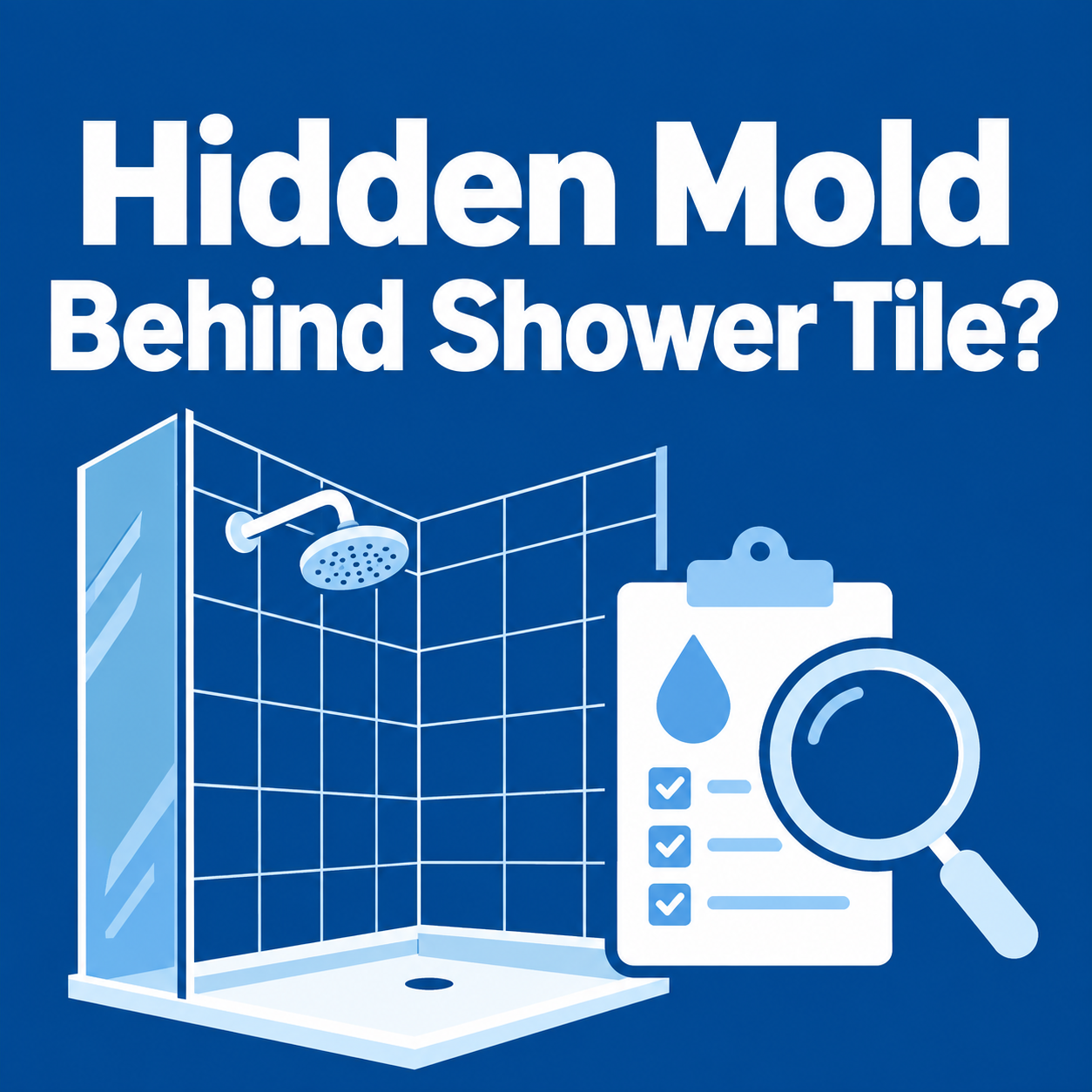
Hidden Mold Behind Shower Tile: Can a Leak Be the Cause?

Yes. A shower leak can cause hidden mold behind shower tile when water reaches moisture-sensitive materials and keeps them damp. Failed waterproofing, damaged shower pans, curb penetrations, and plumbing leaks can affect backing materials, framing, or nearby drywall. An inspection can identify evidence of leakage, but concealed damage may require controlled opening to confirm.
The shower itself may still look clean. Sometimes the first visible evidence appears on a closet baseboard behind the shower, along flooring outside the curb, or on the ceiling below an upstairs bathroom. Those locations deserve investigation, even when no mold is visible on the tile.
Tile and Grout Are Not the Waterproofing System
A tiled shower manages water through components beneath or behind its finished surfaces. Tile and grout, including sealed grout joints, should not be treated as a complete waterproof barrier. Schluter’s installation guidance explains that tiled showers require an integrated waterproofing system to protect the surrounding construction. Schluter
Shower construction varies. A traditional assembly may use a pan liner beneath a mortar bed, while a bonded membrane system places waterproofing directly beneath the tile. Walls, corners, drains, curbs, and penetrations must work together within the selected system.
Moisture within an assembly designed to receive and drain it is different from water escaping into framing or adjacent drywall. An elevated reading at a recently used shower floor does not, by itself, establish a leak or hidden mold.
Where Concealed Shower Leaks Can Begin
The shower pan is the waterproofed base assembly that contains and directs water toward the drain. Its condition cannot usually be established by looking at the finished tile floor.
In traditional assemblies, an improperly sloped liner or obstructed drainage can keep the mortar bed wet. Punctures or failed connections can allow water to escape. Schluter identifies missing pre-slope and penetrations through curb liners as important failure mechanisms. Schluter
Other locations needing attention include:
- Curbs and door attachments, where fasteners may interrupt waterproofing.
- Wall-to-floor transitions and corners, where waterproofing continuity matters.
- Niches and benches, where joints and slope affect water management.
- Showerhead and valve openings, where splash water may reach inadequately protected backing.
- Supply fittings and drain connections, which can leak independently of the waterproofing.
Signs May Appear Outside the Shower
In NTX Enviro moisture investigations, adjoining rooms provide useful access to the other side of a shower wall. A closet may reveal damage that is hidden by tile inside the bathroom.
Look for patterns such as:
| Observation | What it may justify investigating |
|---|---|
| Swollen baseboard in an adjacent closet | Moisture reaching the shared wall or its base. |
| Staining outside the curb | Leakage, splash escape, or a nearby plumbing source. |
| Ceiling damage below an upstairs shower | Drain, supply, or shower assembly leakage. |
| Musty odor near a shared wall | Concealed damp materials or another nearby moisture source. |
These findings do not prove mold or identify one specific defect. A toilet, vanity, or pipe in the same bathroom may produce damage in a similar location.
In North Texas slab-on-grade homes, there may be no accessible ceiling beneath the shower. Inspection may depend more heavily on adjacent walls, trim, flooring, and available plumbing access.
Investigating Hidden Mold Behind Shower Tile Before Demolition
A useful investigation starts with the history. Does staining appear after showering? Does it continue when the shower is unused? Were the pan, drain, door, or fixtures recently repaired? Photographs taken when damage first appeared can help establish the sequence.
The assessor then evaluates accessible areas, including the shower perimeter, shared walls, nearby flooring, plumbing access openings, and the ceiling below where applicable.
Moisture mapping can help locate damp building materials and compare suspect areas with appropriate unaffected locations. Measurements through tile require caution because assembly materials, metal, and instrument limitations can affect results. Accessible drywall or framing may provide more informative measurements.
Thermal imaging can help identify surface temperature patterns that warrant investigation. It cannot see mold or directly view a waterproofing membrane behind tile. FLIR recommends confirming suspected moisture indicated by thermal patterns with moisture measurements. Flir
A borescope may provide a limited view through suitable existing access or a planned opening from an adjacent room. Its small field of view does not establish the condition of the entire cavity.
Plumbing Tests and Waterproofing Tests Answer Different Questions
A qualified plumber may help distinguish a supply leak from a drain leak. A shower installation specialist may need to evaluate the pan and waterproofing details. These investigations should be coordinated so one test does not obscure another source.
Water testing is commonly used to check a newly installed waterproofing assembly before tile is placed. Schluter describes it as a quality-control check of the assembly. Schluter
Testing an existing shower suspected of leaking requires judgment. Adding water may worsen damage, and a pan test does not evaluate every wall opening or pressurized fitting. Homeowners should avoid improvising a flood test and instead ask the appropriate professional what can be tested safely and what the result would establish.
What May Remain Uncertain Until Materials Are Opened
An inspection can establish evidence of moisture intrusion without confirming every concealed consequence. Before opening, the assessor may be unable to determine:
- Whether growth is present on the back of inaccessible materials.
- The full extent of affected insulation, framing, or subflooring.
- The condition and continuity of concealed waterproofing.
- Whether wood deterioration requires additional repair evaluation.
Normal room air samples do not rule out a localized concealed source. Likewise, dry readings after the shower has been unused do not prove that previous damage is absent.
The Environmental Protection Agency (EPA) recognizes that mold can remain hidden behind apparently normal surfaces and that investigating concealed growth may require professional care. US EPA
Controlled opening should have a defined purpose and appropriate precautions for suspected contamination. Avoid random holes through the shower’s waterproofing, which can introduce additional defects.
Document the Findings Before Repairs Conceal Them
If active leakage is suspected, limit shower use until the source can be evaluated. Photograph visible damage and preserve information about prior repairs and when symptoms occur.
When opening is necessary, document the exposed materials, water pathways, waterproofing details, and observed growth before removal changes the evidence. The assessment and repair scope may need revision as concealed conditions become visible.
The work should address both affected materials and the leak source. Fresh tile, grout, or caulk does not demonstrate that concealed contamination was removed or defective waterproofing was corrected. Where mold remediation is performed, follow the project’s assessment, protocol, and verification requirements before reconstruction conceals the work.
Frequently Asked Questions
Does mold on shower caulk mean there is mold behind the tile?
No. Surface growth on caulk does not establish concealed contamination. Damage outside the shower, persistent dampness, or recurring leaks warrants further investigation.
Will regrouting fix a leaking shower pan?
Regrouting does not repair a damaged concealed pan liner or failed membrane connection. The repair must address the identified defect within the shower’s construction system.
Should I remove the tile before scheduling a mold assessment?
An assessment before demolition can help document existing conditions and plan access. If work has already begun, preserve photographs and arrange evaluation of exposed areas before additional removal or reconstruction.
Can an inspection determine how long the shower has been leaking?
Reported history and documented changes may help establish a timeline. Staining or deterioration alone generally cannot establish a precise leak duration.
A shower leak can support hidden mold even when the finished tile appears normal. Adjacent damage, moisture measurements, plumbing evaluation, and carefully selected access can help guide the investigation. Concealed conditions should be documented when opened, and repairs should address the moisture source as well as affected materials.
Related Articles
- Why Moisture Mapping Is Critical Before Mold Remediation in Texas Homes
- How Do I Know If a Water Leak Has Caused Hidden Mold?
- Why Post Remediation Verification Is Critical After Mold Removal in Texas
Dennis Butts is a Texas licensed Mold Assessment Consultant and principal of NTX Enviro Consulting Services, providing mold inspections, remediation protocols, and post remediation verification services throughout North Texas.
NTX Enviro provides professional mold inspections and moisture evaluations for homeowners throughout North Texas.