📞 (972) 643-8379 Monday to Friday 8:00 am - 5:00 pm, Saturday & Sunday - CLOSED

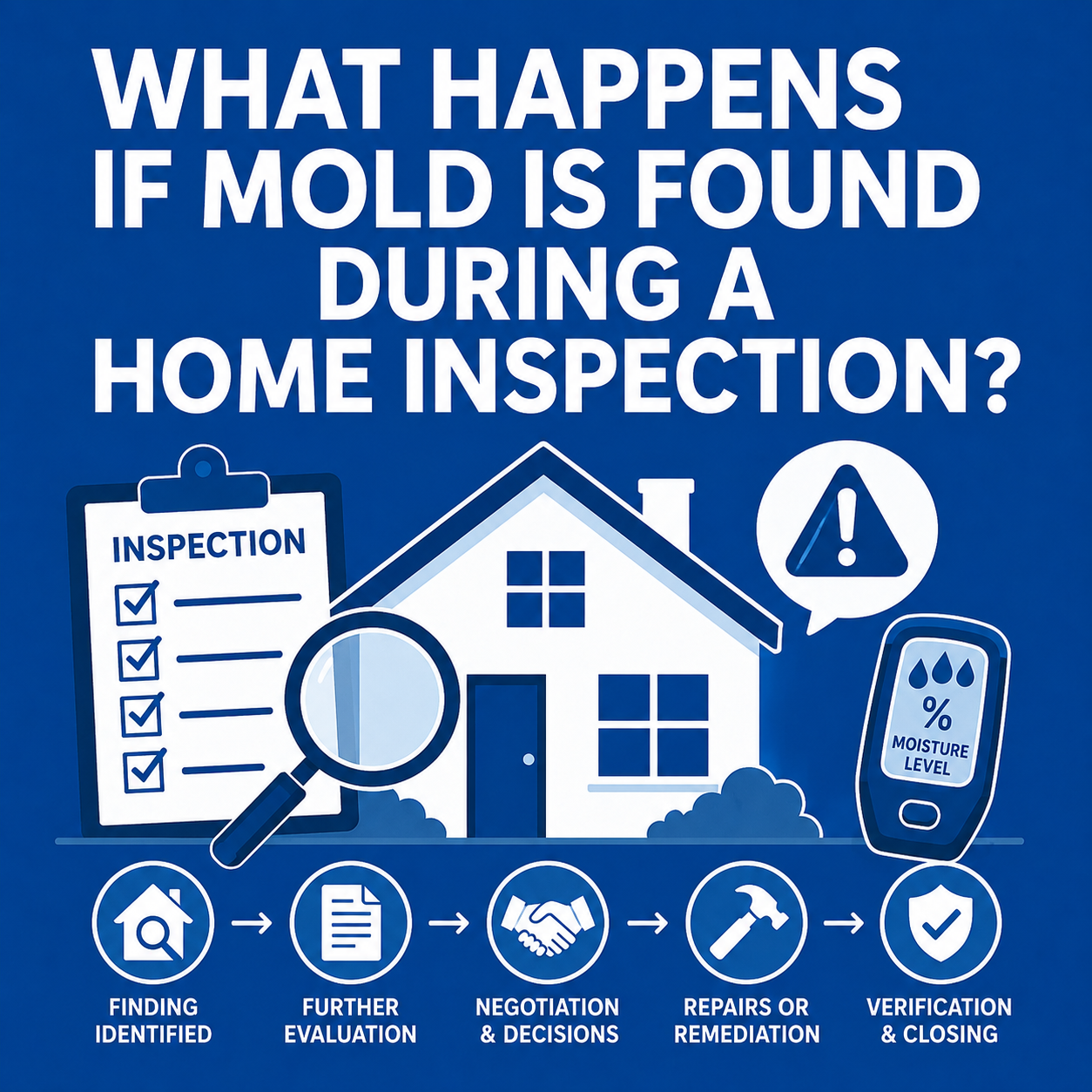
What Happens If Mold Is Found During a Home Inspection?

Discovering mold during a home inspection can be concerning for both buyers and sellers. In many cases, the finding comes as a surprise, especially when no visible water damage or indoor air quality concerns have previously been reported.
While mold findings can complicate a real estate transaction, they do not automatically mean the sale will fail or that the property has a serious environmental problem. The next steps depend on the extent of the mold growth, the conditions contributing to it, and whether additional evaluation is needed.
Understanding what happens after mold is discovered can help buyers and sellers make informed decisions and avoid unnecessary delays during the transaction process.
How Mold Is Typically Discovered During a Home Inspection
Home inspectors commonly identify conditions that suggest moisture intrusion or possible mold growth during a visual evaluation of the property.
Examples may include:
- Visible discoloration on building materials
- Water staining on ceilings or walls
- Deteriorated drywall
- Evidence of previous leaks
- Musty odors
- Excessive humidity in crawlspaces, attics, or living areas
- Suspected microbial growth on accessible surfaces
In most cases, home inspectors do not perform mold assessments. Instead, they document observed conditions and recommend further evaluation by an appropriately qualified professional when warranted.
The presence of suspected mold growth often raises additional questions that require a more detailed investigation.
Not All Mold Findings Are the Same
One of the most important things for buyers and sellers to understand is that mold findings vary significantly from property to property.
A small area of visible growth beneath a bathroom sink is very different from widespread mold resulting from a long-term roof leak or chronic moisture intrusion.
Factors that may influence the significance of a mold finding include:
- The size of the affected area
- The type and condition of affected materials
- Whether moisture is currently present
- The source of the moisture
- The location of the growth
- Whether the issue appears active or historic
In some situations, the mold may be limited to a small, isolated area. In others, visible growth may simply be the portion that is accessible while additional damage exists behind walls, beneath flooring, or within other concealed spaces.
Determining the extent of the condition is often the next step following discovery.
Additional Evaluation May Be Recommended
When mold or moisture concerns are identified during a home inspection, a more detailed evaluation may be recommended to better understand the conditions present.
A mold assessment typically focuses on identifying:
- Visible mold growth
- Moisture sources
- Areas of water damage
- Conditions contributing to mold growth
- The extent of affected materials
- Whether remediation may be necessary
Depending on site conditions, the assessment may include moisture measurements, thermal imaging, humidity evaluation, HVAC observations, and laboratory sampling when appropriate.
The goal is not simply to determine whether mold exists. The more important objective is identifying why it developed and whether moisture conditions remain unresolved.
How Mold Findings Can Affect Real Estate Negotiations
Once mold concerns are identified, buyers and sellers often enter a period of negotiation regarding corrective actions.
Potential outcomes may include:
- Seller completion of repairs before closing
- Seller completion of mold remediation before closing
- Financial concessions or credits
- Escrow agreements
- Adjustment of the purchase price
- Buyer acceptance of the property condition
The appropriate solution depends on the nature and extent of the findings.
In some situations, corrective measures may be straightforward and completed quickly. More extensive moisture or mold issues may require additional investigation, remediation, and verification before the parties are comfortable moving forward.
Because every property is different, there is no universal approach that applies to every transaction.
What Happens If Mold Remediation Is Required?
If remediation is determined to be necessary, the primary objective is correcting the moisture source and addressing affected materials.
Simply cleaning visible mold without correcting the underlying moisture problem often results in recurring issues.
The scope of work may vary depending on the size and location of the affected area, as well as applicable regulatory requirements.
Potential remediation activities may include:
- Removal of damaged materials
- Surface cleaning
- Drying of affected building components
- HVAC cleaning when warranted
- Containment of affected work areas
- Air filtration during remediation activities
Following remediation, many buyers seek independent verification that the work was completed successfully before proceeding with closing.
Why Post-Remediation Verification Is Often Requested
When mold remediation has been performed during a real estate transaction, buyers frequently request independent post-remediation verification before finalizing the purchase.
Post-remediation verification is intended to evaluate whether:
- Remediation activities were completed as specified
- Visible mold growth has been addressed
- Moisture sources have been corrected
- Clearance criteria have been achieved when applicable
This process can provide additional confidence that corrective measures were performed appropriately before ownership changes hands.
For buyers, it serves as an independent assessment of the completed work rather than relying solely on contractor documentation.
Related Article
👉 Why Post Remediation Verification Is Critical After Mold Removal in Texas
Does Finding Mold Mean You Should Walk Away From the Purchase?
Not necessarily.
Many mold issues can be corrected successfully once the underlying moisture source is identified and addressed.
The more important questions often include:
- What caused the mold growth?
- Is the moisture source still active?
- How extensive is the affected area?
- What repairs will be necessary?
- Has the issue been properly corrected?
A well-documented evaluation can help buyers understand the actual condition of the property and make informed decisions based on facts rather than assumptions.
In many cases, the transaction proceeds successfully after appropriate repairs, remediation, and verification are completed.
Finding mold during a home inspection can create uncertainty, but it does not automatically indicate a major problem or failed real estate transaction. Mold is often a symptom of moisture intrusion, elevated humidity, or building system deficiencies that require further evaluation.
Understanding the cause, extent, and corrective actions necessary allows buyers and sellers to address concerns appropriately and move forward with greater confidence. A thorough assessment can help clarify the situation, identify any necessary repairs, and support informed decision-making throughout the transaction process.
Related Articles
👉 What Every Homebuyer Should Know About Mold Before Closing
👉 Why Real Estate Mold Disclosures Do Not Replace a Professional Mold Inspection in Texas
👉 Why Post Remediation Verification Is Critical After Mold Removal in Texas
Dennis Butts is a Texas licensed Mold Assessment Consultant and principal of NTX Enviro Consulting Services, providing mold inspections, remediation protocols, and post remediation verification services throughout North Texas.
NTX Enviro provides professional mold inspections and moisture evaluations for homeowners throughout North Texas.