📞 (972) 643-8379 Monday to Friday 8:00 am - 5:00 pm, Saturday & Sunday - CLOSED

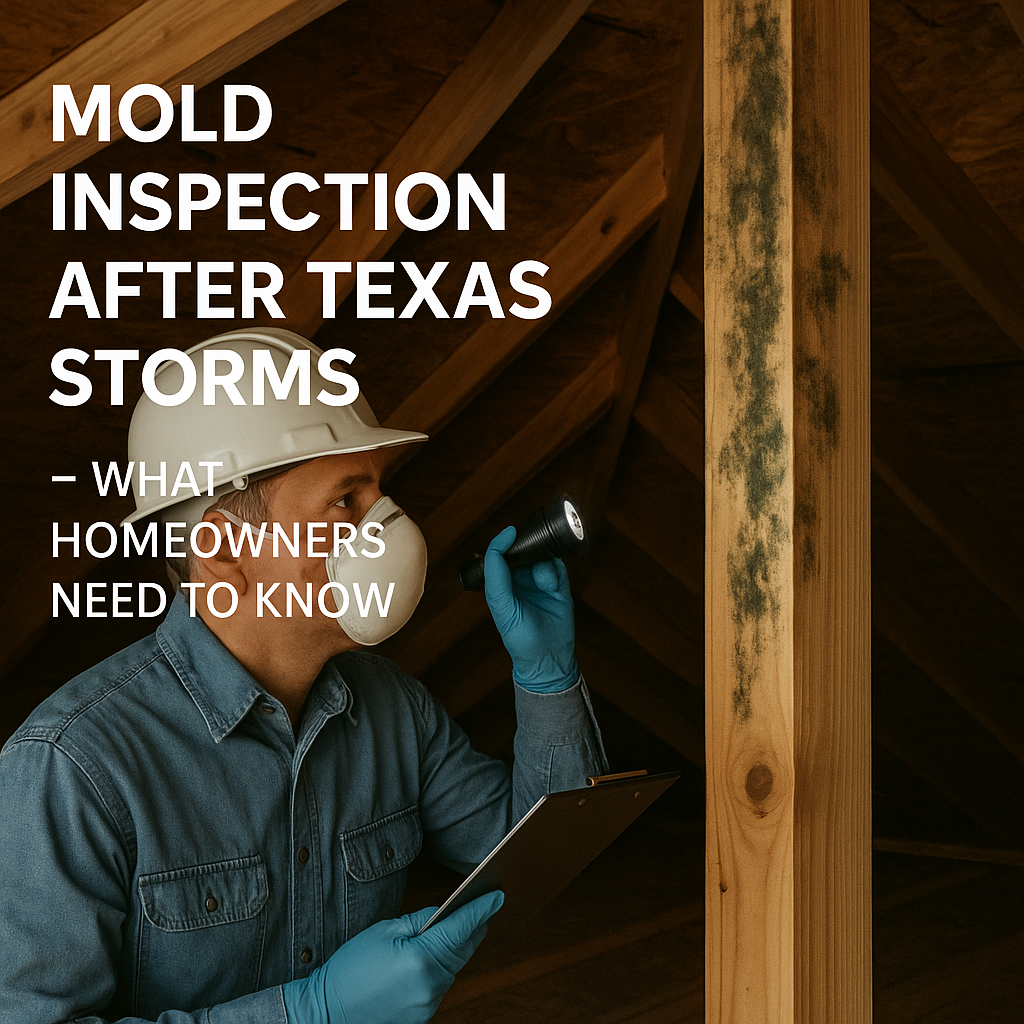
Mold Inspection After Texas Storms – What Homeowners Need to Know

In Texas, storms are part of life. From sudden spring downpours to late-summer hurricanes, heavy rains and flooding often leave behind more than just visible damage. One of the biggest hidden threats after a storm is mold growth.
Because mold can begin to grow within 48 to 72 hours after water intrusion, homeowners should prioritize scheduling a professional mold inspection as part of their storm recovery plan. In this post, NTX Enviro explains why inspections matter, what the process includes, and how Texas homeowners can protect themselves after a storm.
Why Storms Lead to Mold Growth
Excess Moisture
Heavy rainfall, roof leaks, and flooding saturate building materials like drywall, insulation, and carpet. Even if standing water is removed, trapped moisture lingers.
Power Outages
Extended power outages shut down air conditioning and dehumidifiers. Without climate control, humidity skyrockets indoors, accelerating mold growth.
Hidden Damage
Water often seeps into wall cavities, attics, and crawlspaces – areas not visible during a quick walk-through.
The 48-Hour Rule: Why Timing Is Critical
Mold growth can begin within 48 hours of water intrusion. That means:
- Quick cleanup is essential, but it isn’t enough.
- Even professional water restoration doesn’t guarantee mold won’t develop later.
- A mold inspection confirms whether lingering moisture has already triggered contamination.
👉 If your home experienced roof leaks, flooding, or high humidity during a storm, schedule an inspection as soon as possible.
What a Post-Storm Mold Inspection Includes
At NTX Enviro, we follow state-regulated procedures to ensure accurate results. A typical post-storm inspection may include:
- Visual Assessment
Inspecting walls, ceilings, flooring, and HVAC systems for visible signs of mold or water damage.
- Moisture Mapping
Using thermal imaging and moisture meters to identify damp areas behind walls, under flooring, and in attics.
- Air and Surface Sampling
- Air samples compare indoor vs. outdoor spore levels.
- Surface samples confirm whether visible spots are mold or staining.
- Detailed Reporting
Homeowners receive a written report with lab results, photos, and recommendations.
- Guidance on Next Steps
If remediation is necessary, our unbiased consultants explain whether a licensed mold remediation contractor is required under the Texas Mold Law.
Texas Mold Law and Storm Damage
The Texas Mold Assessors and Remediators Rules (TMARR) and Texas Occupations Code, Chapter 1958 regulate how mold is inspected and remediated.
- Homeowners can clean up less than 25 contiguous square feet of mold without a license.
- Larger areas require a licensed mold remediation contractor (MRC).
- After remediation, a Certificate of Mold Damage Remediation (CMDR) may be issued, protecting property value during resale.
👉 Skipping a professional inspection after storm damage can lead to compliance issues, insurance disputes, or resale challenges later.
What Every Homebuyer Should Know About Mold Before Closing.
Health Risks of Ignoring Post-Storm Mold
Mold isn’t just a property issue – it’s a health issue. Elevated mold spores indoors can cause:
- Persistent coughing, sneezing, and congestion
- Worsening asthma or allergy symptoms
- Headaches and fatigue
- Irritated eyes, nose, and throat
For children, the elderly, and those with weakened immune systems, exposure can be especially harmful.
Is Mold Making You Sick? Common Symptoms Explained.
How Inspections Protect Homeowners
Early Detection
Finds mold before it spreads and becomes more costly to remove.
- Documentation for Insurance
Inspection reports and lab results strengthen storm-related claims.
- Real Estate Protection
If you sell your home later, having a CMDR provides assurance to buyers and protects resale value.
- Peace of Mind
Knowing your home is safe for your family helps you move forward with confidence after a storm.
DIY Cleanup vs. Professional Assessment
It may be tempting to tackle cleanup on your own, especially after a storm, but DIY efforts come with risks:
- Limited Scope: You may clean visible spots but miss hidden colonies.
- Cross-Contamination: Improper cleanup can spread spores to unaffected rooms.
- No Legal Documentation: DIY cleanup doesn’t provide a CMDR.
A professional assessment ensures compliance with Texas law and provides a clear plan for proper remediation if needed.
“DIY Mold Cleanup vs. Professional Assessment: What’s the Difference?”
Prevention Tips After Texas Storms
Even if your home appears dry, take these proactive steps:
- Run dehumidifiers to keep indoor humidity between 30–50%.
- Use fans and ventilation to dry damp areas.
- Remove wet carpet, rugs, or upholstery that cannot be dried quickly.
- Inspect attics and crawlspaces for hidden leaks.
Schedule a mold inspection if you notice musty odors, discoloration, or lingering dampness.
Texas storms often leave more than just water damage behind. Mold can develop quickly, spread silently, and cause serious health and financial issues if not addressed.
A post-storm mold inspection gives you accurate information, ensures compliance with state law, and provides peace of mind knowing your home is safe.
Dennis Butts is a Texas licensed Mold Assessment Consultant and principal of NTX Enviro Consulting Services, providing mold inspections, remediation protocols, and post remediation verification services throughout North Texas.
Protect your home and health after a Texas storm.
NTX Enviro provides professional mold inspections and moisture evaluations for homeowners throughout North Texas.